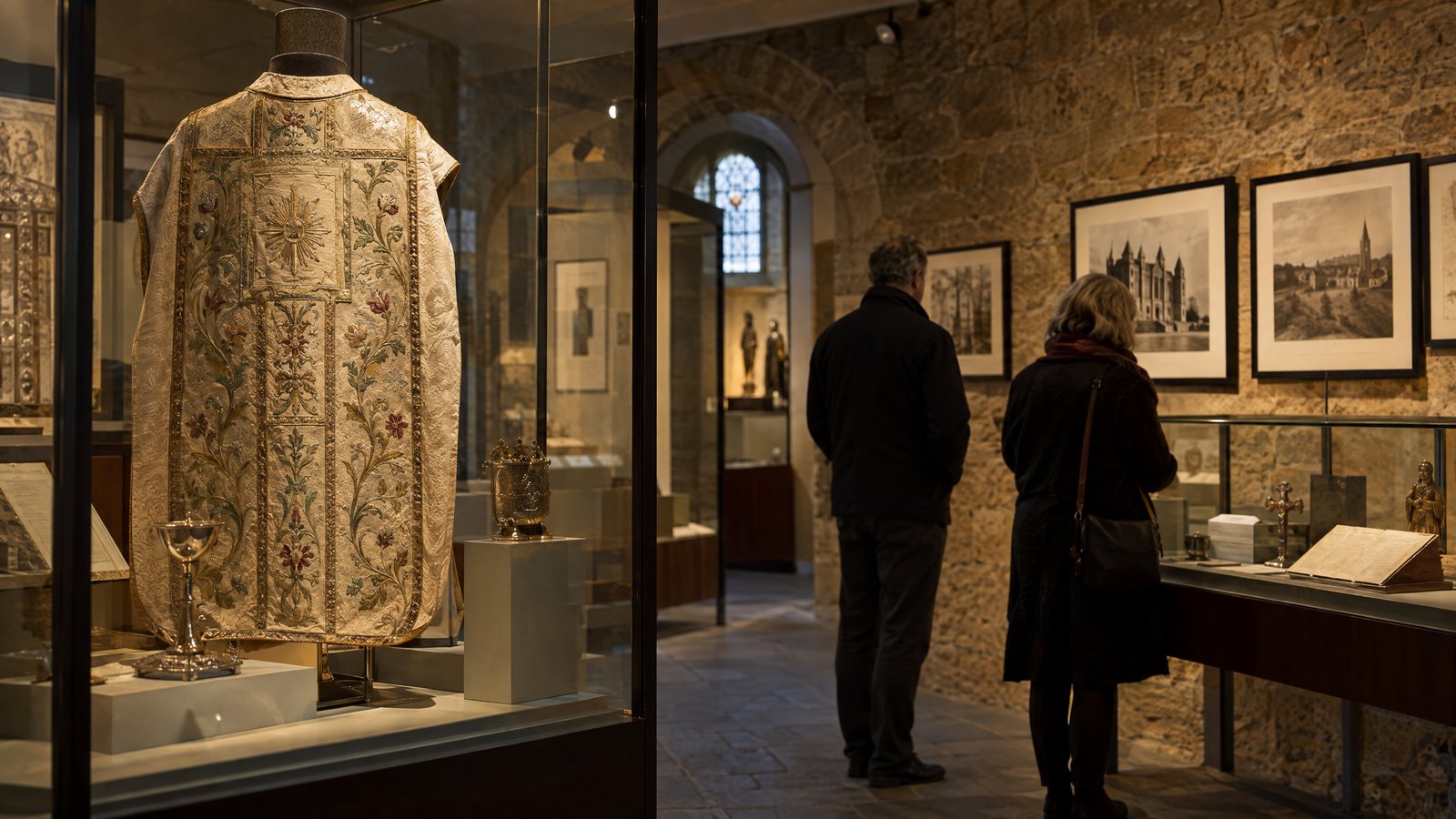

A year-long exhibition exploring Jesuit life in northern England opens at a college museum in Lancashire on 31 October 2026. Called The Northern Connection, it brings together collections and loans spanning the 1600s to the present, with material covering religious missions, education, literature, architecture and parish life.
The exhibition runs until 30 October 2027. Rare artefacts, vestments, paintings and archives form the display, bringing several types of historical material into a shared setting. Its focus is the Jesuit connection with the North, rather than an attempt to represent the region’s religious history as a whole.
The range of material gives the exhibition more than one way into that subject. Objects and clothing sit alongside paintings and archival holdings, allowing the account of Jesuit life to extend beyond a single activity or period. The long timespan also places historical collections within an exploration that reaches into the present.
Collections from across the North
Announced contributors and loans include church, archive and museum collections across northern England. The exhibition therefore draws on holdings beyond those of the host museum. Bringing these materials together is central to its regional scope, with the display concerned with connections across the North rather than only the history of one location.
Missions and parish life are among the principal themes. These put religious activity and community settings within the exhibition’s remit. They are presented alongside education, literature and architecture, giving the display a broader subject range than a focus on religious objects alone would provide.
Education is one of the strands linking the historical content with the exhibition’s planned wider activities. Within the display, it is part of the account of Jesuit life over the centuries. Separately, materials for schools are planned, although those resources should not be treated as already available.
Literature and architecture add further dimensions to the programme. Their inclusion makes clear that the exhibition’s subject is not confined to missions or parish life. Together, the announced themes offer a way of considering Jesuit history through religious, educational and cultural activity, while keeping the northern English setting at the centre.
The different categories of exhibits are important to that approach. Vestments bring clothing into the display; paintings provide visual material; and archives sit alongside rare artefacts. The exhibition combines these holdings rather than relying on one form of collection to carry its account of the period from the 1600s onwards.
Memories and school resources
An oral-history project is intended to gather memories from communities associated with this history. It adds a participatory element to a programme otherwise built around collections and loans. The intention to collect recollections is distinct from a completed body of interviews or a finished oral-history archive.
The project also gives the present-day end of the exhibition’s timespan a place in its wider programme. Historical objects remain central, but the planned gathering of memories recognises that the subject includes associated communities as well as collections. No completed findings from that work have been announced in the supplied exhibition details.
Planned school materials form another part of the educational programme. These are separate from the objects on display and are intended for use by schools. Both this work and the oral-history project extend the exhibition’s ambitions beyond assembling historical holdings, while remaining activities described as planned or intended.
The year-long run does not mean the museum is open to visitors every day. Access is on selected museum dates, so the exhibition’s opening and closing dates define its overall duration rather than a daily admission schedule. The Northern Connection remains a focused exploration of Jesuit history in northern England.