
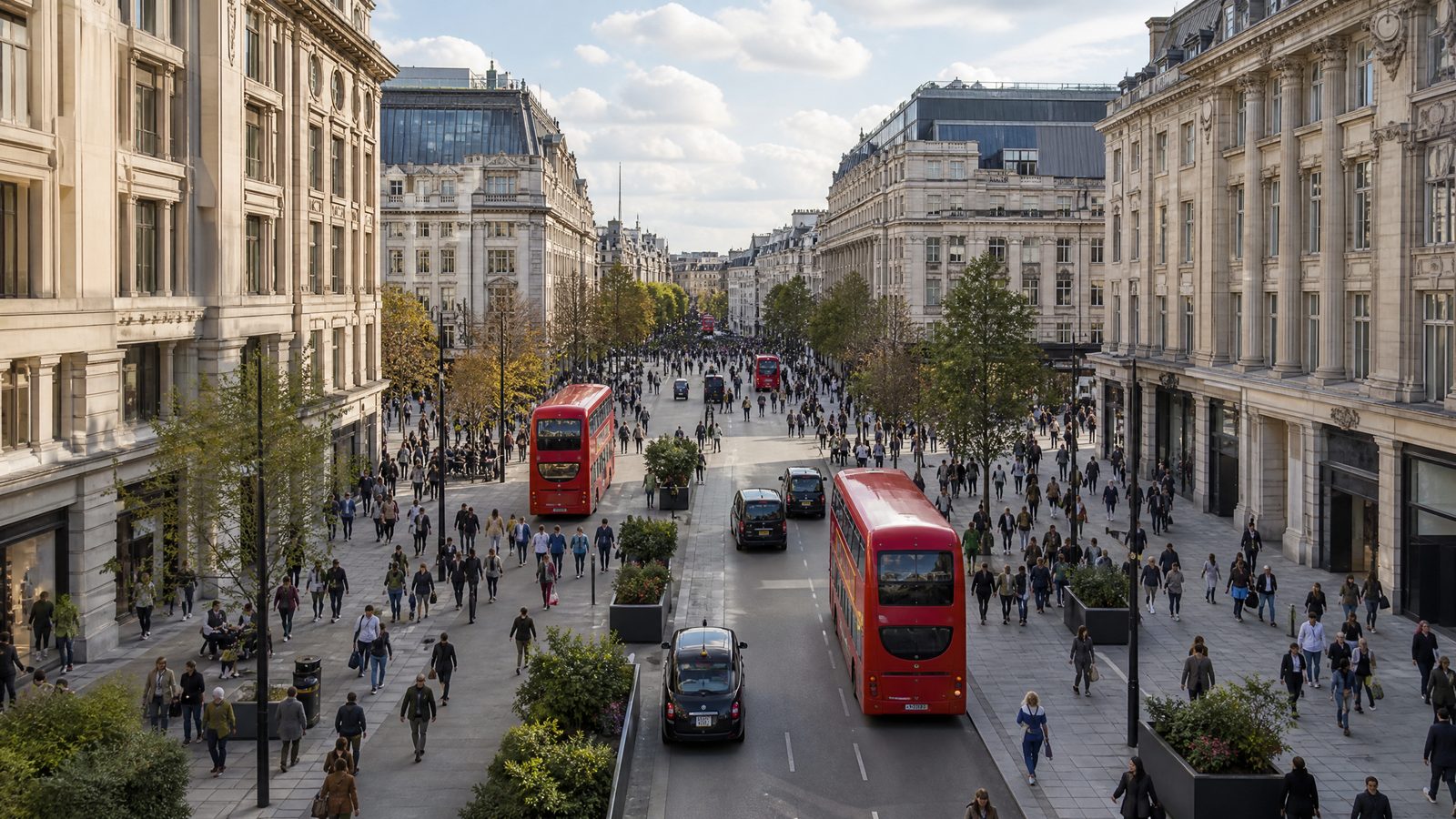

Westminster City Council has formally challenged the Mayor of London’s ambitious plans to pedestrianise Oxford Street, demanding that the Government intervene to ensure a comprehensive environmental probe is conducted. The local authority has written to the Ministry of Housing, Communities and Local Government to request a full Environmental Impact Assessment (EIA), arguing that the current proposal risks causing significant disruption to the heart of the capital without adequate scrutiny.
The challenge marks a significant escalation in the ongoing debate over the future of Europe’s busiest shopping street. Mayor Sadiq Khan has proposed a £150 million transformation of the district, which would see vehicles banned from a major stretch of the road to create a world-class destination for shoppers and tourists. However, the council, which recently saw a change in leadership following the local elections in May, has raised serious concerns that the project is being fast-tracked at the expense of residents and businesses.
Demands for Greater Scrutiny
At the centre of the dispute is the requirement for a full Environmental Impact Assessment. Transport for London (TfL), acting on behalf of the Mayor, has recently sought permission from the Government to bypass the need for this comprehensive evaluation. Instead, TfL has submitted what is known as a “screening opinion,” which suggests that a full assessment may not be necessary for the project to proceed. The council has strongly contested this approach, warning that failing to consider the wider implications of the scheme could lead to a range of negative outcomes.
Senior figures within Westminster City Council have warned that the scale of the proposed changes requires the highest level of scrutiny. They argue that the pedestrianisation of Oxford Street will not happen in a vacuum and will have profound effects on the surrounding urban landscape. The council’s formal letter to the Government highlights several key areas of concern that they believe must be addressed before any work begins:
- The displacement of traffic into residential side streets, potentially leading to gridlock in previously quiet areas.
- A measurable increase in noise pollution for those living and working in the immediate vicinity of the new pedestrian zone.
- Potential degradation of air quality on surrounding roads as vehicles seek alternative routes through the West End.
- Logistical challenges regarding waste management and the daily cleaning of the newly created public spaces.
- Broad concerns regarding public safety and the management of large crowds in a vehicle-free environment.
Warnings of an Unmanaged Mess
Tim Barnes, the Deputy Leader of Westminster City Council, has been vocal in his criticism of the current trajectory of the project. He has accused the Mayor’s office of “cutting corners” to meet an aggressive timeline that aims to begin transformation works by the summer of 2026. According to Barnes, the rush to implement the changes could result in what he describes as an “unmanaged mess” that would ultimately harm the very businesses and residents the scheme is intended to support.
The council’s position is that while they are not inherently opposed to the idea of improving Oxford Street, the execution must be handled with care. Barnes emphasised that a project of this magnitude, which affects bus routes and traffic flow across the entire capital, cannot be rushed. The fear is that without a full EIA, the long-term success of the shopping district could be jeopardised by immediate logistical failures, such as increased congestion on peripheral roads and inadequate infrastructure for the displaced traffic.
The Vision for Oxford Street
Under the Mayor’s current plans, the stretch of Oxford Street between Orchard Street and Great Portland Street would become entirely vehicle-free. The vision for the area includes the potential for al fresco dining areas, improved lighting, and a more welcoming environment for the millions of people who visit the street each year. A permanent design for the new layout is expected to be published by November 2027, following the initial implementation phase.
City Hall has maintained that the pedestrianisation is essential to securing the future of Oxford Street as a premier global retail destination. Supporters of the scheme argue that removing traffic will make the area safer, cleaner, and more attractive to international brands and visitors alike. The Mayor’s office has previously rejected accusations that the project is being rushed, asserting that the transformation is a necessary response to the changing nature of retail and urban living.
Waiting for a Government Decision
The ball is now in the court of the Ministry of Housing, Communities and Local Government. The department will review the submissions from both TfL and Westminster City Council to determine whether a full Environmental Impact Assessment is legally required. This decision will be a critical milestone for the project, as a requirement for a full EIA could significantly alter the timeline for the transformation works.
As Londoners wait for the outcome, the debate highlights the complex balancing act between urban modernisation and the protection of local interests. For the residents of Westminster and the thousands of businesses that call the West End home, the demand for a full environmental probe is seen as a necessary safeguard against a project that will undoubtedly change the face of London for generations to come.







