
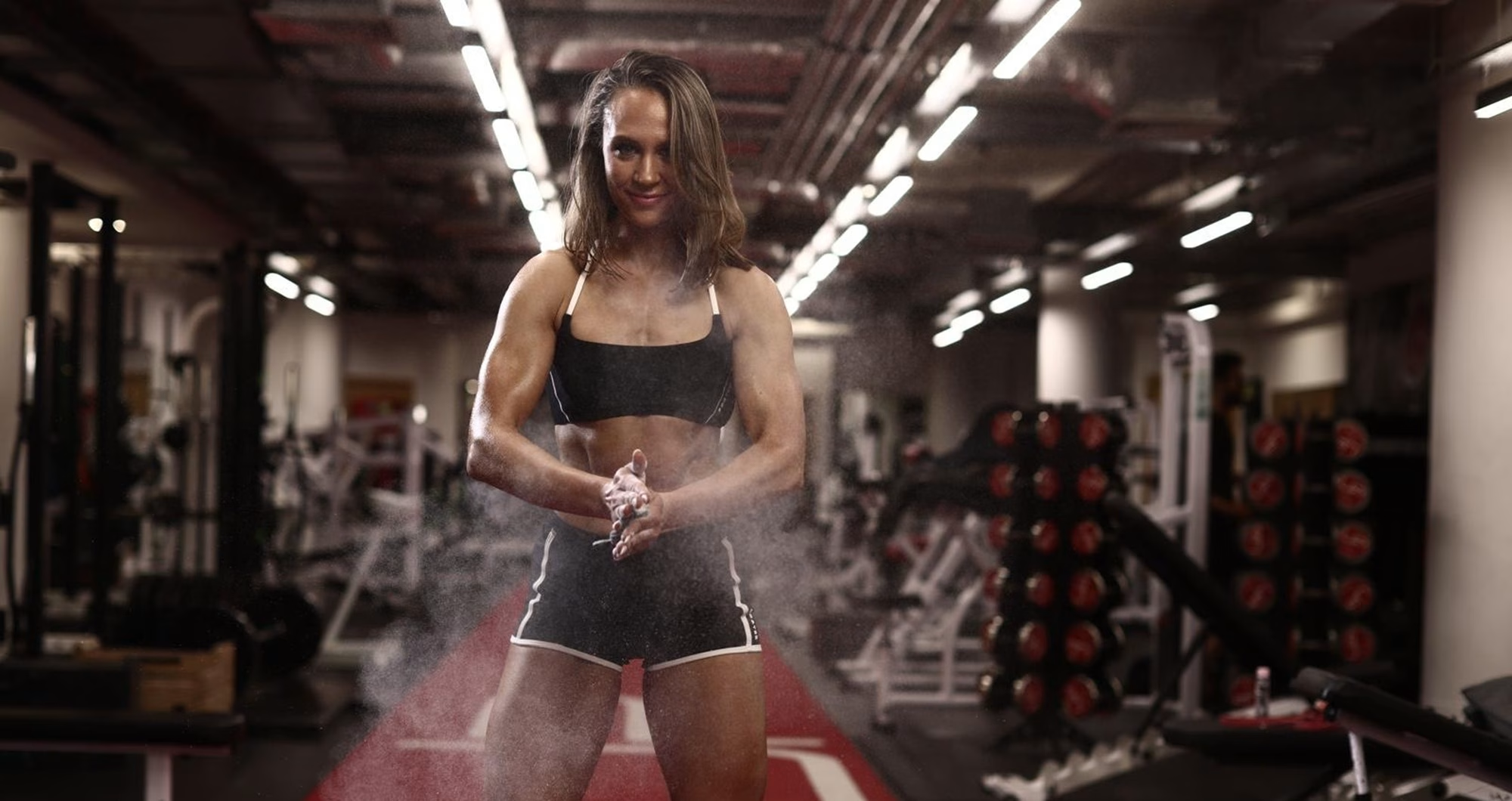

Women should stop fearing lifting weights in the mistaken belief it will make them “bulky”, according to one of the world’s leading personal trainers.
For decades, the myth that lifting weights will leave women looking “too bulky” has held many women back from reaping one of the most powerful exercise modalities for health, strength and confidence.
But the reality is that unless you’re training like a professional bodybuilder, you won’t suddenly sprout Hulk-like muscles. Women generally have lower testosterone than men and require a very high training volume, intensity, and often specific nutrition or supplementation to achieve extreme muscular hypertrophy. What you will gain, however, is protection against osteoporosis, positive effects on hormonal health, improved body composition, greater resilience to stress, and the kind of athletic physique so many women actually want.
That is the advice from Aroosha Nekonam, a body transformation specialist at Ultimate Performance. Ultimate Performance is the world’s leading personal training company and specialises in one-to-one strength training. The company has 27 gyms worldwide and nine different private gyms dotted across London.
Aroosha said: “Although strength training has become more popular among women in recent decades, the association between lifting weights and appearing masculine still holds some women back from participating.
However, there are several reasons why these fears are unfounded.
Anyone who has tried to build genuine muscle will know it takes a lot of time, effort and solid know-how to achieve significant gains. Yes, there may be women in the gym whose physique you don’t want to emulate. But their physique is likely built on a lot of time, dedication and years (and years) of effort. Fearing you will turn into a muscle-laden Amazonian after several weeks’ training is, therefore, a bit like starting to jog and worrying you’re going to end up like Usain Bolt in a month.
In fact, when combined with a high-protein, calorie-controlled diet, lifting weights is far better than endless cardio when it comes to actually losing bodyfat and building lean muscle tissue.”
Instead, according to Aroosha, lifting weights should be seen the best form of exercise for women, not just for aesthetic reason but for their overall holistic health and wellbeing.
Indeed, the benefits of weight training for women are vast:
Improved strength
Aroosha said: “Not only does being stronger make day-to-day life easier, reduced muscular strength is one of the biggest predictors of mortality in older adults. Age-related decreases in muscle mass are particularly important for women as menopause-related shifts in hormones significantly increase the risk of sarcopenia. Resistance training is pretty much the only mode of exercise that can enhance muscular strength and hypertrophy.”
Reduced risk for osteoporosis
“Women are more likely to experience age-related losses in bone mineral density, increasing the risk of fractures and breaks, which seriously impact quality of life,” said Aroosha. “Resistance training is widely recognised as being a powerful tool in preventing osteoporosis.”
Psychological benefits
“A 2013 study applied a 24-week resistance training program with middle-aged and elderly women. At the end of the study, participants reported significant improvements in self-efficacy, socialisation and health scores. This finding appears to be true across age groups. A 2014 research study on postpartum women found that resistance training improved ratings of self-efficacy, depression and activity. So, if you want to become a more independent, confident, kick-ass version of yourself, start lifting weights,” said Aroosha.
Reduced risk of metabolic disease
“Metabolic syndrome refers to a cluster of conditions that include type 2 diabetes, high cholesterol, and hypertension, which significantly increase the risk of all-cause mortality. The biggest risk factor for all of these diseases is poor body composition and having a BMI of 30 and over has the highest level of risk. Resistance training is one of the most important tools for maintaining a healthy body composition.”
Neural adaptations
“Heavy resistance training triggers neural adaptations that occur as your body becomes more efficient at performing the movements,” said Aroosha. “Being more agile and stronger at day-to-day movements not only reduces your risk of injury, it also makes life a whole lot easier.”
Improved aesthetics
Aroosha said: “Many women cite that they want to become more ‘toned’ rather than grow muscle. In clinical terms, muscle ‘tone’ refers to the continuous and passive contraction of a muscle. So, if you’re alive and moving, you’ve already nailed this! What many women mean by ‘toned’ is having a bit less body fat and more definition, which involves improving your body composition. Alongside adequate protein intake, resistance training is pretty much one of the only ways we can achieve this.”
Improved hormonal health
Aroosha said: “PCOS, a hormonal imbalance that often causes infertility, affects 6-20% of women and around 44% of obese women. Sufferers are also at a three-fold risk of developing thyroid disease (especially Hashimoto’s). Resistance training is a crucial mechanism that can assist with weight loss and improve symptoms of insulin resistance, one of the hallmarks of PCOS.”
Aroosha concluded: “Many women hold back from pushing themselves in the gym due to fears of looking masculine. However, moderate to heavy loads help promote strength and hypertrophy without making you look bulky.
The best way to avoid looking bulky is to decrease your body fat stores through a calorie deficit, combined with resistance training. And even if building muscle is your goal, then weight training is the best way to achieve that athletic, sexy physique without turning into a bodybuilder.
Resistance training is also particularly potent health tool for women, as it helps reduce the risk of osteoporosis, age-related muscle loss and improve fertility.
Beyond its health benefits, weight training can help you become a more confident, independent, bad ass version of yourself.”
One London woman who is a powerful testament to the benefits of lifting weights is Holly Collinge, 38.
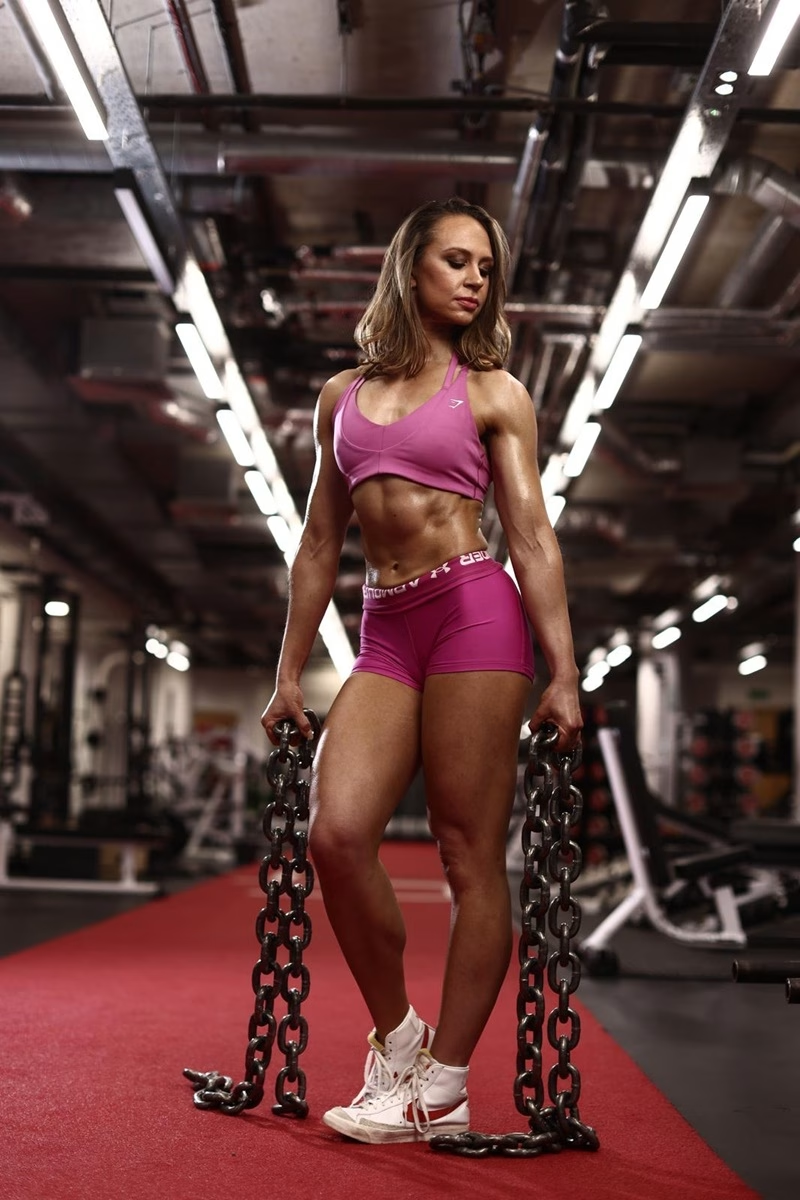
Holly initially came to Ultimate Performance’s St Paul’s gym and lost more than 9kg, reducing her bodyfat from 18.7% to a very lean 12.4% bodyfat through a mixture of weight-training and a calorie deficit.
However, over the preceding nine months, Holly and her trainer Robyn Hutchison focused more on building lean muscle, increasing her calorie intake and lifting progressively heavier weights. Holly’s physical transformation was absolutely staggering, adding approximately 6kg of lean muscle mass to her body, but putting on less than 0.4% in bodyfat.
Holly’s incredible physique shows that even when lifting heavy and eating more calories, women can achieve an enviable figure without turning into a competitive bodybuilder.
Holly said: “After my initial fat loss phase, I wanted to gain muscle so that I could feel stronger and more confident in my body shape, especially my glutes.
“I’m now pretty much the same weight as I was when I first came to Ultimate Performance, but my body shape is so different and I feel so much more confident, and strong, and powerful, in my own skin.
“For a lot of women, it’s drummed into us to shrink ourselves down, but smaller isn’t always necessarily better. I don’t want to be the slimmest person in the gym, or the slimmest person on Instagram. What I wanted was to really inhabit my body, and feel confident in who I am.
“By building muscle, I feel strong. I feel confident. I feel empowered. I know what it means to feel mentally and physically well, and what ‘well-being’ should feel like.”







