
Liverpool has entered 2025 on a wave of optimism, as businesses across multiple sectors report stronger growth, higher investment, and renewed confidence in the city’s economy. From property and retail to culture and digital innovation, Liverpool is positioning itself as one of the UK’s most resilient and forward-looking business hubs.
Property and Investment Driving Confidence
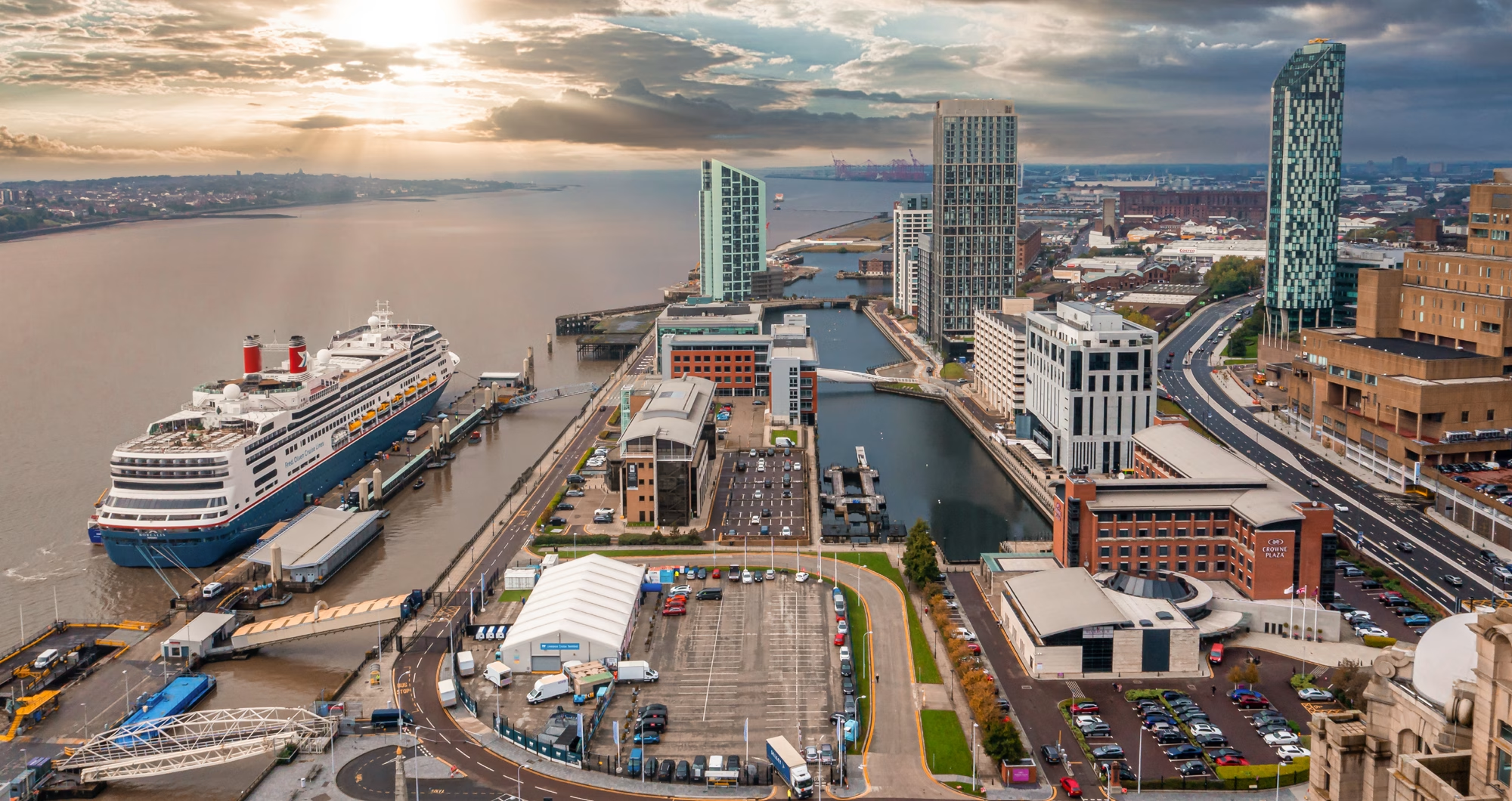
Liverpool’s property market continues to be a cornerstone of the city’s economic success. Regeneration projects such as Liverpool Waters, the ongoing transformation of the Baltic Triangle, and the expansion of the Knowledge Quarter have brought in billions of pounds in investment. These developments are not only reshaping the skyline but also creating jobs in construction, architecture, and professional services.
Companies like Merseyside Acme highlight Liverpool’s appeal to investors, citing strong rental yields that consistently outperform other UK regional cities. The combination of affordable entry prices and rising demand from young professionals and students has kept the buy-to-let sector thriving. The property boom has also sparked growth in related industries, from interior design and furniture suppliers to legal and financial services supporting transactions.
Retail and Independent Business Growth
Liverpool’s retail landscape in 2025 reflects the city’s adaptability and resilience in a shifting marketplace. The Liverpool ONE shopping centre continues to be a major regional destination, drawing visitors not only for shopping but also for leisure, dining, and entertainment. Flagship brands are investing in in-store digital experiences such as augmented reality fitting rooms, interactive product showcases, and AI-driven customer service kiosks. These features allow shoppers to personalise their experience, blending the immediacy of physical retail with the innovation of online platforms.
At the same time, Liverpool’s independent retailers remain one of its greatest strengths. Shops in Bold Street, Lark Lane, and the Georgian Quarter are flourishing by offering unique, locally sourced products that larger chains cannot replicate.
From artisan food and drink specialists to independent fashion labels and craft stores, these businesses have built loyal followings by highlighting authenticity and community. Many have embraced social media marketing, using Instagram and TikTok to connect with younger audiences and drive footfall back to physical stores.
The Rise of Hybrid Retail
Hybrid retail models are fast becoming the norm. Many Liverpool stores now offer click-and-collect services, online order fulfilment, and loyalty schemes that work seamlessly across digital and physical sales channels. Customers can browse online, reserve items, and then pick them up in-store, an approach that combines digital convenience with the reassurance of face-to-face service.
Book retailers, both independents and chains, have capitalised on this trend by creating cultural experiences around reading. Events such as author signings, themed evenings, and children’s storytelling workshops have helped them position themselves as more than just shops, but community hubs. Sales of practical titles, such as a ledger book for small business accounts, remain strong, demonstrating that demand for both lifestyle and functional products is robust.
Meanwhile, homeware and furniture outlets have carved out success by offering immersive online catalogues with 3D room planners, coupled with physical showrooms that let customers assess quality in person.
Competing in a National Market
Liverpool retailers are also standing out by adopting sustainability and ethical sourcing practices. From zero-waste grocery shops to eco-conscious fashion brands, businesses are finding that today’s consumers are increasingly motivated by values as much as price. This approach has allowed local independents to compete with national chains, positioning Liverpool as a leader in ethical retail.
This careful balance of digital convenience, experiential shopping, and local authenticity has helped Liverpool’s retail sector not only weather national challenges but also emerge stronger. By focusing on innovation and customer engagement, the city’s retailers have managed to hold their own in an increasingly competitive market.
Tourism, Culture, and Hospitality on the Rise
Tourism continues to be one of Liverpool’s greatest assets. Visitor numbers in 2025 have exceeded pre-pandemic levels, driven by major cultural festivals, football tourism, and the city’s enduring musical heritage. The legacy of The Beatles still draws international travellers, but new attractions, including immersive museum experiences and live performance venues, have broadened the city’s cultural appeal.
Hospitality businesses are reaping the rewards. Hotels around the waterfront and city centre are reporting record occupancy rates, while Airbnb-style accommodation has surged to meet growing demand. Restaurants and bars, particularly in the Baltic Triangle and Ropewalks, have experienced a boom in trade thanks to a mix of domestic visitors and international tourists.
Liverpool’s reputation as a football city also continues to support local businesses. Matchday tourism linked to Liverpool FC and Everton FC provides a vital boost for pubs, restaurants, and transport services. In 2025, analysts estimate that football alone contributes hundreds of millions of pounds annually to the local economy.
Innovation and Digital Economy
Beyond tourism and property, Liverpool is increasingly recognised as a centre for digital innovation and the creative industries. The expansion of the Knowledge Quarter Liverpool (KQ Liverpool) has positioned the city as a hub for life sciences, advanced manufacturing, and cultural technology. Partnerships between universities, research institutions, Liverpool business news websites and start-ups are attracting fresh talent and venture capital.
The city has also developed a strong reputation in the gaming and software development industries, with creative studios producing everything from educational apps to immersive VR experiences. Liverpool’s history as a music and cultural powerhouse has naturally fed into these industries, giving it a unique edge in creative technology.
Coworking spaces across the city, such as those in the Baltic Triangle, are thriving, fostering a start-up ecosystem where digital entrepreneurs and Podcasters can collaborate, share ideas, and scale their businesses. This digital momentum is not only creating jobs but also attracting a new wave of young professionals eager to build their careers in Liverpool.
A City Positioned for the Future
The combination of strong property growth, a diverse retail landscape, resilient hospitality, and a forward-thinking digital economy has placed Liverpool on a firm footing for the years ahead. Unlike some UK regions still struggling with high street decline, Liverpool has shown how a city can embrace change while preserving its identity.
Local leaders point to the city’s unique balance of culture, community, and commerce as the key to its success. With a business environment that values both tradition and tech innovation, Liverpool is proving that regional cities can thrive in the digital age.
“Liverpool has always been a city of resilience and creativity,” said one local business leader. “In 2025, that heritage is fuelling new growth across property, tourism, and digital innovation. Businesses here aren’t just adapting, they’re thriving.”