
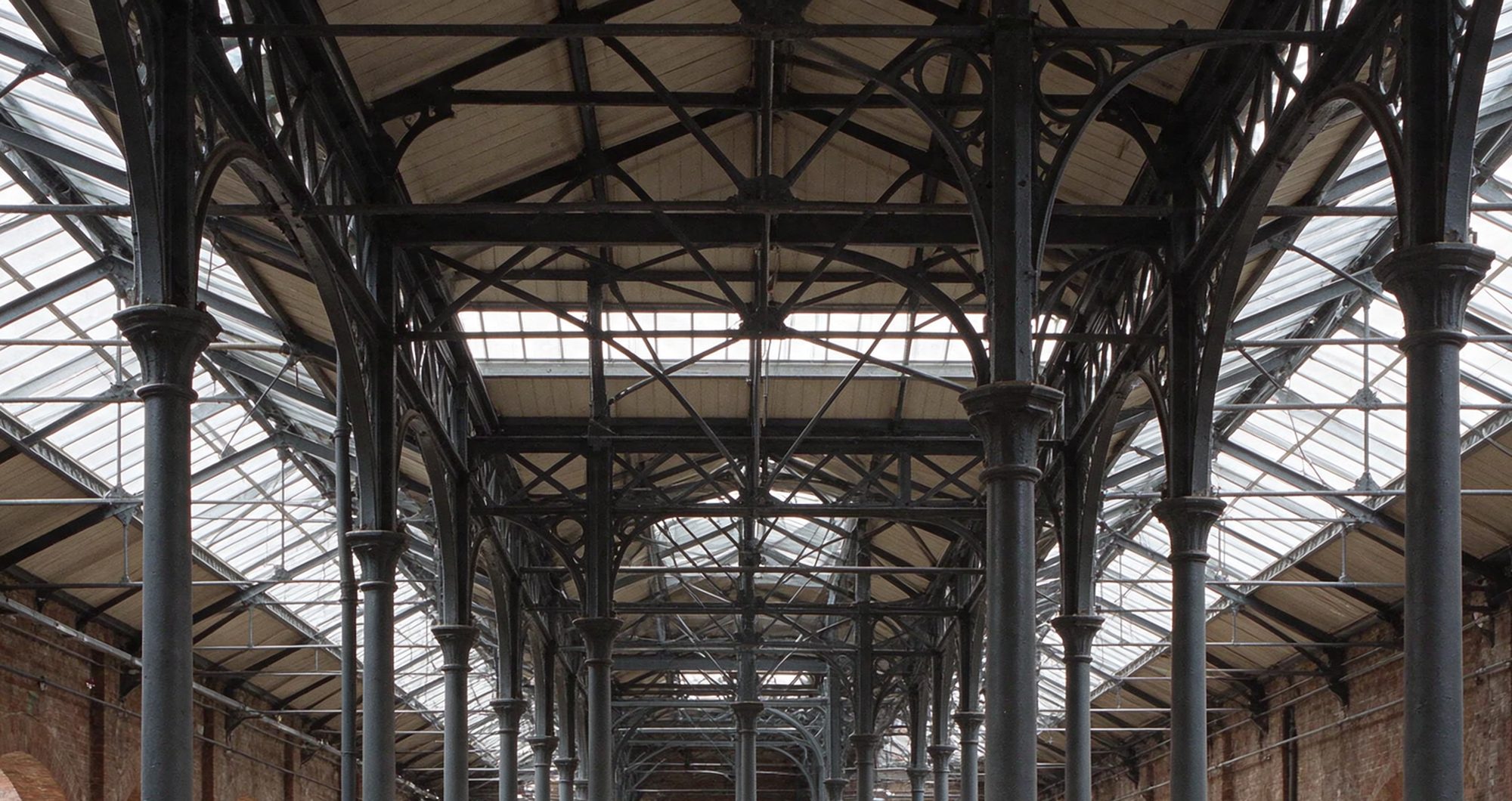

London Museum has revealed its restored Smithfield home and new permanent galleries ahead of its public opening on Saturday, 28 November, bringing the Victorian General Market back into public use after more than three decades.
The opening follows ten years of work on a £437 million project and coincides with the institution’s 50th anniversary. Admission to the permanent galleries is free, with the museum strongly recommending that visitors book a ticket in advance, particularly during its opening weeks.
The completed General Market is the first phase of the new museum. The adjacent Poultry Market is due to follow in 2028, providing two temporary exhibition spaces, a dedicated learning centre and a collections store.
Director Sharon Ament said the aim was to make the museum easier to enter from the surrounding streets and to reach people who might not otherwise visit. “I want to open up culture and history to as many people as possible,” she said.
History above and below ground
The museum is arranged around three connected spaces, called Real Time, Our Time and Past Time. Together, they bring contemporary London, living memory and the city’s longer history into the former market building.
Visitors enter through Real Time, a covered former street where animated screens use data to explore London today. Banksy’s Piranhas sentry box is among the displays, alongside a clock tower containing the final bell cast at the Whitechapel Bell Foundry.
Our Time occupies the former trading floor beneath the restored dome. Its installations include the Lord Mayor’s State Coach, the decommissioned Buckingham Palace telephone switchboard and Syd’s Coffee Stall, an East End fixture now housed in Smithfield.
Below ground, Past Time sits at Roman street level. Its galleries combine chronological and thematic displays, following London from prehistoric settlement through events including the Great Fire and the Blitz to more recent cultural milestones.
The objects range from Roman writing tablets and the Cheapside Hoard of Elizabethan and Jacobean jewellery to Queen Victoria’s mourning dress and memorabilia from the London 2012 Olympic and Paralympic Games. A preserved piece of the Whitechapel Fatberg also goes on display, showing a less celebrated aspect of the city’s infrastructure.
The transport network is visible inside the museum itself. A six-metre viewing window overlooks the Thameslink railway, allowing visitors to watch trains pass through the site while exploring the underground galleries.
A restored market with later opening hours
The General Market opened in 1883 to a design by Sir Horace Jones, whose other work included Tower Bridge and Leadenhall Market. It traded for more than a century before closing in the 1990s and falling into disrepair.
Stanton Williams and Asif Khan Studio worked with conservation architects Julian Harrap on the transformation. The museum says more than 70 trades contributed, including stonemasons, coppersmiths and blacksmiths restoring the decorative ironwork.
The new site also has a programme extending beyond gallery visits. The museum plans tea clubs, DJ sets, dinner clubs and house parties, alongside family activities and changing displays. Its first thematic season, London Tastes, explores the capital’s food culture and runs until August 2027.
Food and drink venues have separate opening arrangements. The museum’s published schedule lists the Temperance Cocoa Rooms as open around the clock from Thursday to Saturday, while Bartholomew’s bar is scheduled to stay open until 2am on Fridays and Saturdays. These hours do not mean the galleries will operate overnight.
The museum’s advertised opening hours are 10am to 6pm from Sunday to Thursday and 10am to 11pm on Fridays and Saturdays. For visitors planning their first trip, Farringdon and Barbican stations are each around a six-minute walk away. Step-free entrances are available on West Smithfield and Charterhouse Street.







