London is bracing for a month of heightened protest activity throughout June 2026, with various campaign groups initiating a “Month of Action” targeting financial institutions. This comes on the heels of a massive police operation in May that saw thousands of officers deployed to manage rival demonstrations, underscoring the ongoing challenges faced by authorities in maintaining public order across the capital. The planned June protests are expected to focus on issues related to arms, migrant detention, and the situation in Palestine, urging individuals and organisations to divest from institutions perceived as unethical.
Escalating Tensions: A Month of Action Ahead
Campaign groups, including “Boycott Bloody Insurance” and “Bank Better,” are coordinating a widespread “Month of Action” across the UK, with London anticipated to be a central hub for activities. The campaign’s strategy involves a diverse range of tactics, from traditional picketing and physical protests outside business premises to letter-writing campaigns, petitions, and extensive social media engagement. The aim is to exert pressure on financial institutions deemed complicit in various global conflicts and human rights issues, encouraging a shift towards more ethically aligned financial providers. Businesses across the City of London have been advised to review their security arrangements and consider increasing visible patrols in anticipation of potential disruptions. Authorities are closely monitoring the situation. The City of London Police hosted a webinar on 4th June 2026, providing updates on intelligence surrounding protest activity and outlining their policing approach for June and July. This proactive measure highlights the serious consideration given to potential public order challenges, as detailed in recent London news updates.
Lessons from May: An Unprecedented Police Deployment
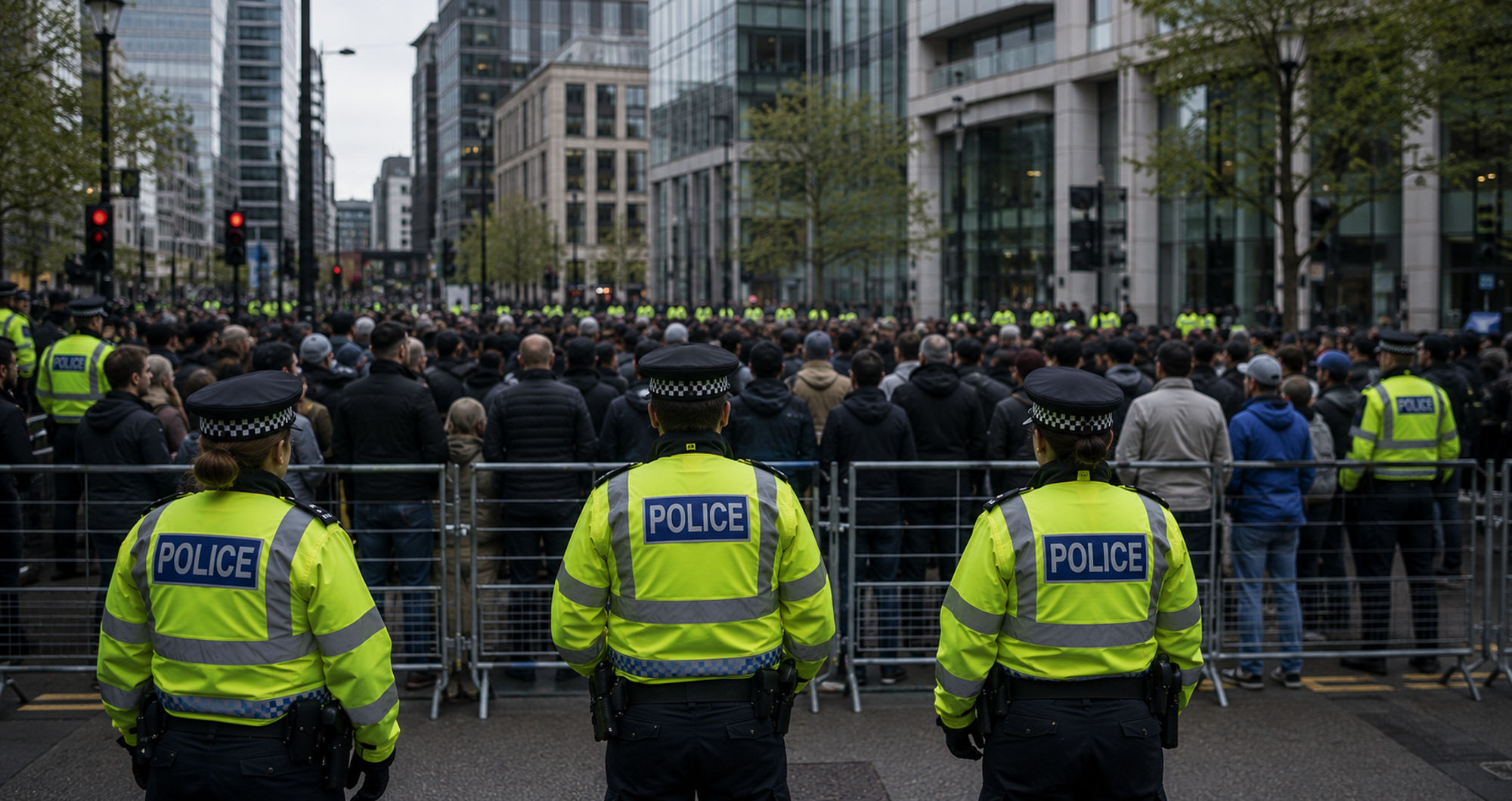
The upcoming month of action follows a significant period of unrest in May 2026, which saw the Metropolitan Police undertake one of its most extensive public order operations in recent history. On 17th May, over 4,000 police officers were deployed across central London to manage two large, rival demonstrations: a pro-Palestinian march marking Nakba Day and a “Unite the Kingdom” rally organised by far-right figure Tommy Robinson. The operation, which cost an estimated £4.5 million, resulted in 43 arrests, with officers working to maintain a “sterile zone” between the opposing groups. This deployment involved officers from forces across England and Wales, utilising tactics such as live facial recognition cameras at major railway stations like Euston and King’s Cross St Pancras to identify individuals of interest. The Met’s strategy aimed to uphold the right to free speech while preventing serious disorder, a delicate balance in the face of deeply divisive issues. Despite the scale of the operation, serious clashes between the rival factions were largely averted, a testament to the meticulous planning and execution by the police force. Further details on police operations can often be found in the Metropolitan Police news archive.
Impact on Londoners and Infrastructure
The continuous cycle of protests and associated police operations inevitably impacts daily life for Londoners and the city’s infrastructure. While the May protests were managed without significant transport disruption, the broader context of industrial action, such as the London Tube strikes in early June 2026, adds another layer of complexity. Such events necessitate careful planning for commuters and residents, often leading to increased pressure on alternative transport methods. For the latest information on travel, residents are advised to consult London travel updates regularly. The ongoing presence of large-scale demonstrations and the associated police response highlight the dynamic and often challenging environment within a global city like London. As the “Month of Action” unfolds, authorities will continue to balance the right to protest with the imperative to ensure public safety and minimise disruption across the capital.
Feature Image Generated with OpenAI ChatGPT