
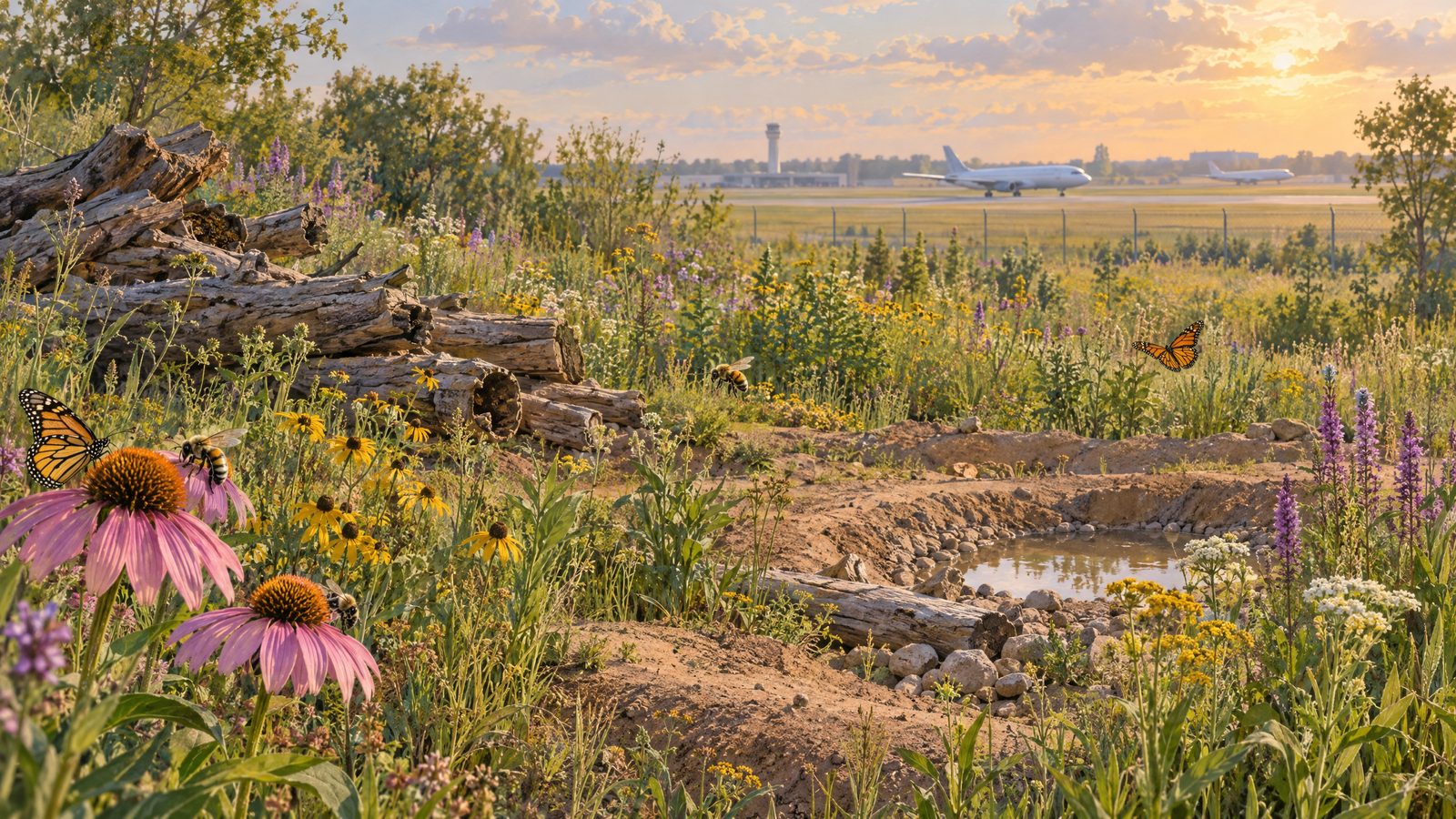

London Stansted has created a 3.18-hectare wildlife habitat near Bury Lodge Lane, close to the M11, as part of environmental work linked to the airport’s wider transformation programme.
The area is about the size of four football pitches and has been restored as grassland with features intended to provide food, nesting places and shelter for insects and other wildlife. The airport says the scheme includes log piles, bee posts, earth banks and shallow scrapes. A new footpath from the Long Stay car park is also being built to improve access to the area.
Several species have already been recorded at the site. They include the patchwork leaf-cutter bee, large-headed resin bee and cinnabar moth caterpillar. The vegetation cited includes bird’s-foot trefoil, oxeye daisy and Queen Anne’s lace. These are observations from the newly created habitat, not a claim that the project has established a completed long-term population trend. Monitoring over future seasons will be needed to show how the site develops.
The project is one of a series of environmental measures being highlighted as the airport’s transformation programme progresses. It is connected to commitments on biodiversity net gain, a planning approach intended to leave biodiversity in a better condition than before development. In practical terms, this project combines restored grassland with purpose-built habitat features rather than relying only on a landscaped perimeter.
The location also matters. Airports must manage habitats carefully because wildlife activity and aircraft safety can intersect. The announcement places the site near Bury Lodge Lane and the M11 rather than describing it as an airside attraction or a space for passengers. It is not a change to passenger security, flight operations or access arrangements. The new path from the Long Stay car park is the only visitor-access measure specified in the update.
Stansted has previously referred to other nature initiatives on and around its estate, including management of a wildlife area north of the runway, support for rare oxlip rewilding projects and participation in the Essex Wildlife Trust’s Investor in Wildlife scheme. The habitat announcement is more specific than those broader commitments because it gives the size, location and physical components of a new site.
The airport’s sustainability material also describes a 12.8MW on-site solar farm as a completed project and states an ambition for net-zero carbon operations by 2038. That energy project and the wildlife habitat address different environmental issues. The solar farm concerns airport electricity demand, while the new grassland focuses on ecological features around the site. Neither measure removes the need to assess the environmental effects of future airport development through the applicable planning processes.
The habitat is therefore best understood as a defined environmental project within a much larger airport estate and transformation plan. Its immediate importance lies in turning a 3.18-hectare parcel of land into a managed mix of grassland and microhabitats, with named species already recorded. Its longer-term importance will depend on continued habitat management, ecological monitoring, and how the airport integrates biodiversity commitments with a site that remains a major and growing part of London’s aviation network.







