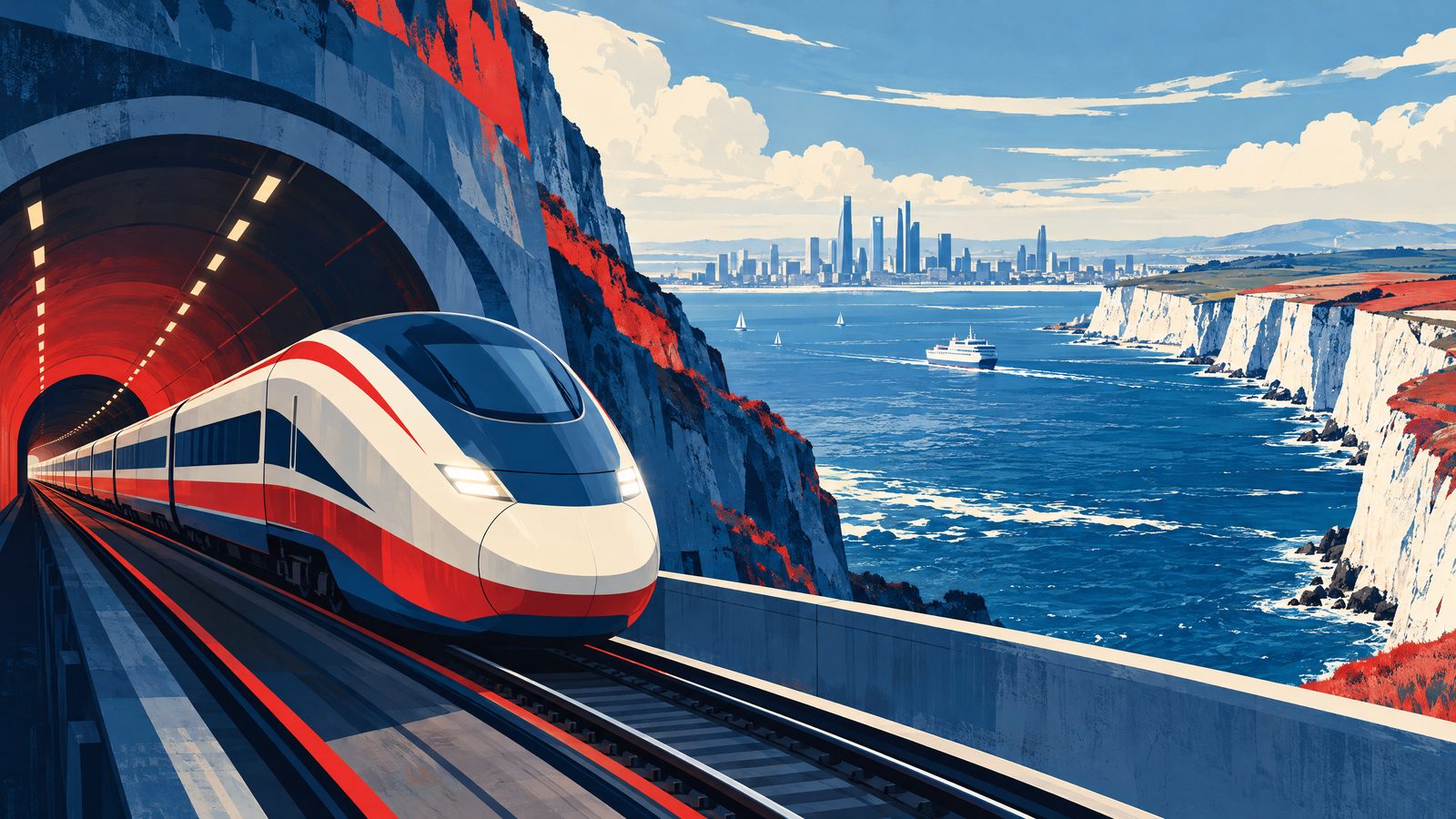

Virgin and Alstom have signed agreements covering 12 high-speed trains and long-term maintenance for a proposed new cross-Channel rail service. The arrangements are a significant step towards adding another operator on routes linking London with mainland Europe, but they do not mean passenger trains are ready to run.
The agreements cover Avelia Stream trains, designed and manufactured at Alstom’s Savigliano site in Italy, with maintenance to be carried out in the UK. Virgin has described the maintenance commitment as a 30-year contract. Alstom says the order booking is expected only after regulatory approval and financial close, so the commercial and operating process still has conditions to clear.
A planned service, not a launch
Virgin’s current plan is to begin services from 2030, connecting London with Paris, Brussels and Amsterdam. It has proposed up to 20 daily return services and says the trains could add almost 7.5 million seats a year to the cross-Channel network. Those figures are company projections, not an operating timetable or confirmed passenger capacity. Routes, frequencies and start dates may depend on decisions and access arrangements still to come.
The trains are designed for speeds of up to 300 kilometres an hour. Alstom is to build them in Savigliano, while maintenance would take place in Britain. The maintenance commitment matters because an international fleet needs a continuing base for servicing as well as trains themselves. Virgin has secured an agreement to use the Temple Mills international depot in east London, where its trains are to be maintained.
The UK rail regulator has previously pre-approved access for Virgin to use High Speed 1, the line between St Pancras and the Channel Tunnel, for up to 20 daily return services between October 2030 and the end of 2040. That is an important piece of the proposed route, but it is not permission to operate a complete international service by itself. The regulator has said Virgin must secure access to other rail networks and obtain safety approvals from UK and European authorities. The new train agreements do not remove those requirements.
What the deal changes
The immediate change is that Virgin now has a stated train-supply and maintenance arrangement with a manufacturer, rather than only a proposal to enter the market. For passengers, the prospect is a further choice on journeys through the tunnel. For the existing operator, the plan could bring competition on routes that have long been served by Eurostar. Neither the timing nor the eventual scale of competition is settled by this announcement.
Virgin has forecast that its wider plans could support up to 1,000 jobs across the UK and Europe. It has also said that the additional seats would encourage tourism and business travel. These are projected effects, not confirmed posts or measured economic outcomes; the announcement does not set out a breakdown of where jobs would be based or when recruitment might begin.
Virgin has also discussed bringing its rail and airline networks closer together, including possible links for travellers connecting in London. That remains an ambition to explore rather than a confirmed integrated ticket or transfer service. The planned on-board offer and customer features are likewise still being developed.
The signed agreements therefore make the project more concrete while leaving key steps unresolved. The trains must move from agreement to completed order, and the operator still needs the relevant cross-border access and safety clearances. Until those conditions are met and services actually begin, destinations, frequency, jobs and extra seats should be treated as plans rather than available travel options.