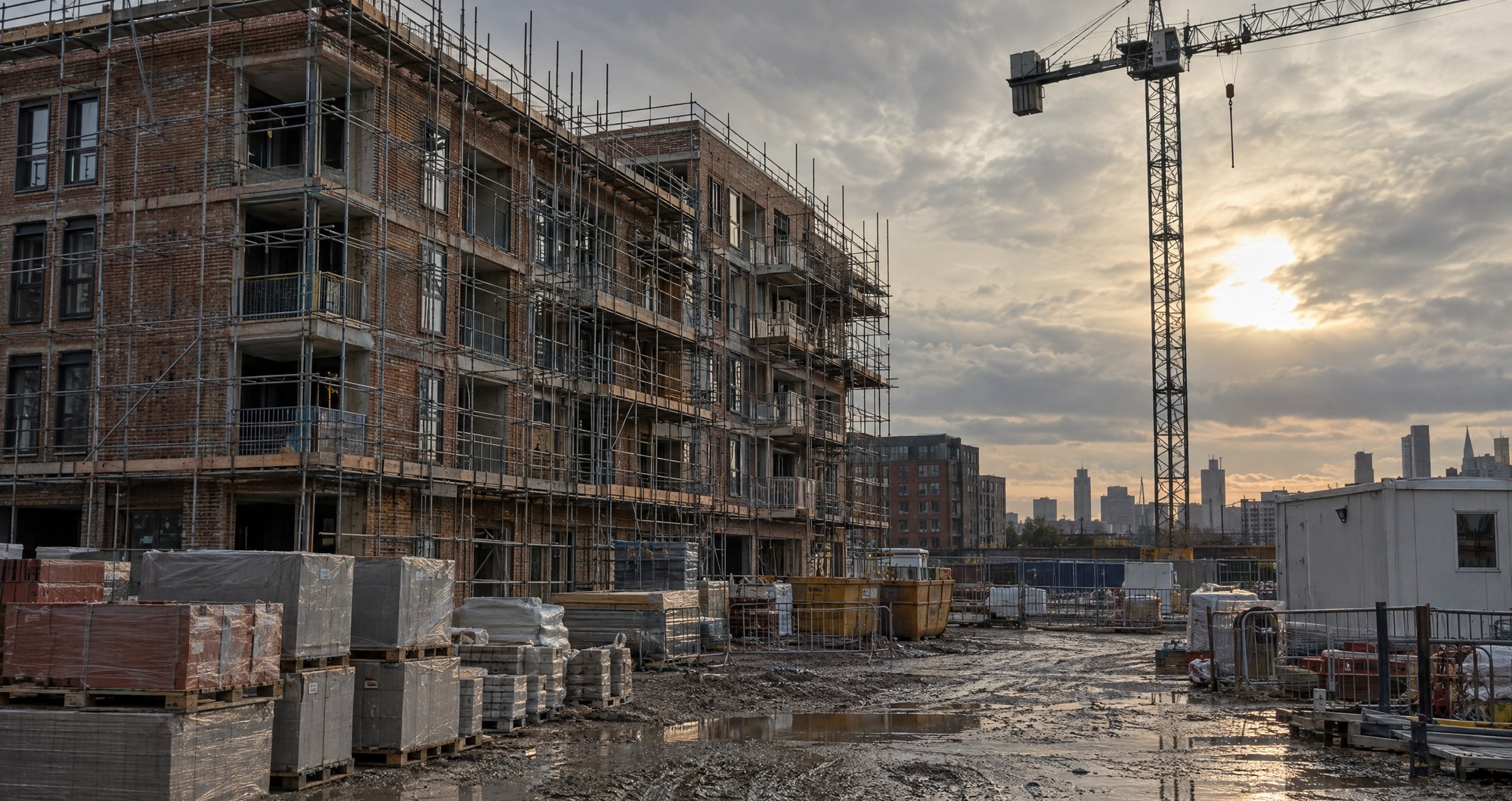

L&Q, one of London’s largest housing associations, has reported a £191 million half-year deficit as the sale of its private rented sector business produced a substantial loss and housing completions fell by about 38 per cent. The 105,000-home landlord completed 648 homes in the six months to 30 September 2026, compared with 1,052 in the same period a year earlier.
The results mark a reversal from the £93 million surplus recorded a year earlier. A £232 million loss on the disposal of Metra Living was the main driver of the deficit, while turnover, sales revenue and operating surplus also declined.
For London and the South East, the figures show a major housing provider delivering fewer completed homes while spending more on repairs and maintenance. They also show a distinction between its reduced output during the reporting period and a sizeable development pipeline that remains largely on site.
Metra Living sale drives half-year loss
L&Q sold Metra Living, its 3,200-home private rented sector portfolio, in June for just over £1 billion. The buyer was a fund managed by Morgan Stanley Real Estate Investing with Ridgeback Group.
The transaction generated a £232 million loss, despite its sale price exceeding £1 billion. That loss was larger than the overall half-year deficit, making the disposal central to the change in L&Q’s reported financial position. The sale also helped cut net debt to £4.2 billion.
The headline deficit therefore needs to be considered alongside the effect of the transaction. It was not simply a measure of the performance of L&Q’s ongoing housing operations, although the operating figures also weakened over the six months.
Turnover fell by 8 per cent to £469 million. Sales revenue more than halved to £31 million, while operating surplus dropped by 35 per cent, from £199 million to £130 million. L&Q remained in operating surplus even as it reported an overall deficit.
The lower sales revenue is another important part of the results, separate from the Metra Living disposal. The figures supplied do not establish how much of that fall reflected the number of properties sold, changes in prices or the timing of transactions.
Completions fall faster than starts
The 648 homes completed during the period were 404 fewer than the 1,052 delivered a year earlier. The decline of about 38 per cent represents a substantial reduction in completed output for a landlord of L&Q’s scale and makes its development performance a significant part of the half-year results.
Social housing tenures accounted for 69 per cent of completions. Most homes delivered during the six months were therefore in that category, rather than other tenures. The figures do not provide a further breakdown of those social housing completions.
Starts were more stable. L&Q began work on 613 homes, compared with 636 in the same period last year, a reduction of 23. That is a much smaller decline than the fall in completions, showing that the two measures moved at different rates.
Starts and completions describe different stages of development. The steadier number of starts does not reverse the reduction in homes finished during this reporting period, but it is relevant when assessing the activity continuing behind the lower completion total.
Repairs spending rises as financial measures weaken
L&Q increased capitalised major repairs spending by two-thirds to £65 million. Maintenance costs rose by £14 million to £144 million. Both figures show higher expenditure on its existing homes during a period when revenue and operating surplus were falling.
For a landlord managing 105,000 homes, expenditure on the existing stock sits alongside the cost of delivering new housing. The results show those pressures occurring together, but do not specify which types of repair accounted for the increase or establish a direct cause for the fall in completions.
Interest cover fell from 182 per cent to 117 per cent. The EBITDA-MRI margin also declined, from 40 per cent to 23 per cent. These weaker financial measures add to the picture of reduced operating headroom, alongside the lower surplus and increased repairs spending.
More than 6,000 homes remain in the pipeline
L&Q’s approved development pipeline stands at 6,181 homes, with 80 per cent already on site. That leaves a substantial programme under way despite the lower number of homes completed during the half-year.
Liquidity was nearly £1.7 billion, alongside net debt of £4.2 billion following the Metra Living sale. The next reporting period will show whether completions recover as schemes progress and whether operating performance strengthens. The current figures do not provide a timetable for completing the approved pipeline or a forecast for full-year delivery.