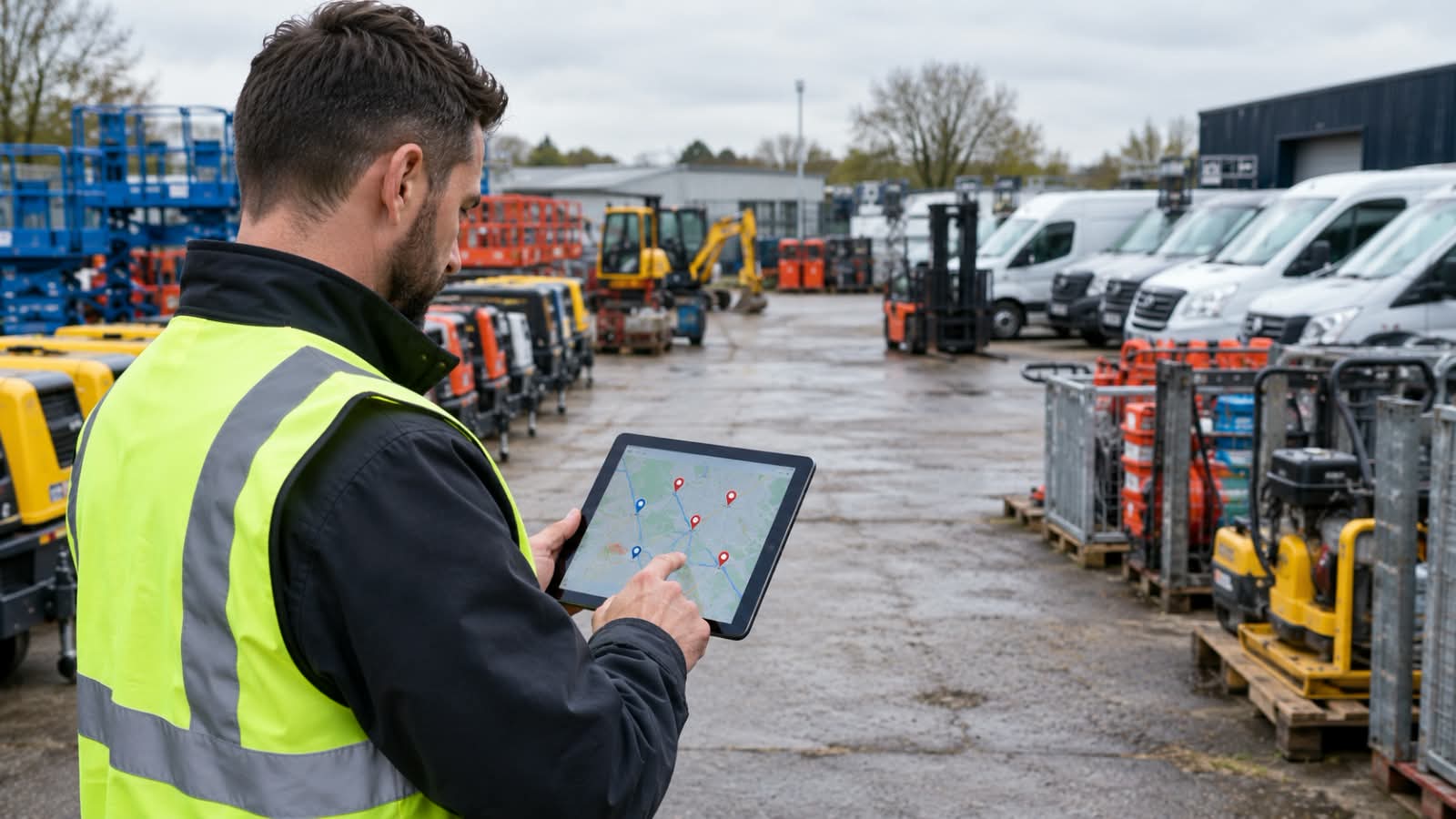

A map full of moving symbols can look impressive without helping anyone make a better decision. For a logistics team, equipment hire business, or field service operation, the value of tracking depends on whether location information is understandable, timely, and connected to a useful action.
Before choosing technology, identify the problem. Staff may spend too long locating equipment, dispatchers may struggle to confirm availability, or managers may lack a reliable record of asset movements. Each problem suggests different requirements. Starting with those requirements makes it easier to assess a service without being distracted by its longest feature list.
Describe the decisions the system must support
Consider a team sharing portable equipment across several worksites. Its main question may be which item is available nearby. A transport operation might instead need to identify vehicles that have not reached an expected destination. The first use case depends heavily on asset identity and status; the second depends on useful movement updates and an escalation process.
Write down who needs the information and what they will do with it. A dispatcher, maintenance coordinator, and security manager may need different views of the same asset. Giving everyone the same dashboard can create unnecessary complexity and expose more information than their roles require.
J6 Solutions describes a secure asset tracking solution through its J6S Tracker platform, including location history, geofencing and notifications. Those categories offer useful starting points for a purchasing discussion, but buyers should test how the proposed configuration supports their own workflow and access requirements.
Separate location, connectivity and availability
A tracking system needs a way to establish position and a way to send that information to the people using it. Those are separate functions. A device might determine where it is but be unable to transmit an update immediately. Conversely, a connected device may have an uncertain position in a difficult environment.
Ask how the interface distinguishes a recent update from an old one. The last known position should be accompanied by a visible timestamp, and users should understand what an offline status means. An apparently precise point can otherwise encourage more confidence than the underlying information warrants.
Availability is another separate question. An asset located at a depot may already be allocated, awaiting inspection or unsuitable for the next job. Decide whether those states belong in the tracking platform or an integrated booking system. Clear responsibilities prevent the location map from becoming an unreliable substitute for an inventory.
Match the device to the working environment
Device selection should follow the asset’s use. Consider how it will be mounted, who will inspect it and whether workers can reach it for maintenance. A small removable tag and a permanently installed unit present different practical trade-offs.
Battery claims also need context. Ask what reporting interval, temperature range and movement pattern underlie a quoted operating life. Test a representative device under normal working conditions, including quiet periods and unusually busy days. A charging process that works in an office may fail when equipment changes hands across shifts.
Create a short device record for each installation. Include the asset identifier, device identifier, responsible team and maintenance expectations. When a device is replaced or transferred, update that record promptly. A technically accurate location becomes misleading if it is associated with the wrong piece of equipment.
Turn security claims into specific questions
The word “secure” should lead to a discussion about controls, not end it. Ask how accounts are authenticated, how access is restricted, and what happens when a device or credential is lost. Establish whether administrators can review changes to users, permissions, and important settings.
Different roles should receive access suited to their responsibilities. A regional supervisor may need only their own area’s assets, while a system administrator needs configuration access. Request a demonstration using representative roles so that permissions can be assessed through ordinary tasks.
Also ask how information is protected during transmission and storage, how backups are handled and what the provider’s incident process includes. Where movements can identify individuals, involve the organisation’s privacy adviser in decisions about purpose, transparency, access and retention. Product capability alone does not settle those governance questions.
Design alerts around a response
A geofence is a defined area used to trigger events when a tracked device enters or leaves it. Its value depends on the action that follows. A depot departure notification may help confirm a dispatch, while an unexpected movement alert might prompt a verification call.
Too many low-value alerts can obscure the important ones. During a pilot, record which alerts led to useful action and which reflected expected activity or boundary effects. Adjust rules carefully, and keep a record of why significant changes were made.
For each important alert, agree:
- Who receives it during normal hours and outside them.
- What information the recipient needs to verify the event.
- How quickly someone is expected to review it.
- Which action is appropriate after verification.
- Who receives the escalation if the first contact is unavailable.
- How the event is closed and recorded.
An SOS feature needs particularly clear arrangements. Establish what it sends, who monitors it, and what happens if connectivity is unavailable. Do not assume a software notification automatically reaches emergency services or guarantees a response.
Run a pilot that exposes ordinary failures
A useful pilot includes the conditions most likely to cause confusion: weak coverage, low batteries, handovers, temporary device removal and staff absence. Ask ordinary users to complete real tasks instead of relying entirely on a supplier demonstration.
Choose a few measurable outcomes. These might include the time needed to locate available equipment, the proportion of devices reporting as expected, or the number of alerts that required action. Compare the results with the original problem, while accounting for changes in workload.
Test how information leaves the platform as well as how it enters. Confirm what records can be exported, which identifiers remain attached and whether another system can interpret them. Agree an exit process before a service becomes embedded in daily operations.
Keep ownership clear after launch
Assign responsibility for users, devices, data quality and supplier contact. Those tasks may sit with different teams, but each needs an owner. Review access when roles change and make device checks part of the relevant maintenance routine.
Tracking becomes useful through this combination of technology and everyday discipline. A well-chosen system shows what is known, makes uncertainty visible, and gives someone a clear next action. When those elements are in place, location data can support dependable decisions without becoming another screen that staff must constantly interpret.