
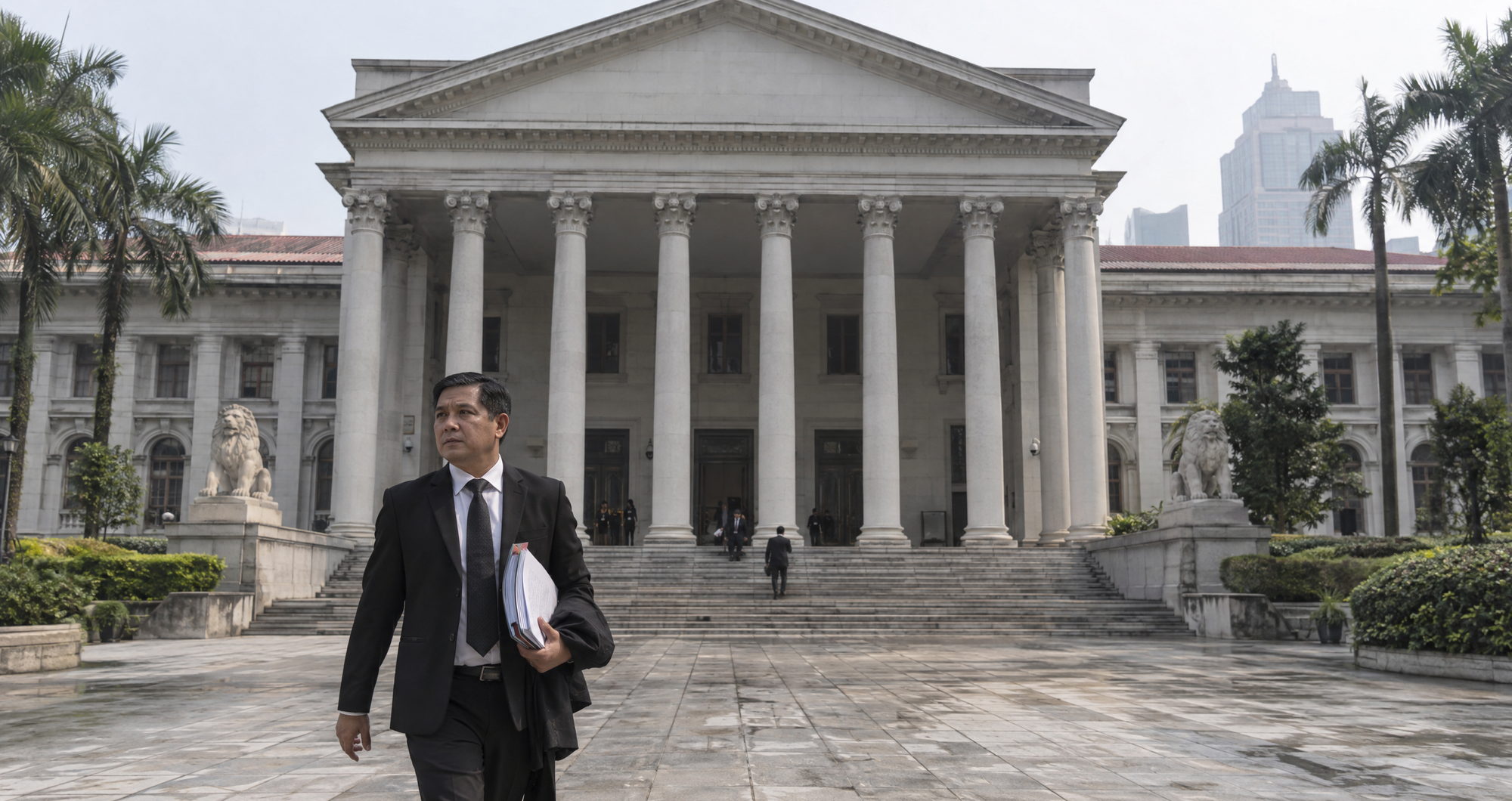

President Ferdinand Marcos Jr has appointed Supreme Court Associate Justice Rodil Zalameda as the Philippines’ 28th chief justice, bypassing two more senior colleagues in a decision announced on 5 November.
Zalameda succeeds Alexander Gesmundo, who retires on 6 November. The appointment was announced by the presidential communications office chief, Lino Cayetano.
The appointment
Zalameda is 63 and will serve until he reaches the mandatory retirement age of 70 in August 2033, giving him almost seven years in the role. That is longer than most recent chief justices, whose terms have been shortened by retirement or removal.
Marcos skipped the seniority convention, passing over Senior Associate Justice Marvic Leonen and Associate Justice Alfredo Benjamin Caguioa. Both were appointed by earlier administrations, and Leonen in particular has been a frequent dissenter in cases involving the previous government.
It is the first chief justice appointed by Marcos Jr. Gesmundo was appointed by Rodrigo Duterte in 2021.
The record
Zalameda wrote the ruling that cleared Imelda Marcos, the president’s mother, of seven graft counts, a decision that attracted international attention when it was issued.
He also wrote the 2024 decision in Deduro v Vinoya, which addressed the practice of red-tagging, the labelling of activists and community organisers as communists. The ruling set limits on how the state and the military can characterise individuals and groups.
His record is that of a careful technician rather than a public intellectual, and his opinions have tended to follow precedent closely. That profile makes him a predictable choice for a president who wants a court that does not generate political crises.
The politics of judicial appointments
The chief justice heads a court that has become a central arena in Philippine politics, ruling on cases involving former presidents, election protests, the vice presidency and the constitutionality of government policies.
Seniority is a convention rather than a legal requirement, and presidents have bypassed it before. Each departure from the convention is read as a signal about the court’s independence, particularly when the appointee is seen as closer to the administration.
Legal groups have criticised the decision, arguing that it politicises the court at a time when public confidence is fragile. The presidential office has defended it on the basis of merit and of the need for a chief justice who can manage the court’s administrative reforms.
What Zalameda has said
He has identified courthouses, technology and staff benefits as priorities, arguing that delays in the judicial system are often caused by infrastructure and process rather than by law.
Those are unglamorous problems, and progress on them would be measured in case disposition rates and in the time it takes to resolve ordinary disputes. They matter more to most litigants than the constitutional cases that attract headlines.
What to watch
The court will soon face cases involving the government’s economic programmes, the impeachment of senior officials and the continuing dispute with the International Criminal Court over the previous administration’s drug war.
How Zalameda handles those cases, and whether he can hold a court together that includes justices appointed by three different presidents, will determine whether the appointment is remembered for continuity or for control.







