
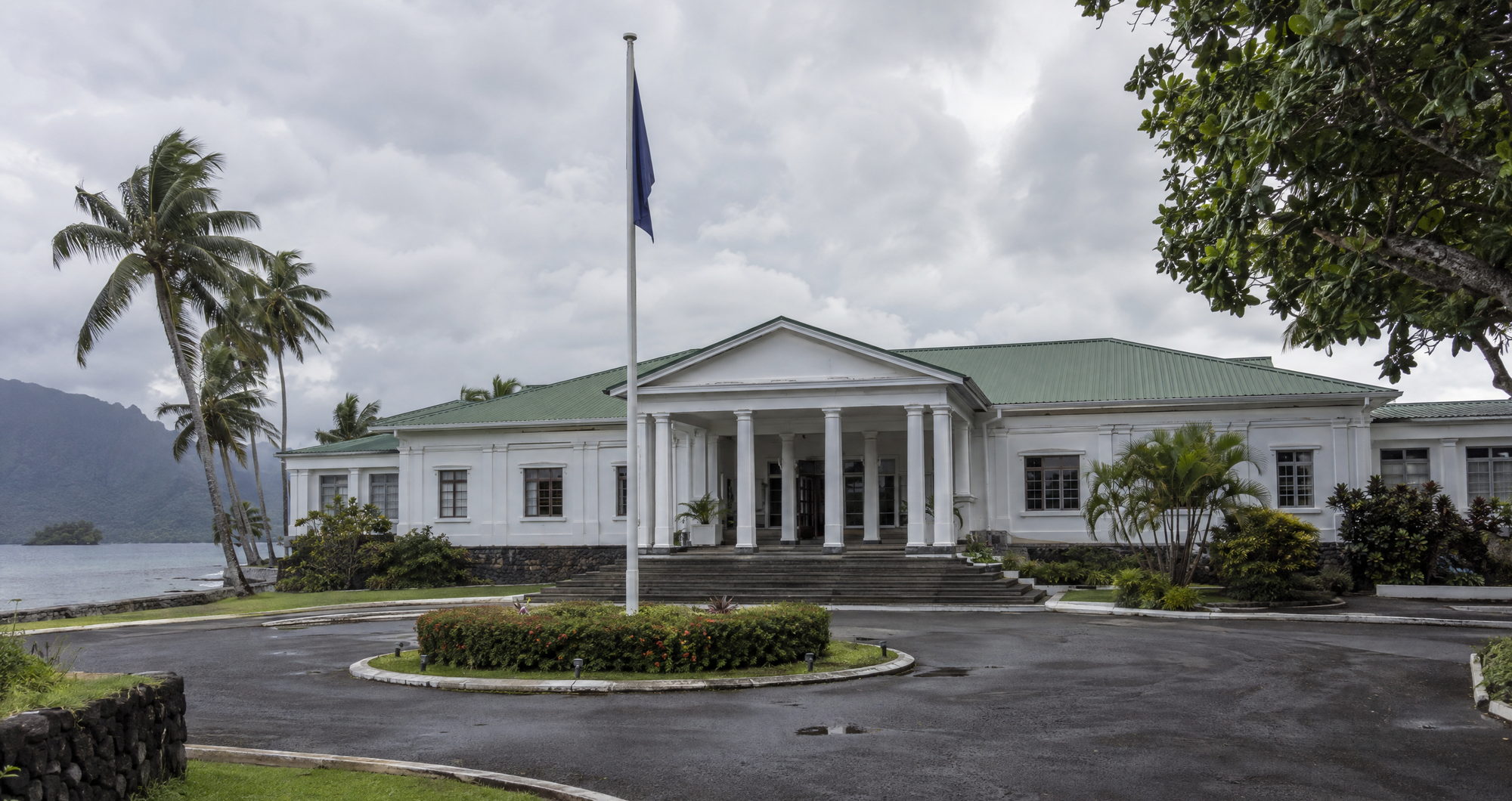

The Solomon Islands has begun a two-day constitutional retreat aimed at reducing political instability, with proposals to restrict no-confidence motions, prevent MPs from switching parties and fix a minimum parliamentary term.
The event, held at Parangiju Mountain Lodge in Central Guadalcanal on 4 and 5 November, was convened under the theme of advancing constitutional reform through policy, legislative strategy and institutional consultation.
The proposals
Six pillars are under discussion: responsible use of no-confidence motions, anti-defection measures, rules-based government formation, a stable and continuous parliamentary term, safeguards for parliament and the judiciary, and constitutional recognition of the country’s Christian identity.
Participants include the prime minister’s office, the attorney general’s chambers, the national parliament, the ministry of justice and legal affairs, and the political parties commission. The presence of those bodies suggests the reforms are being prepared as legislation rather than as an academic exercise.
The country has seen six no-confidence motions in ten years, including one in May 2026 that removed Jeremiah Manele and installed Matthew Wale as prime minister. Each change of government resets the policy programme and the public service leadership.
Why instability matters
The Solomon Islands is a small state of around 700,000 people spread across hundreds of islands. Government turnover disrupts budget execution, delays infrastructure projects and makes it difficult to negotiate with donors, who need continuity to commit funding.
The country also sits at the centre of regional competition. It signed a security agreement with China in 2022, and its decisions on policing, telecommunications and port access are watched closely by Australia, New Zealand and the United States.
A government that changes every year is easier for external powers to influence and harder for its own institutions to hold to account. That is the argument for reform that the retreat’s organisers are making.
The constitutional difficulty
Anti-defection provisions are common in the Pacific but difficult to design. If an MP who leaves a party loses their seat, the party leadership gains control over individual members, which can entrench leaders and weaken accountability.
Restrictions on no-confidence motions raise similar questions. A requirement that a motion be supported by a minimum number of MPs, or a cooling-off period after an election, can prevent frivolous challenges, but it can also protect a government that has lost the confidence of the house.
A Victoria University of Wellington academic, Jon Frankel, has argued that anti-defection rules only work where parties are strong enough to enforce them and where the courts are willing to adjudicate disputes about membership.
What happens next
The retreat is expected to produce a set of recommendations for cabinet, which would then need to draft a constitutional amendment bill. Amendments require a special majority in parliament, and in some cases approval at a referendum.
Prime Minister Matthew Wale is recovering in an Australian hospital, and his absence may slow the process. His government has made political stability one of its priorities, which gives the reforms a reasonable chance of reaching the floor.
Whether they survive scrutiny is another matter. Constitutional change in a country with a recent history of unrest, including the riots of 2021, tends to be judged on whether it protects incumbents or fixes a genuine problem.







