
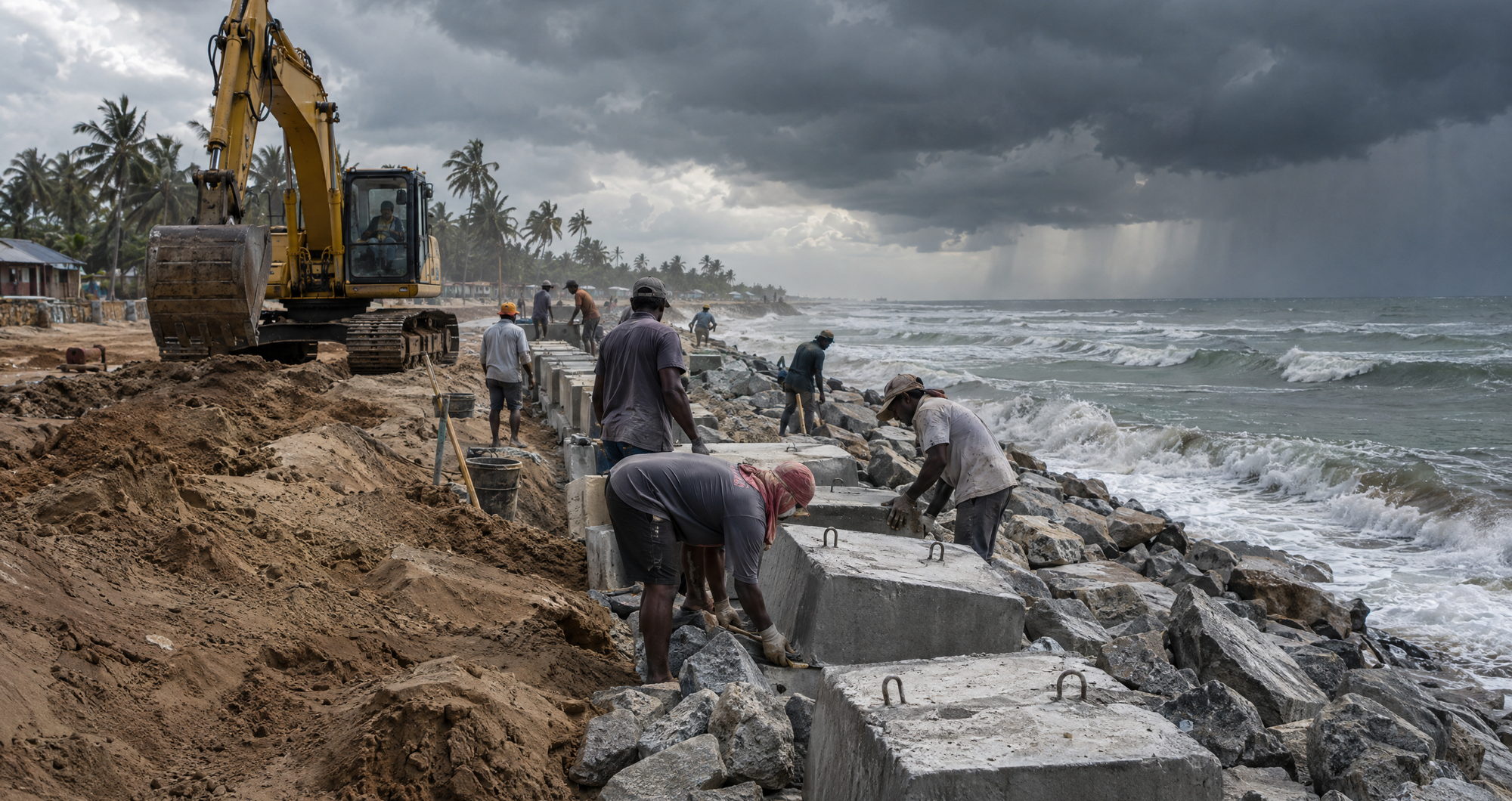

Developing countries will need around $305bn a year for climate adaptation by 2035, and even tripling international public adaptation finance would cover only 20 to 29 per cent of that need, according to a United Nations report published on 4 November.
The Adaptation Gap Report, subtitled Ready? Not, also warns that the barriers to adaptation are institutional as well as financial.
What the report finds
The headline figure is the gap between what is needed and what is being provided. The report models a scenario in which international public adaptation finance triples by 2035, an aspiration associated with the COP30 process, and finds that it would still leave most of the need unmet.
It also notes that warming is set to exceed 1.5C, which means the assumptions behind many adaptation plans are already out of date. Infrastructure designed for a climate that no longer exists will fail earlier and more often than planners expect.
The report was presented at a joint high-level event during COP31, which runs in Antalya, Turkey, from 9 to 20 November.
Why money is not the only problem
The report identifies institutional barriers: weak planning capacity, unclear responsibilities between ministries, difficulty in accessing funds, and projects that are too small to attract international finance.
A country may have a national adaptation plan and no mechanism to turn it into projects. A city may know that its drainage needs upgrading and lack the authority to borrow the money. A ministry may be able to secure a grant and be unable to manage the procurement.
Those problems are not solved by increasing the size of the cheque. They require changes in how governments plan, budget and procure, which take longer than writing a funding commitment.
The politics of adaptation finance
Adaptation has long been the poor relation of climate finance, which has concentrated on reducing emissions because that is where the global benefit lies. Adaptation spending benefits the country that does it, which gives donors less incentive to pay.
Developing countries have argued for years that the balance is unfair, since the emissions causing the problem came largely from industrialised nations. The response has been a series of pledges that have been slow to materialise and difficult to count.
The report’s contribution is to put a number on the gap and to show that even the most generous plausible increase in public finance would not close it. That implies a much larger role for private capital, which is difficult in adaptation because many projects do not generate revenue.
What it means for COP31
The conference in Antalya will test whether governments are willing to commit to adaptation targets with the same seriousness as mitigation targets. The report gives them the evidence to justify ambition and the excuse to say that money alone will not be enough.
For vulnerable countries, the practical consequence is that adaptation will continue to be funded project by project, with long application processes and uncertain outcomes. That is slower and more expensive than programme funding, but it is what the current system delivers.







