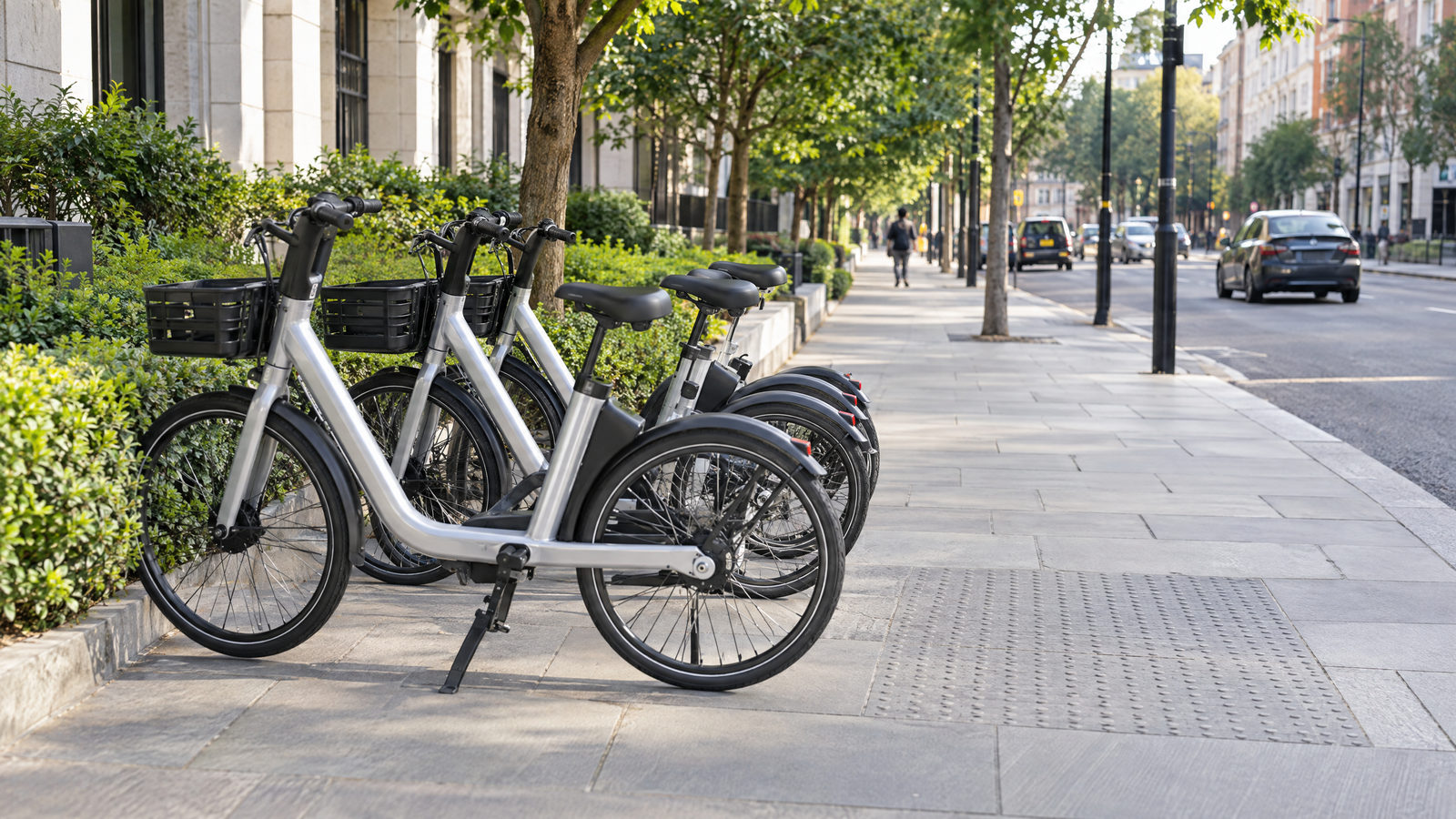

The Mayor of London has set out a plan for Transport for London to take on a future licensing role for dockless e-bike hire across the capital. The proposal is not yet a working scheme. It depends on the Government completing secondary legislation and issuing guidance that would allow TfL to use the powers envisaged in the English Devolution and Community Empowerment Act 2026.
If those steps are completed, the proposed arrangement would replace the present borough-by-borough patchwork with one pan-London framework. That could affect the rules applied to operators, the way bikes are parked and removed, how fleets are managed, and the information shared to support enforcement and planning. For people who use hire bikes, the intended change is a more consistent set of expectations when a journey crosses a borough boundary.
What the proposed framework would cover
The Mayor’s vision is for a single licensing system covering parking, operations, regulation and enforcement. It is designed to address a familiar tension in the rapid growth of dockless hire: bikes can make short journeys easier, but poorly parked machines can obstruct pavements, entrances and space needed by people walking, wheeling or using mobility aids.
Under the proposal, TfL would set city-wide standards for operators rather than leaving each borough to negotiate its own arrangements. The stated ambitions include well-maintained bikes, rider education, responsible behaviour and more effective enforcement. The framework would also seek to make data sharing more useful, so that compliance can be monitored and places needing more parking capacity can be identified more quickly.
Parking is likely to be one of the most visible tests. The plan describes a move away from dealing with obstruction only after a complaint or removal is needed. It envisages using monitoring data to target investment and resolve recurring problems. That does not mean every street will have the same parking layout, nor does it settle the future rules on fleet size or operator fees. Those details would need to be developed after the enabling legislation and guidance are in place.
Why the legal timing matters
The legislation creates a route for the Secretary of State for Transport to give TfL statutory powers over dockless micromobility schemes. But it does not, on its own, switch on a London-wide licensing regime. Further secondary legislation is still needed, and the Department for Transport and the Secretary of State are expected to consult on that next stage.
Until then, the existing borough arrangements remain in force. The Mayor and TfL say they will work with boroughs while preparing for the possible transition, rather than waiting until the final legal steps have been completed. TfL has also said it will publish further detail on the Mayor’s vision later this year, alongside shorter-term work intended to improve how services operate now.
That distinction is important for residents and riders. The announcement is a policy direction and a request for the Government to act quickly; it is not a new licence, a change to current parking rules or an immediate restriction on any operator. Any future TfL role would be exercised only once the relevant powers have been provided.
A growing part of London’s cycle network
The proposal comes as cycling continues to grow in London. City figures put daily cycle trips 43 per cent higher than in 2019, while the Cycleways network has expanded from 90km in 2016 to more than 450km. TfL estimates that dockless bikes accounted for more than one in 10 cycling journey stages in 2024.
Existing parking provision is also expanding. TfL says £1.7m has been made available to London boroughs for micromobility parking this year and that there are already more than 36,000 spaces on the streets. The proposed framework would aim to build on that work by linking parking provision, operator data and enforcement across the capital rather than treating each borough boundary as a separate system.
The practical question now is how quickly the Government completes the remaining legal work. If it does, TfL and the boroughs will have to turn the Mayor’s broad aims into detailed standards that protect accessible streets while keeping dockless e-bikes available as part of London’s transport mix.