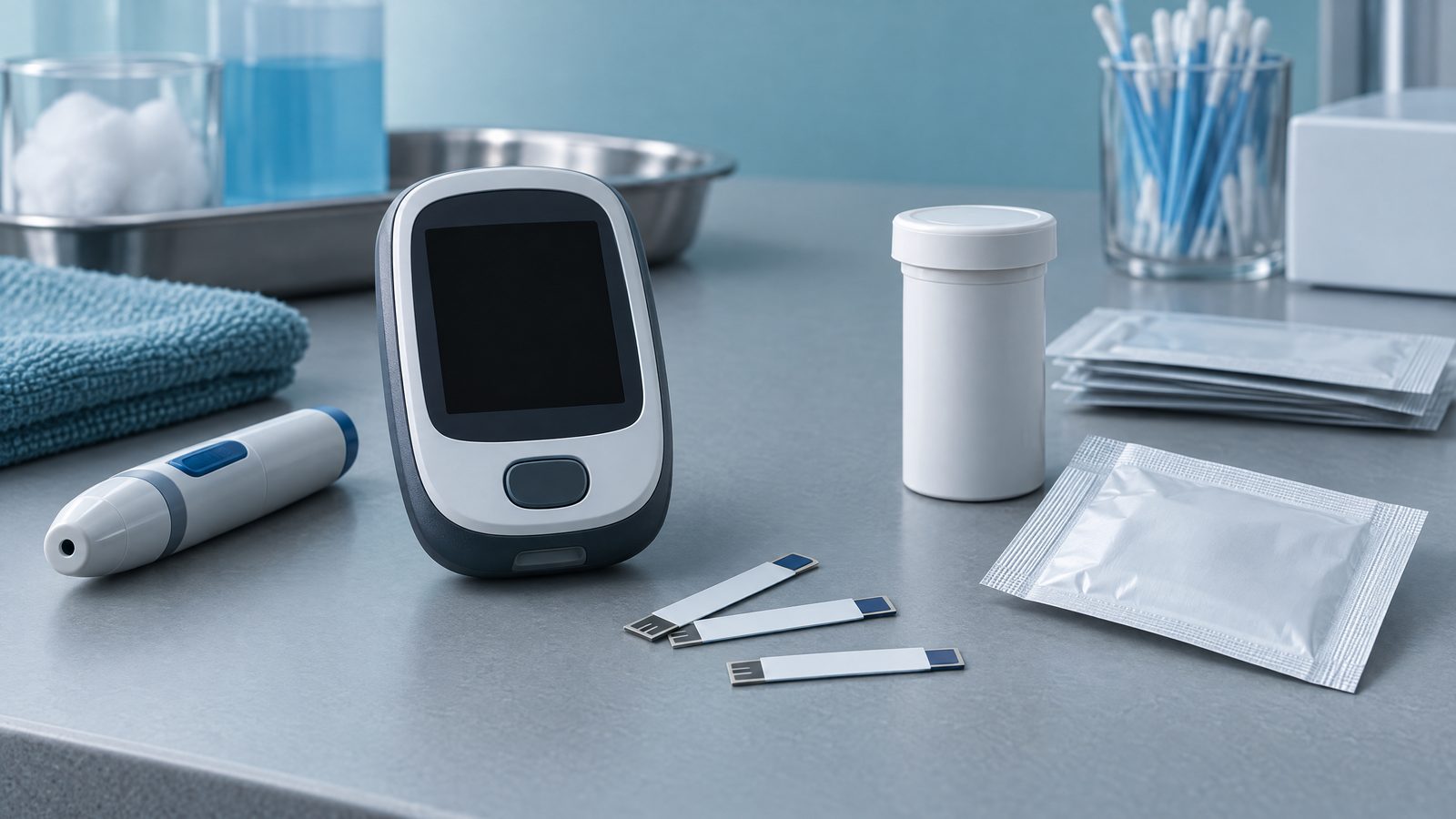

A recall of some Nova Biomedical StatStrip blood-ketone test strips could reduce rapid testing capacity across NHS services, with replacement stock not expected in the UK for about four weeks. The Medicines and Healthcare products Regulatory Agency (MHRA) says specified lots have experienced repeated quality-control failures and should not be used. Nova Biomedical has paused distribution of affected lots, and further lots may have to be withdrawn if they fail checks.
The alert describes a risk of a progressive squeeze on usable stock rather than a confirmed nationwide exhaustion date. Organisations are being asked to establish which lots remain available, assess how much testing they can sustain and plan for the possibility that more stock becomes unusable. The four-week estimate concerns replacement availability; it is not a guarantee that each service has four weeks of supply.
Services asked to map capacity and alternatives
Rapid blood-ketone testing is used in emergency departments, acute and paediatric services, ambulances, community hospitals, primary care and other settings where people may be assessed or monitored outside a main hospital. The alert says the potential disruption may therefore reach beyond hospital laboratories, particularly where a near-patient result is needed and laboratory testing is not immediately available.
Healthcare organisations are asked to check the lots they hold and stop using those identified in the recall. For lots not recalled, staff should follow the product instructions. If a lot fails quality-control testing twice in succession, it should be removed from use and the organisation should switch to another lot if available or use an alternative blood-ketone method. Services are also asked not to assume that current stock will last as long as usual, because further lots could be withdrawn following failures.
Planning includes counting usable strips, locating testing devices and estimating when supplies could run out. Organisations are asked to identify and validate alternatives, including other point-of-care devices and laboratory testing, and to ensure that clinical, procurement, testing and governance teams share local contingency arrangements. A substitute method needs to be checked as suitable for the service using it; the alert does not suggest that every alternative is immediately available or interchangeable.
Priority where rapid testing is most critical
If supply is constrained, the regulator says available blood-ketone testing should be prioritised for people at greatest clinical risk. Its examples include suspected or established diabetic ketoacidosis (DKA), children, acutely unwell people with type 1 diabetes and those needing repeated measurements during DKA treatment. Organisations are also asked to have escalation arrangements for situations where clinically indicated testing cannot be provided, and to maintain a documented contingency plan until confirmed, validated capacity can meet foreseeable demand.
Blood-ketone measurements help clinicians assess and monitor DKA, a potentially life-threatening complication of diabetes. The alert notes that a concentration above 3 mmol/L may indicate DKA and require emergency assessment. It also says timely testing may be important when DKA is suspected, during treatment, or when clinicians need to judge whether a patient is responding. These points describe the service-level reason for prioritisation; they are not individual diagnostic advice.
The greatest concern identified is a loss of timely testing when someone is acutely unwell or DKA is suspected or being treated, and no clinically appropriate validated alternative is immediately accessible. Possible consequences described by the regulator include delays in recognising or assessing DKA, treatment decisions, escalation or hospital transfer, and monitoring response. They are potential risks, not evidence that a particular service has experienced a delay or that harm has occurred.
The alert says UK replacement stock is expected in approximately four weeks and that the Department of Health and Social Care will issue clinical guidance. The supply position may change if additional lots fail quality checks, so NHS organisations are being asked to monitor stock and implement local plans rather than rely on a single forecast. The notice also advises distributors to follow recall and stop-ship instructions and not supply lots identified as unsuitable for use.