
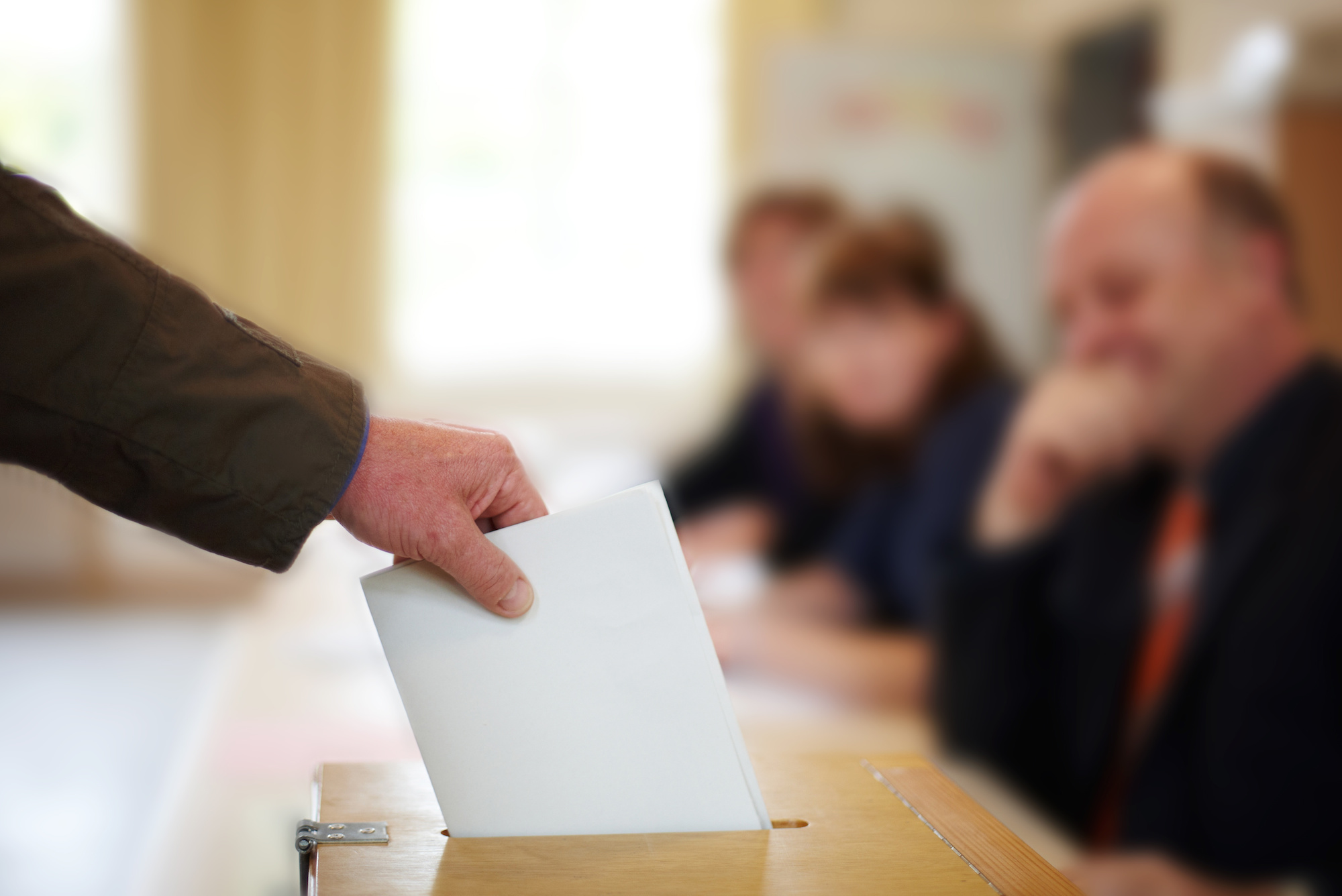

Bosnia and Herzegovina voted on 4 October in one of the most complicated elections anywhere in Europe, and the preliminary results told a familiar story. Ethnic parties dominated. Turnout fell to a record low of around 42 per cent, roughly ten points down on 2022. Milorad Dodik, barred from public office after his 2025 conviction for defying the High Representative, still declared victory on behalf of his party. What was largely absent from the campaign was the one question on which most Bosnians actually agree: their country’s future in the European Union.
Few people know the country’s machinery better than Miroslav Lajcak, the Slovak diplomat who served as High Representative and EU Special Representative for Bosnia and Herzegovina from 2007 to 2009 and later as Slovakia’s foreign minister. Speaking to Slovakia’s TA3 television the morning after the vote, he described a political system that almost guarantees the outcome it produces, and a European Union that was, as he put it, not a factor in the election at all.
A system built to reward ethnic parties
Voters chose representatives at four levels: the three members of the state presidency and the lower house of the state parliament; the president and assembly of Republika Srpska; the lower house of the Federation; and the assemblies of the Federation’s ten cantons. The Dayton constitution recognises three constituent peoples, Bosniaks, Serbs and Croats, and organises political life around them. In practice, as Lajcak explained, Serbs vote for Serb representatives, Croats for Croats and Bosniaks for Bosniaks. That creates something close to three parallel elections, and in that environment parties with an ethnic profile will almost always beat parties with a civic one. Citizens outside the three groups cannot stand for the presidency, an arrangement the European Court of Human Rights found discriminatory in its 2009 Sejdic and Finci judgment.
The preliminary figures bear this out. Zeljka Cvijanovic of Dodik’s Alliance of Independent Social Democrats (SNSD) won the Serb seat on the presidency with about 55 per cent. Darijana Filipovic of the Croatian Democratic Union (HDZ BiH) took the Croat seat. Denis Becirovic won a second term in the Bosniak seat, while the Party of Democratic Action (SDA) of Bakir Izetbegovic led the race for the Federation parliament after four years in opposition. Because the constitution rests on collective rather than individual rights, the winners must now agree a government together after campaigns fought largely against each other.
Everyone wants Europe, nobody campaigns on it
Every major party formally supports EU membership. The real dividing line, Lajcak noted, is the balance of power between the state and the two entities. Sarajevo-based parties and much of the international community want stronger central institutions; Banja Luka resists surrendering further competences. Each community has therefore looked for international advocates to back its position, and the map of those advocates has shifted. Dodik’s victory speech thanked Donald Trump and Vladimir Putin, a sign of how far the change of administration in Washington has shifted the calculus in Banja Luka. The United States lifted its sanctions on Dodik and his associates in October 2025.
The accession process, meanwhile, has stalled. Bosnia and Herzegovina received candidate status in December 2022, and EU leaders agreed in March 2024 to open accession negotiations, subject to further steps. Progress has since stopped on two practical points: the appointment of a chief negotiator, which has become caught up in arguments over which community and which party should provide one, and the completion of judicial reform. The cost is measurable. According to the EU’s foreign policy chief Kaja Kallas, the country has already lost 108 million euros under the EU Growth Plan and risks losing a further 370 million if the reform agenda is not implemented.
Lajcak’s sharper point concerns credibility. When the Union sets conditions that go beyond a normal accession process, some of them barely achievable, and then backs away from them, it loses authority and citizens lose faith that membership will ever arrive. That is when they start looking for other partners. No leading candidate promised faster integration during this campaign, and Brussels played little visible role in how the results were read.
London’s stake in the outcome
Britain sits on the Steering Board of the Peace Implementation Council, the body that oversees the Office of the High Representative. That office has been led on an acting basis since July 2026, after Christian Schmidt stepped down and Washington and European capitals failed to agree on a successor. London also maintains the sanctions it imposed on Dodik and Cvijanovic in April 2022 for undermining the Bosnian state, and kept them in place after Washington lifted its own. With Cvijanovic re-elected to the state presidency, the question of how Western governments engage with Bosnia’s new leadership, and whether they do so with one voice, matters more than ever. London’s continued sanctions, set against Washington’s decision to lift its own, leave that question unresolved.
Voting with their feet
The other message of this election is the empty polling station. Emigration is a region-wide phenomenon, and recent censuses across the former Yugoslavia have recorded falling populations. He pointed to the obvious drivers: higher living standards elsewhere, visa-free travel to the Schengen area, few jobs at home and persistent weaknesses in the rule of law. His most striking observation was a simple one. When people do not see their state moving closer to the EU, many decide to move closer to it individually.
Yet the appetite for Europe has not gone away. Drawing on his own travels across the country, he noted that people’s everyday concerns are the same whatever their faith or ethnicity: a dignified life, a job and basic social security. EU membership remains the only issue with majority support in both entities and among all communities. Kallas has put national support above 70 per cent.
Putting Europe back on the ballot
If the EU wants its offer to count in Bosnia’s next political cycle, three things matter.
- Make the reward concrete and close. Growth Plan funding, phased access to parts of the single market and visible infrastructure speak to voters more directly than a distant membership date.
- Keep conditions few, achievable and firmly applied. A chief negotiator and the outstanding judicial laws are realistic steps. Moving the goalposts in either direction erodes the credibility on which the whole process depends.
- Speak with one Western voice. Brussels, London and Washington do not need identical policies, but they do need to stop sending competing signals to Bosnia’s leaders, starting with a settled arrangement for the Office of the High Representative.
Lajcak has observed that politicians elsewhere are elected to shape the future, while in Bosnia they sometimes seem more intent on reshaping the past. For Slovakia, joining the EU was the national priority of a generation. Across much of the Western Balkans, the priority is still coming to terms with the 1990s. The career of Miroslav Lajcak has run through the region since he served as the EU’s envoy for Montenegro’s 2006 independence referendum, and the lesson of that work applies here too: the European future has to feel more real to voters than the arguments about their past. This election suggests that work has barely begun.







