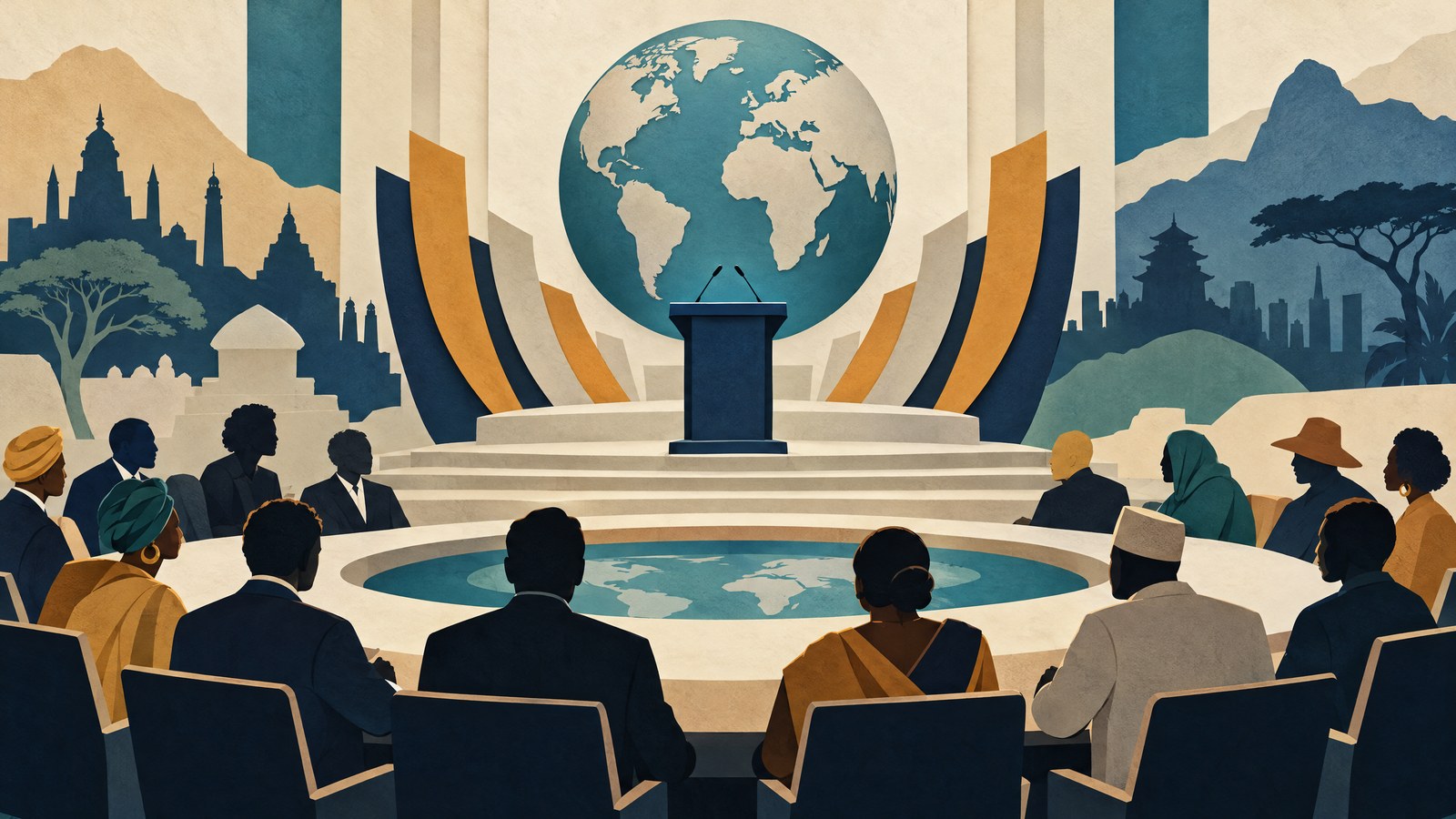

Modi calls for stronger global institutions and a greater Global South voice
Indian Prime Minister Narendra Modi has called for international institutions to reflect changes in the world economy and give the Global South a greater role in decision-making. Addressing an international summit in New Delhi on 22 October, he argued that cooperation should endure during crises, not only when conditions are favourable.
Modi framed his remarks around what he described as a period between global orders. He said established institutions had not adapted sufficiently as new economies and powers emerged, while challenges had become more complex. In his view, the distance between current realities and older decision-making arrangements is growing.
A call to adapt multilateral institutions
The prime minister pointed to the United Nations as an institution founded on dialogue and cooperation after the Second World War. He argued that its historical role remains significant but that the limits of existing global bodies are increasingly apparent in addressing contemporary problems. His proposed direction was reform: stronger institutions, wider representation and a more substantial voice for countries of the Global South.
Modi also warned that international cooperation should not disappear when circumstances become difficult. He recalled the divisions and competition for resources seen during the Covid-19 pandemic and argued that a system built around shared human welfare is needed to prevent stronger countries from simply pursuing their own interests. These were political arguments advanced in the address, rather than decisions agreed by governments at the summit.
He described trade, technology and sea routes as areas that can become sources of tension as well as connection. The address presented dialogue and consensus among stakeholders as necessary to reduce the risks created by that changing environment. It did not announce a new treaty, institutional reform package or implementation timetable.
India’s capabilities and global resilience
Modi linked India’s domestic development to his case for international cooperation. He said building national capabilities could also strengthen global supply chains, productivity and resilience. The prime minister presented India as moving beyond a role centred on back-office services towards technology design, research and innovation.
As examples of capability-building, he cited India’s non-fossil electricity capacity passing 300 gigawatts and the restart of domestic Penicillin G production in Kakinada, Andhra Pradesh. Those figures and descriptions were claims made by the prime minister in his address; they have not been independently verified here. He also referred to investment in pharmaceutical ingredients and semiconductor design, positioning manufacturing and research as part of a broader effort to reduce reliance on overseas supply.
His remarks connected these domestic priorities with the ability to contribute internationally during disruptions. The argument was that a stronger productive base can help India support wider resilience, while international cooperation can make shared systems less vulnerable. The speech did not establish that any particular supply-chain risk has been resolved.
Political appeal, not a new agreement
The address combined a call for changes to global governance with a defence of India’s development approach. Modi cited past cooperation through international forums and said India could build consensus across differences. The summit address itself, however, should be understood as the prime minister’s policy argument, not as evidence that other governments endorsed a specific reform or committed to new joint action.
The practical significance of the appeal will depend on whether governments take up institutional reform and agree how representation should change. The speech set out a broad principle rather than a negotiated outcome: global bodies should better match contemporary realities, and cooperation should remain effective through crises.
Modi’s message thus joined two themes: a more representative multilateral system and investment in domestic capacity. His stated case was that both are relevant to global resilience, while the claims about India’s achievements remain attributed to him rather than independently established in this report.