
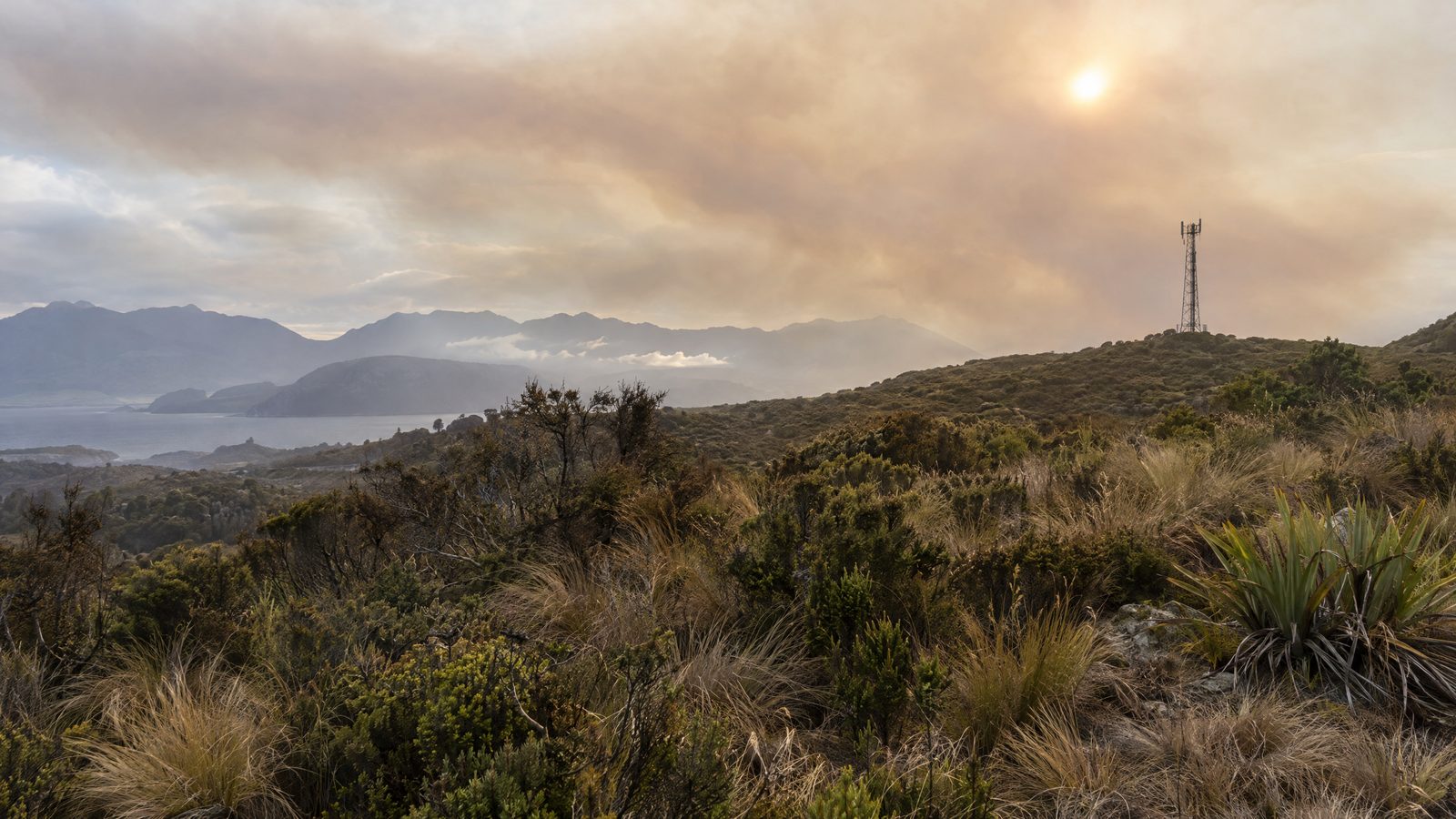

Southland scrub fire remains active as wind limits response and threatens telecommunications towers
A vegetation fire in the Centre Hill area of Southland remained active on Monday after strong winds restricted the response. Nearly 80 hectares had been affected by the time of the latest operational update. The fire had drawn an aerial response on Sunday, with crews working to protect two nearby telecommunications towers.
The update concerns an evolving incident rather than a confirmed outcome. The fire was still burning when the situation was assessed on Monday morning, while high winds prevented aircraft from operating. Fire and Emergency New Zealand said firefighting would resume when conditions allowed. The cause had not been established and investigators were expected to examine it.
Six helicopters had earlier worked with monsoon buckets near Centre Hill, a rural area in northern Southland near Mossburn. Their immediate task was to protect the communications infrastructure close to the fire. That priority remained central as weather conditions became the main limit on the next stage of the response.
During the earlier phase, Fire and Emergency New Zealand said there was no risk to people or homes. That assessment was made while crews were managing the fire and should not be read as a declaration that the incident was over. It described the public-risk position at that point, while responders continued to monitor a fire in exposed country.
There had been no deployment of ground crews at the time of the later update. Fire and Emergency New Zealand linked that decision to the terrain, which includes high-country grazing land and conservation land. The absence of a ground operation was therefore reported as an operational constraint, not as evidence that the fire had been contained or extinguished.
Weather was a major part of the changing picture. An earlier forecast warned of gusts of up to 100km/h overnight. By Monday, an orange strong-wind warning for Southland included severe gales of up to 130km/h in exposed places. The different figures relate to forecasts issued at different stages of the incident and should not be treated as a single measured wind speed at the fireground.
A heavy-rain watch was also in place, with conditions potentially easing when it came into effect early in the afternoon. That prospect was conditional. It did not amount to confirmation that rain had reached the fire, that aircraft had resumed flying, or that the burn area would stop growing.
The response illustrates why telecommunications infrastructure can shape priorities during a rural vegetation fire. The aircraft were directed towards protecting the two towers while wind and terrain limited other options. The information available did not say that either tower had been damaged. It said they were under threat and that protection work had been carried out.
It also remains important not to infer a cause from the location, the weather or the type of land involved. Investigators were due to look into the blaze, and no explanation for how it started had been confirmed. Equally, the nearly 80-hectare figure was an estimate from the operational update, not a final assessment of the affected area.
For now, the confirmed position is that the fire remained active, aircraft operations had been halted by high winds, and further firefighting was dependent on safer conditions. Updates on containment, damage to infrastructure, the precise final area burned and the cause will require later confirmation.







