

Nando’s has reported a pre-tax loss of £11.3m for the year to 28 February 2026, down from a £38.2m profit a year earlier, despite revenue rising 2 per cent to £1.51bn.
The chain, which ended the year with 984 restaurants, said energy, labour and food costs will again weigh on performance this year while it presses ahead with 15 new openings in the UK and Ireland.
The numbers
The company invested £116.6m in capital projects during the year and opened 34 restaurants, including 11 in the UK and Ireland. Sales continued to grow in the six months to August 2026 on what the company described as robust consumer demand.
Group chief executive Rob Papps said the operating environment remains challenging, with some commodity prices easing but cost pressures broadly elevated because of geopolitical conditions and sustained global inflation.
The swing from profit to loss reflects the combination of thinner margins and higher depreciation from the new openings, rather than a collapse in demand. Revenue per restaurant has held up better than at many casual dining chains.
What is squeezing restaurants
Casual dining operators have faced a sequence of cost increases: energy contracts renewed at higher prices, wage rises driven by the minimum wage and labour shortages, higher employer National Insurance contributions, and food input inflation that has been volatile rather than falling.
Unlike supermarkets, restaurants cannot easily substitute cheaper ingredients without customers noticing, and unlike pubs they depend on discretionary spending for meals rather than drinks. When household budgets tighten, eating out is one of the first things cut.
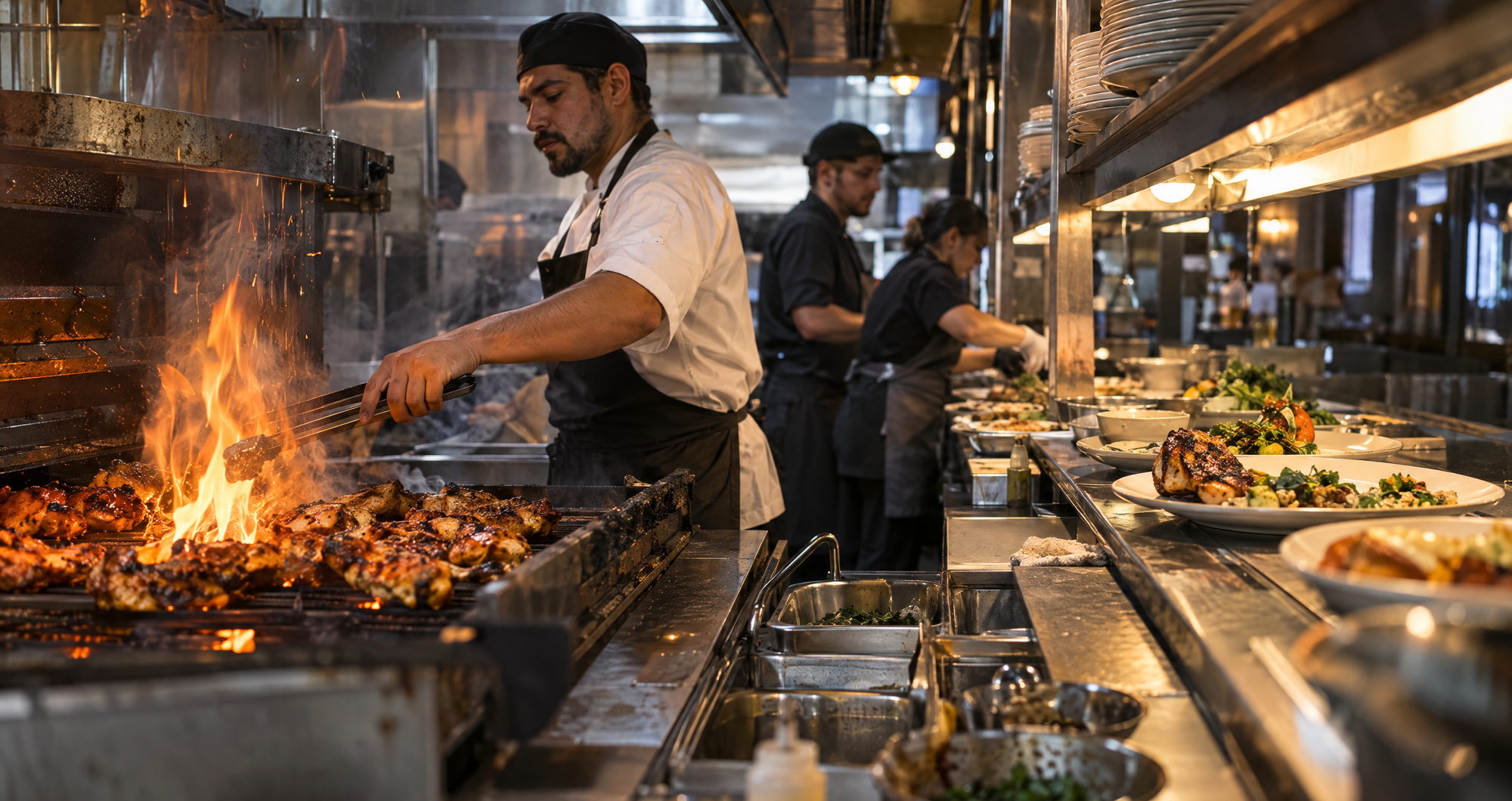
Nando’s has responded by investing in energy efficiency, including rolling out more efficient grills across its UK and Ireland estate. The company says the equipment reduces both energy use and cooking times, which matters in a business where the grill is the production line.
Why it keeps opening
The decision to keep expanding during a loss-making year is a bet on location and format. New restaurants in retail parks, transport hubs and suburban high streets have performed better than city-centre sites that depend on office workers.
Opening new sites also protects market share in a category where rivals are consolidating. Chains that stop expanding often find it harder to negotiate with landlords and suppliers, and lose the operational discipline that comes with a pipeline of new openings.
The risk is that the new sites add fixed costs before they add profit, which is what the accounts show. A restaurant typically takes two to three years to mature, so a year of heavy openings will depress reported profit even if the underlying investment is sound.
The wider picture
Nando’s is one of the largest casual dining operators in the UK, and its results are a better guide to the sector’s health than the headline figures from smaller chains, many of which have restructured or closed sites.
Papps said the business is mindful of the pressures facing both the company and its customers, a phrasing that acknowledges the constraint: it cannot raise prices much further without losing the families and young people who make up most of its trade.
The coming year will test whether cost inflation continues to ease. If it does, a business with strong demand and a growing estate should return to profit quickly. If it does not, the chain will have to choose between slower expansion and thinner margins.







