
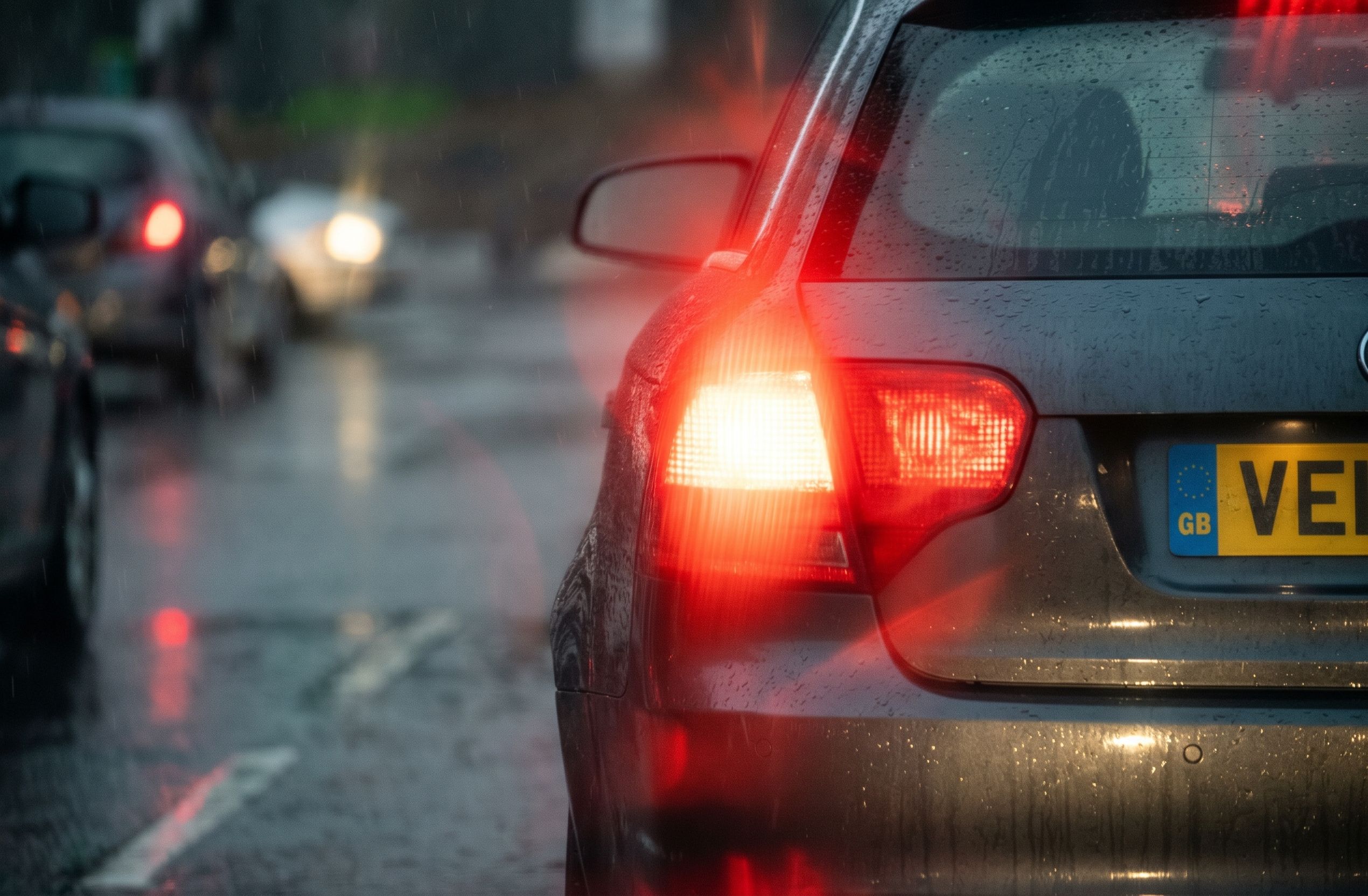

Nearly 1 in 5 drivers in South London scored Dangerous for harsh braking, according to new data from Marshmallow Car Insurance – the third highest proportion among the 75 postcode areas analysed.
Drivers in the S postcode got the third lowest scores for harsh braking out of the 75 postcode regions that were analysed by Marshmallow Move, the insurer’s telematics service.
In total, the data covered over 10 million trips over a three-month period. Each factor was scored out of 100 and grouped into six ratings: Dangerous, Very Poor, Poor, Average, Good, and Excellent.
South London drivers hit the brakes
Drivers in Chelmsford, Milton Keynes, Wolverhampton, Southall and South London recorded the lowest braking scores, with Chelmsford ranking lowest overall.
| Area | Dangerous Braking |
| Chelmsford | 22.30% |
| Milton Keynes | 21.10% |
| South London | 19.80% |
| Southall | 19.80% |
| Wolverhampton | 19.20% |
Common reasons for harsh braking include following too closely to the car in front, not paying close attention to the road and not anticipating events, all of which can put you at greater risk of having an accident.
Stephen Hemmings, Marshmallow’s Group Product Manager for Telematics, said:
“Distraction can reduce the time drivers have to recognise and respond to changing road conditions, increasing the likelihood of sudden braking.”
“We hope these insights will encourage drivers to give the road their full attention and anticipate hazards as best as possible.”
“With Marshmallow Move, as well as getting a discount up front, drivers get insights on their driving and tips on how to improve, helping them to stay safe on the roads.”
Dr Leanne Savigar-Shaw, Associate Professor in Policing at the University of Staffordshire’s Institute of Policing and Justice, said:
“Harsh braking is likely to be influenced by the road network and road conditions.
“Navigating junctions, roundabouts and traffic congestion can be complex, adding to the possible hazards that may appear and have to be responded to.
“In congested areas, people may be more tempted to use a mobile phone while driving, so that can also contribute to the requirement for harsh braking.”
More than half had ‘Poor’ or worse braking scores
Harsh braking wasn’t just a South London issue. It was the biggest area for improvement across the UK, with more than half (51%) of the policies analysed rated ‘Poor’ or worse and nearly 1 in 5 (19%) had a “Dangerous” braking score.
This is compared only 15% who scored Poor or worse for Speeding, and 33% for using their phone.
| Telematics Metric | % Who Scored ‘Poor’ or worse |
| Braking | 51% |
| Phone Handling | 33% |
| Cornering | 23% |
| Speeding | 15% |
| Acceleration | 13% |
Drivers who use their phone more often while driving also scored lower on braking.
The worst 25% of phone users had a “Poor” braking score on average. Whereas the best 25% of phone users were rated “Good” on braking.







