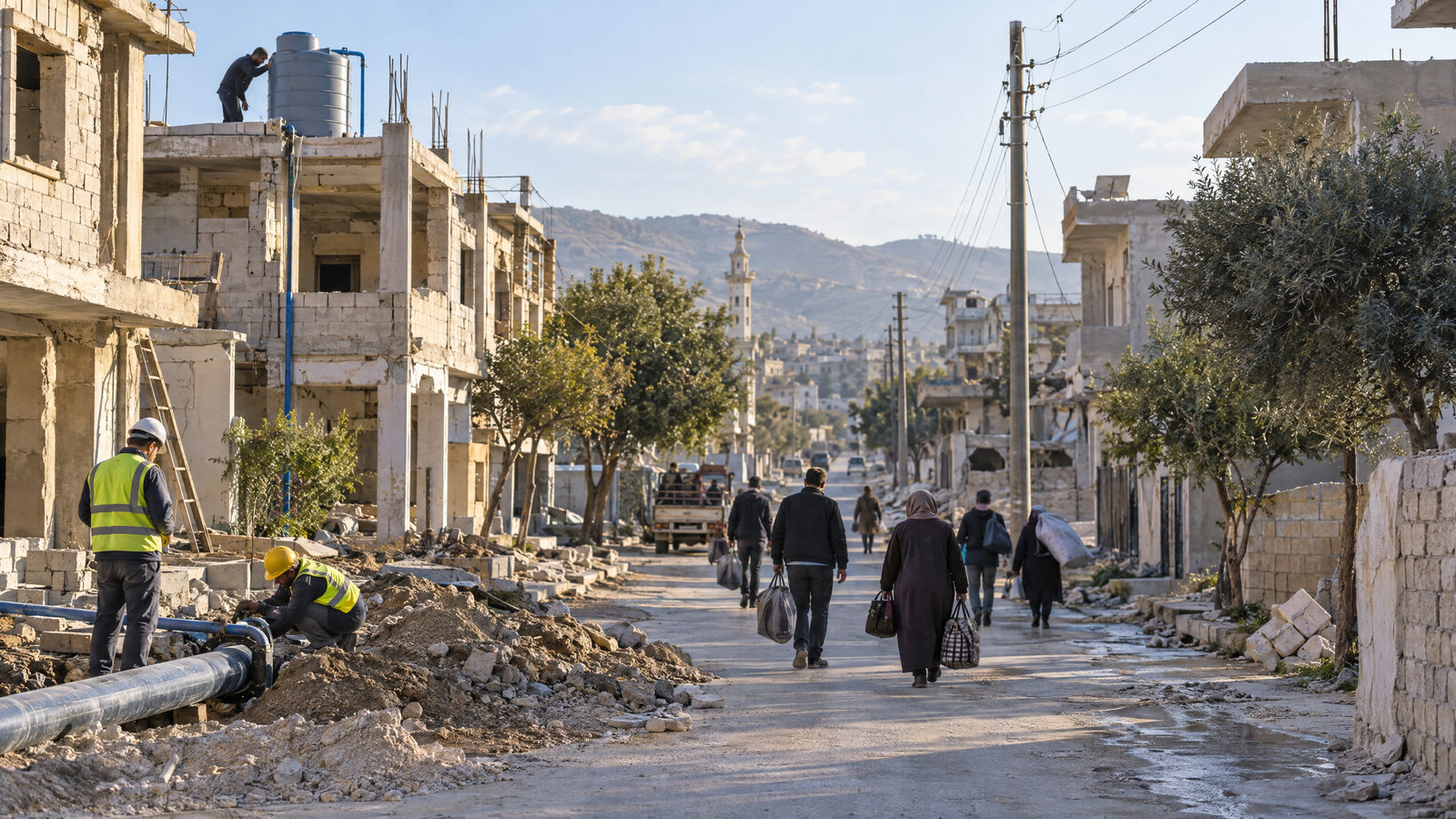

Nearly 39,000 internally displaced Syrians left displacement sites during July and August, a movement that is shifting the practical demands of humanitarian work from camps to the towns and villages people are trying to rejoin.
The latest humanitarian update puts the total at 38,836 people. It says 19,600 of them were supported through facilitated-return mechanisms, while 130 displacement sites were inactivated over the same two months. More than 60,000 people have been supported to return from such sites since January. The figures point to a substantial change in where assistance is required, but they do not by themselves show that every household has achieved a safe or lasting return.
Leaving a site is not the finish line
A camp departure can mark an important step for a family that has spent years displaced. Yet the assessment cautions that return communities often have inadequate housing, damaged infrastructure, restricted services and limited ways to earn a living. Those conditions can undermine reintegration and, it says, raise the risk of secondary displacement.
That distinction matters. A reduction in the number of active sites is a countable change; rebuilding a viable home life is much harder to measure. A household may have reached its area of origin while still lacking a habitable house, reliable water, electricity, access to a clinic or school, or the income to meet everyday costs. Returns should therefore be understood as a live recovery challenge rather than the end of a humanitarian one.
Services must follow people
The response is increasingly focused on restoring the infrastructure that makes return possible. The update lists bakeries, water and electricity networks, hospitals, schools, roads, bridges and homes among the facilities being rehabilitated in return-affected communities. These are not interchangeable projects. Repairing a water network may affect an entire neighbourhood; reopening a bakery can improve access to food; restoring a road or bridge can reconnect households to markets, work and health care.
There are signs of progress in some locations. The assessment identifies Ar-Raqqa as showing some of the stronger recovery indicators in north-east Syria, including improvements in water, electricity and protection conditions. It nevertheless describes economic vulnerability as a major obstacle to durable recovery. The contrast illustrates why service repairs and livelihood support need to move together: functioning infrastructure alone cannot guarantee that a family can afford to stay.
Large needs, limited resources
Humanitarian partners reached an average of 2.53 million people a month between January and July, according to the update, with 314 organisations working across 4,765 communities. More than $123 million was delivered as cash and vouchers. Those figures demonstrate a broad response, but they should not be read as evidence that needs have been met or that assistance is equally available in every return area.
The funding picture remains a constraint. The wider response says that more than 15 million people in Syria still require humanitarian assistance and that its $2.9 billion plan is less than one-third funded. As people leave sites, the central test will be whether funding can support both immediate aid and the slower work of repairing homes and local systems.
For families who have left camps, the next measure of success is likely to be less visible than a departure total: whether water runs, a child can attend school, health care is reachable and there is a realistic route to income. The latest figures make clear that those questions now belong at the centre of the response in communities of return.