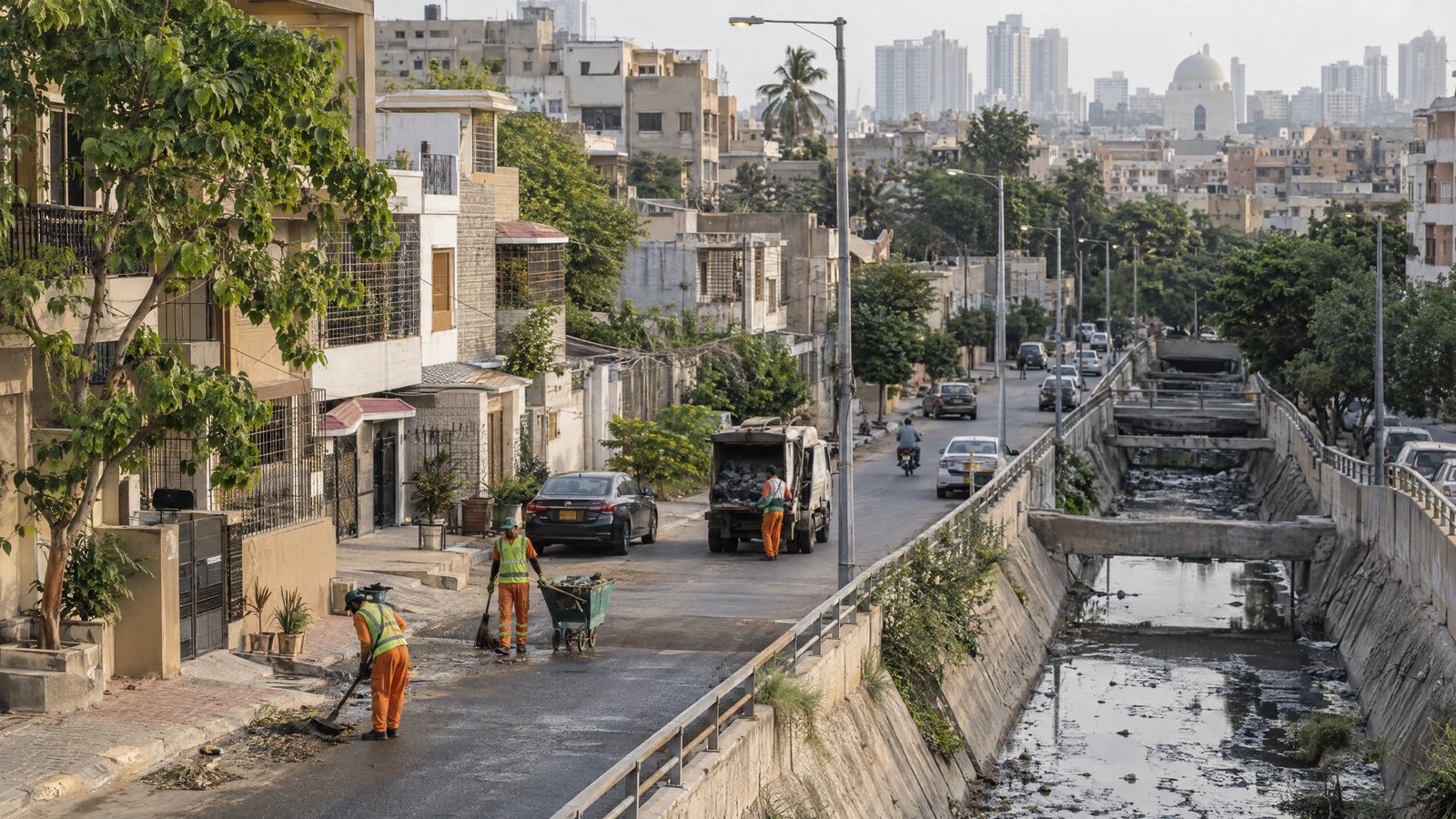

A US$150 million financing programme has been approved to strengthen property-tax collection and municipal services in Karachi and other urban centres in Sindh, Pakistan. The plan seeks to connect higher local revenues with spending on infrastructure and services in participating councils.
The Sindh Property Revenues Enhancement Programme is designed to raise Karachi’s annual property-tax collection from approximately US$8.5 million to US$85 million. It also aims to increase compliance from 20% to 50%. Both figures are targets, rather than results already achieved through the approved financing.
The proposed link between taxation and services centres on reinvestment. Around 70% of collected urban-immovable-property-tax revenue is intended to go back into infrastructure and services in participating councils. That provision concerns the revenue collected, not a 70% allocation of the US$150 million financing package.
Karachi councils at the centre
The first component covers Karachi’s 25 local councils and 3.58 million people. Its scope brings property revenues and municipal services into the same programme, with the intention of supporting improvements across the participating council areas.
The collection target represents a tenfold increase from the approximate annual baseline. The compliance target is separate: it seeks to lift the stated rate by 30 percentage points. These two measures describe different ambitions, one for the amount collected and the other for compliance.
Approval establishes the financing framework for pursuing those ambitions. It does not mean that Karachi’s annual collection has already reached US$85 million, that compliance has risen to 50%, or that the proposed municipal improvements have been completed.
The programme uses performance-linked awards as part of its approach. Alongside that mechanism, the reinvestment provision is intended to connect collected property-tax revenue with council-level infrastructure and services. The awards and reinvestment arrangements are elements of the plan, rather than evidence of benefits already delivered.
Infrastructure and service priorities
Proposed rehabilitation covers drainage, sewerage, schools, fire stations, roads and street lighting. The scope therefore includes both neighbourhood infrastructure and facilities used for public services, rather than treating property-tax administration as an isolated exercise.
For Karachi, the financing plan’s central proposition is that stronger collection can be linked to local improvements. The intended reinvestment share gives that relationship a defined place within the programme, although the approval itself does not establish how much revenue individual councils will collect.
The 3.58 million people covered by the first component represent its intended reach. That beneficiary figure describes the population within the programme’s scope; it should not be read as a count of people who have already received improved services.
Expansion beyond Karachi
A US$40 million investment-project component is intended to expand surveys and tax administration to 20 councils in other urban centres across Sindh. This extends the programme’s reach beyond Karachi while retaining its focus on urban property revenues.
The survey and administration work forms a distinct part of the financing plan. Its stated purpose is to widen those activities in the additional councils, while the Karachi component sets out the principal collection and compliance targets described for the programme.
The financing combines work on revenue collection with proposed spending on municipal infrastructure. Its intended results depend on progress towards the collection and compliance targets and on the planned reinvestment of collected revenue into participating councils’ services.
For now, the confirmed development is approval of the US$150 million programme. The larger tax receipts, higher compliance and rehabilitated facilities remain objectives to be pursued, not completed outcomes. The plan’s significance lies in the proposed connection between urban property taxation and the local services it is intended to support.