


The latest Ofcom complaint figures reveal a stark divide between the UK’s broadband providers, with some of the biggest brands attracting the highest number of complaints. The data shows that consumers are raising concerns about customer service, delays and problem resolution — even as the overall volume of complaints has fallen to its lowest point on record.
Ofcom tracks complaints received per 100,000 customers across broadband, landline, mobile and pay-TV. The results show that between April and June, broadband complaints varied significantly across providers. EE received ten complaints per 100,000 customers — more than double the complaint rate of the lowest-scoring provider. Vodafone, NOW Broadband, BT and TalkTalk followed closely behind with nine complaints per 100,000 customers, while Virgin Media recorded eight.
Meanwhile, Plusnet sat at the top of the table with just four complaints per 100,000, reinforcing the trend that smaller or challenger providers often perform better on service metrics.
Andrea Troy, spokesperson for Orbus, says: “People assume the biggest broadband companies must offer the best service, but Ofcom’s complaint data paints a very different picture. In many cases, smaller and independent networks deliver faster resolutions and better customer support simply because they are not dealing with outdated systems and massive call-centre queues.”
Biggest brands see highest complaint volumes
The latest analysis mirrors a trend seen across previous quarterly reports: many of the UK’s largest telecoms brands consistently receive higher complaint figures than newer entrants or regional full-fibre operators.
In Ofcom’s broadband data:
- EE recorded the highest level of complaints
- Vodafone, NOW Broadband, BT and TalkTalk scored only slightly lower
- Plusnet remained the lowest complained-about broadband provider
Experts say this gap isn’t just about connection — it is about service culture. Large brands have millions of customers and rigid legacy processes, making quick resolutions harder to deliver.
With more customers frustrated by wait times and complex escalation paths, households are increasingly searching for
broadband customer service as a key deciding factor when switching provider.
Andrea Troy adds: “The next wave of broadband switching won’t be driven by speed — it will be driven by service. Consumers care less about whether a package offers 500 Mbps or 900 Mbps, and more about whether someone answers the phone when something goes wrong.”
Consumers shift toward reliability over headline speed
Full-fibre rollouts have changed how households assess broadband. Previously, fibre packages were sold on speed claims. Now, customer service and reliability are more influential than theoretical Mbps numbers.
Many households are actively moving away from large incumbents and toward reliable broadband providers after experiencing inconsistent support.
Drivers behind the shift include:
- Complex call routing and outsourced support structures at major brands
- Slow response times on outage or installation issues
- Lack of proactive communication when faults occur
- Customer fatigue caused by repeated troubleshooting scripts
According to Ofcom, one of the biggest reasons people switch broadband is not speed or price, but dissatisfaction with complaint handling.
Challenger ISPs rise as alternatives to legacy brands
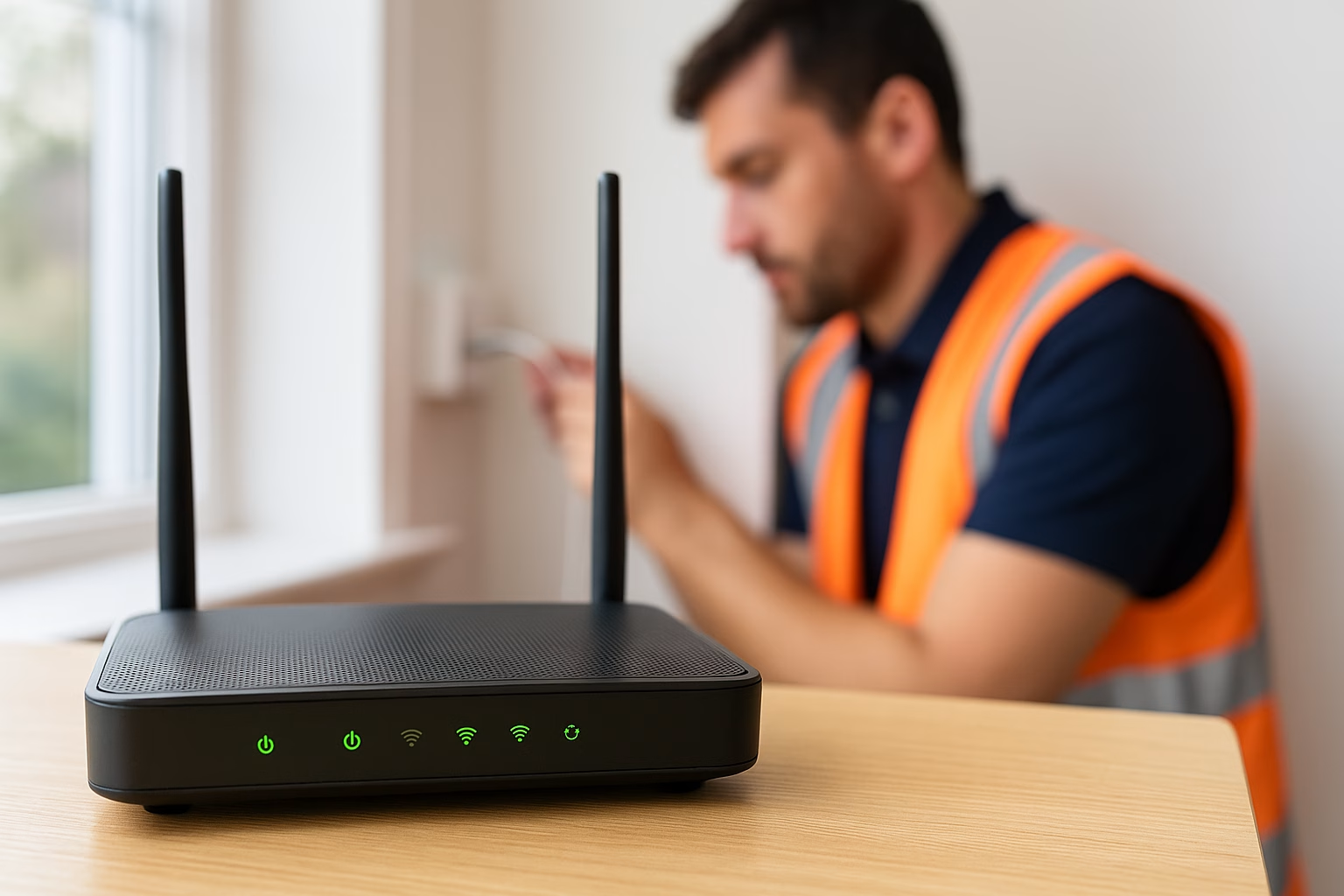
The complaint data coincides with rapid growth in the UK’s full-fibre networks — a market now dominated by alternative infrastructure builders rather than traditional telecom giants. These newer networks focus on engineering quality, transparent pricing and streamlined support.
This shift is driving more customers to seek out a fibre broadband alternative to big brands when contracts end.
Andrea Troy notes: “Customers are increasingly asking whether their provider will treat them like a customer — not a ticket number. Independent ISPs can design support and onboarding from scratch, without legacy technical debt.”
Improved complaint landscape — but the gap between providers remains
Ofcom emphasised that complaints across all telecom categories are now at their lowest levels since records began, reflecting improvements in regulation, automatic compensation schemes and proactive service upgrades. However, while overall complaints are down, the disparity between the highest and lowest-performing providers has widened. Some companies consistently appear at the higher end of complaint rankings across broadband, landline and pay-TV.
This difference explains why more households are actively considering independent broadband providers when comparing their next contract renewal.
Andrea Troy concludes: “This year marks a turning point. People are realising they don’t have to stay with national brands just because they recognise the name. If a provider struggles with complaints every quarter, that is valuable data — and consumers are finally using it.”







