
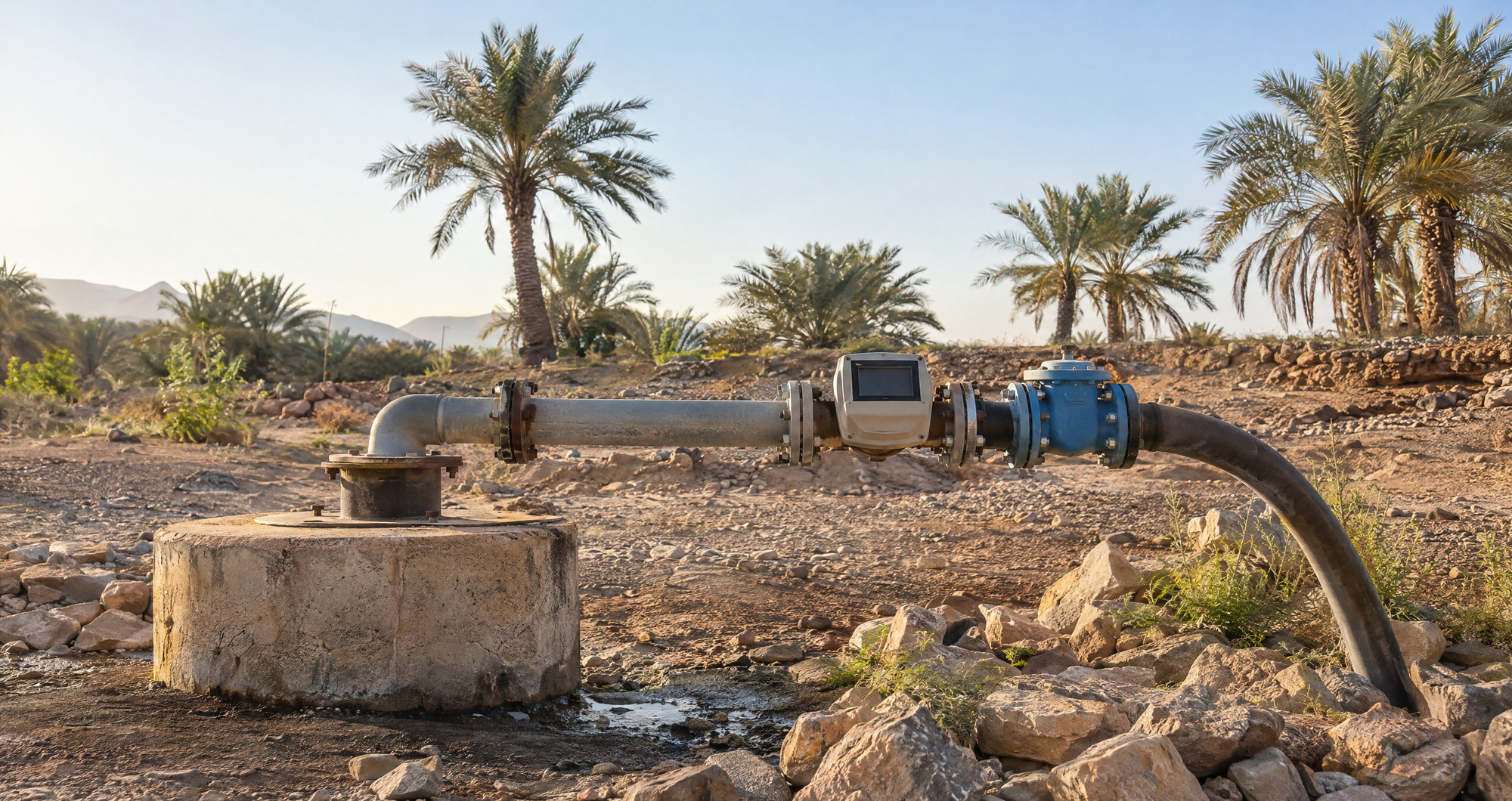

Oman has signed an agreement to introduce smart meters at around 1,000 licensed groundwater wells, with the first phase scheduled to run from January 2027 to December 2028. The project is intended to give authorities a clearer picture of how much water is being taken from wells serving farms, businesses and traditional irrigation systems.
The Ministry of Agriculture, Fisheries and Water Resources signed the agreement with Nama Water Services in Muscat on 11 November. It covers the supply, installation and operation of the meters and a national digital platform for monitoring groundwater consumption. The agreement has been signed; the first-phase installation is still to come.
Ali bin Mohammed Al Abri, the ministry’s undersecretary for water resources, signed on behalf of the ministry. Nama Water Services was represented by its chief executive, Qais bin Saud Al Zakwani.
Wells serving different users
The first phase is planned to cover licensed wells across Oman’s governorates. The categories include auxiliary wells supporting aflaj, the country’s traditional irrigation systems, as well as wells serving water-bottling plants, investment and development projects, land-use agreements and productive farms.
The target of around 1,000 is for the first phase, not a count of all wells in Oman. The announcement does not identify the individual wells or say how many in each category will receive a meter. It also does not give a cost for the programme or a timetable for any later phase.
Nama Water Services is to finance the project, provide and install the meters, operate them and manage the digital platform. The ministry is responsible for oversight and for developing regulations and policies concerning groundwater wells. The announcement does not specify new charges or changes to individual well permits.
A national platform
The planned system will connect meters electronically to a unified platform, with the aim of providing real-time information on groundwater consumption. That would give the ministry a way to track consumption indicators using readings from the wells included in the programme.
The design calls for locally hosted cloud infrastructure and a wireless communication technology known as LoRaWAN. The announcement says the system is intended to comply with national requirements for personal data protection and cybersecurity, including the use of encryption under the supervision of the relevant authorities. Those provisions describe the planned system; they are not evidence that it is already operating.
The announcement does not set out how often individual well readings will be reviewed, who beyond the responsible bodies will have access to the data, or whether the information will lead to changes in water allocations. The stated purpose is to improve management and support decisions using consumption data.
Water and agriculture
Groundwater is a significant resource in Oman, where agriculture relies on irrigation. A water-resources assessment published in 2021 estimated that agriculture accounted for 83 per cent of the country’s total water withdrawals in 2018. That figure covers withdrawals from all water sources in that year, not just the wells included in the new agreement, and is not a current measurement of their use.
The same assessment described groundwater salinity and aquifer depletion as pressures on agricultural production in the north, including where seawater enters coastal groundwater. Measuring consumption at selected wells is different from measuring the condition of an entire aquifer, and the announcement does not report an estimate of water savings from the project.
Aflaj add another dimension to the planned monitoring. These systems channel water from underground sources, springs or surface water for farming and domestic use. Some rely on long-established arrangements for sharing water among communities, and five Omani aflaj systems form a World Heritage property. The agreement refers to auxiliary wells supporting aflaj; it does not say that any particular heritage site is included.
The planned installation window runs from 1 January 2027 to 31 December 2028. Until work begins and the participating wells are identified, the agreement establishes the scope and responsibilities of the first phase rather than an operational record of metered groundwater use.







