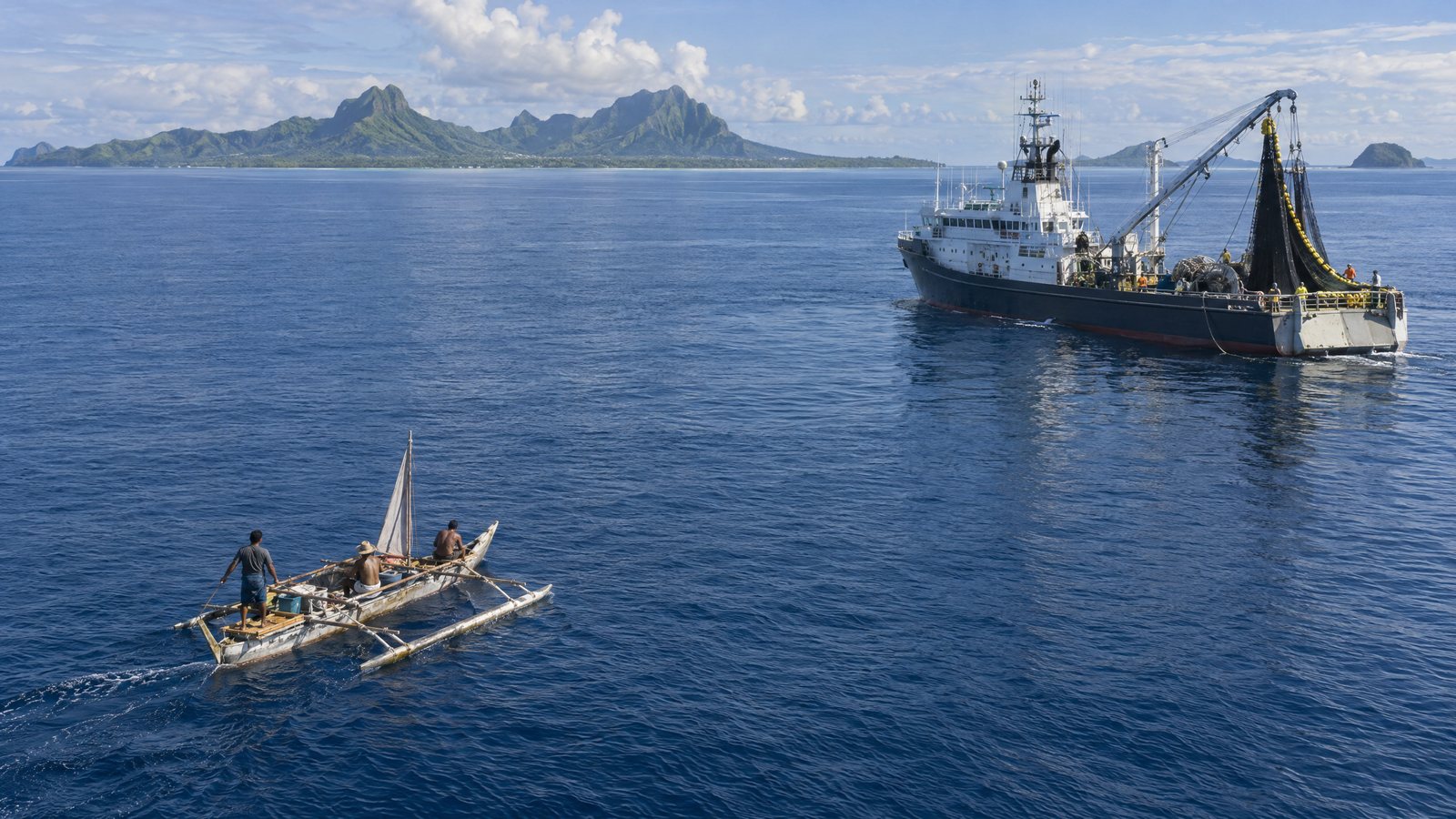

Seventeen Pacific island governments have formally submitted a joint proposal for managing bigeye tuna, seeking a regional approach that would cover both purse-seine and longline fisheries. The common position was endorsed in Honiara, Solomon Islands, on 30 October, ahead of a regional tuna commission meeting in Port Vila, Vanuatu.
The proposed management procedure remains subject to the commission’s decision. If adopted, it would be the first procedure to span the two principal fishing methods used to catch bigeye tuna. The commission session is scheduled for 30 November to 5 December, with the proposal among the Pacific governments’ priorities for consideration.
A shared approach to bigeye tuna
The submission brings together the position of all 17 members of the regional fisheries agency. Its central aim is to distribute conservation responsibilities more fairly between purse-seine and longline fisheries, while protecting Pacific countries’ fishing opportunities and their interests in the revenue generated by fishing.
That combination is important to the proposal’s scope. It is not solely a call for conservation measures, nor solely a position on access to fishing. The governments are seeking a management approach that addresses conservation responsibilities alongside the opportunities and revenue interests of Pacific countries. Whether the commission accepts that approach has yet to be decided.
The stock concerned represents about 40% of global bigeye tuna catches. The latest assessment found that it had not been overfished. Those details place the proposal in the context of a substantial fishery whose assessed condition does not amount to a finding that the stock is overfished.
The proposal therefore should not be understood as an announcement that bigeye tuna has newly become overfished. Equally, the assessment does not mean the submitted procedure is already in force. The stock’s condition and the status of the proposed management approach are separate matters: one concerns the latest assessment, while the other awaits a commission decision.
Two fishing methods, one proposed procedure
The intended coverage of purse-seine and longline fisheries is the distinguishing feature of the submission. Both are principal methods for catching bigeye tuna, and the governments want conservation responsibilities considered across them. Adoption would mark the first management procedure with that combined reach, rather than a procedure confined to one of the two methods.
For the Pacific governments, the question of how those responsibilities are shared sits alongside the protection of fishing opportunities and revenue interests. The common position seeks to bring these concerns into the same management framework. Endorsement in Honiara established their joint position, but it did not settle the regional rules that the commission will consider in Port Vila.
The distinction between submission and adoption is central to the next stage. The governments have completed the endorsement and formal submission of their proposal. The regional commission has yet to determine whether it will adopt the procedure, so the proposed combined management of the two fisheries remains pending.
Other priorities for Port Vila
The Pacific members have also submitted priorities concerning South Pacific albacore allocation, monitoring, reporting and high-seas transhipment. These are additional matters for consideration alongside the bigeye proposal, rather than evidence that the proposed bigeye procedure has been approved or that the associated priorities have been settled.
The Port Vila session will provide the setting for consideration of the submission. Until the commission decides, the development is a joint policy proposal from the 17 Pacific island governments: a proposed first procedure spanning purse-seine and longline bigeye fisheries, with fairer conservation responsibilities and Pacific fishing interests at its centre.