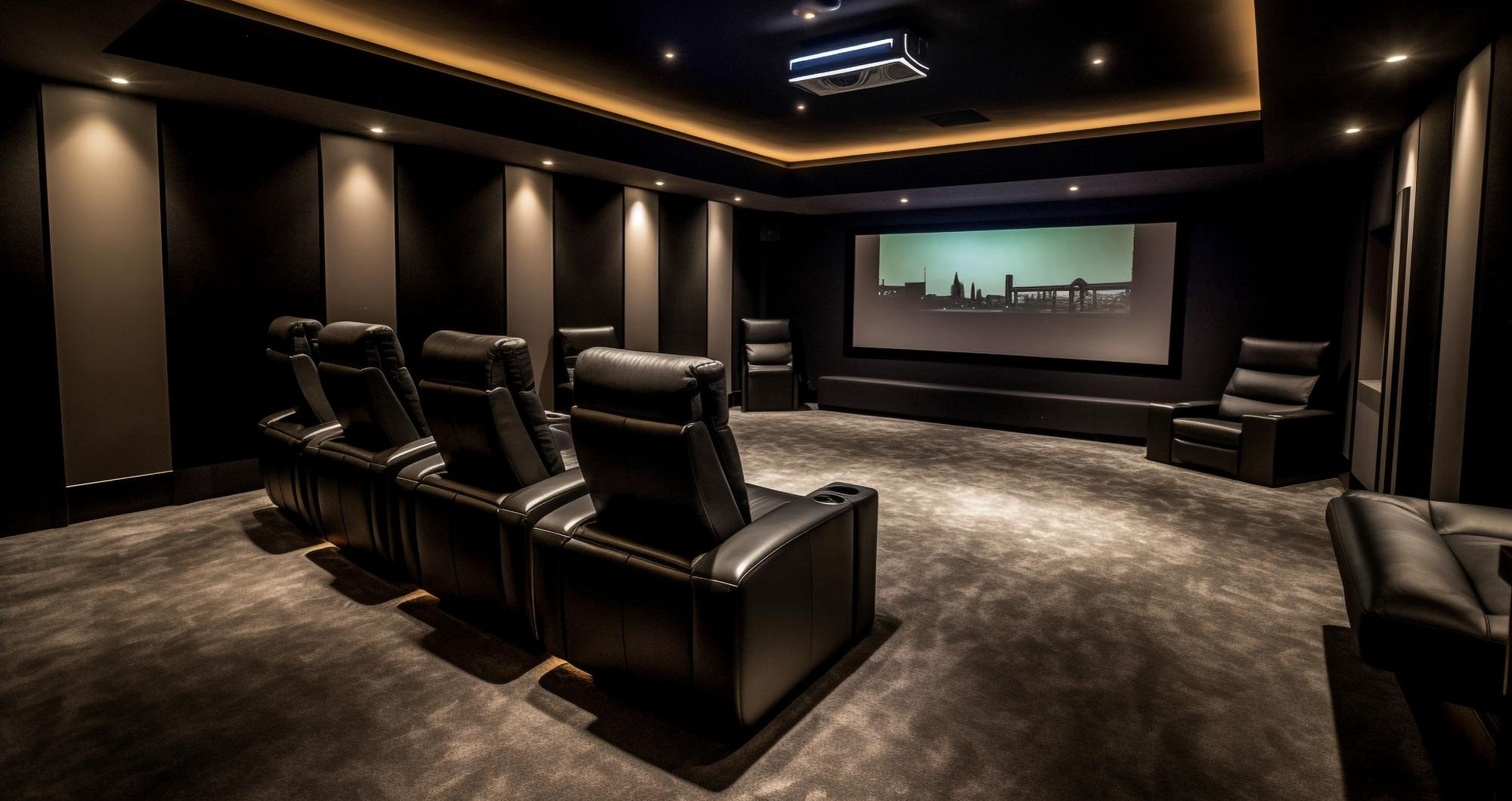

A proper home cinema — a room that wraps you in picture and sound and genuinely rivals the multiplex — is more achievable today than it has ever been. But there is a world of difference between a large television with a soundbar and a cinema room that truly delivers, and that difference has far less to do with spending money than with planning. Get the fundamentals right and a modest setup can be magical; get them wrong and the most expensive equipment in the world will disappoint. Here is what actually separates a great home cinema from a frustrating one.
Whether you are converting a spare room or carving a cinema out of a living space, these are the things that matter.
Start with the room
The single biggest factor is the room itself. A home cinema lives or dies on your ability to control light, so a space you can make properly dark — a spare room, a basement, a loft — has a head start over a bright, window-filled lounge. Shape and proportion matter too: a rectangular room generally behaves better for sound than a square one, and you need enough depth to sit a sensible distance from the screen. None of this means you cannot build a cinema into a multi-use living room — plenty of excellent ones are — but it does mean that controlling the environment becomes the central design challenge. It is worth measuring the space early, too, because the room’s dimensions quietly dictate how big a screen makes sense and how far back the seating can comfortably go.
Light is the enemy of a good picture
Ambient light is what washes out a picture and flattens contrast, turning deep blacks into murky grey. Controlling it is essential. Blackout blinds or curtains, ideally ones that seal the edges of windows properly, make an enormous difference, and being able to dim or zone the room’s own lighting lets you set the right level for viewing without plunging the room into total darkness. The more completely you can control the light, the more punch and depth the image will have — which is why dedicated cinema rooms, where light can be shut out entirely, look so much better than a screen fighting daylight.
Screen or projector?
One of the central decisions is how you put the picture on the wall. A large, high-quality television is bright, sharp and copes well with some ambient light, making it a sound choice for a multi-use room that cannot be fully darkened. A projector and screen, by contrast, deliver the big, properly cinematic scale that no television can match, but it needs a darker room to look its best. The right answer depends on the space and how you will use it: a dedicated, light-controlled room makes the most of a projector’s scale, while a bright family room may be better served by a top-end screen. It is a trade-off worth thinking through carefully before committing.
Sound is half the experience
It is easy to obsess over the picture and forget that sound is fully half of what makes cinema immersive. A real surround system — speakers placed around and, in the best setups, above the seating, paired with a subwoofer for the deep bass you feel as much as hear — is what puts you inside the action rather than watching it from outside. Placement is everything: speakers need to be positioned correctly relative to where you sit for the surround effect to work, which is why thinking about seating and speaker positions together, early in the design, matters so much.
Don’t forget the acoustics
A room full of hard, bare surfaces — bare walls, big windows, a tiled or wooden floor — bounces sound around and produces echo and harshness that no amount of expensive equipment can fix. Soft furnishings help enormously: carpet or rugs, curtains, upholstered seating and, where needed, dedicated acoustic panels all absorb stray reflections and tighten up the sound. Acoustic treatment is one of the least glamorous parts of a cinema room and one of the most transformative, taking a system from merely loud to genuinely clear and controlled.
Seating and sightlines
Comfort and clear views complete the picture. Seating should be placed at a sensible distance from the screen — close enough to feel immersive, far enough to take in the whole image comfortably — and everyone should have an unobstructed line of sight. In larger rooms, raising the back row on a tiered platform stops heads getting in the way and lends the space a touch of genuine cinema theatre. The aim is simple: every seat should be a good seat.
Hide the technology, keep the magic
Part of what makes a home cinema feel special is that the technology disappears and the experience takes over. A tangle of visible cables, boxes and speakers on stands undoes much of that effect. The neatest installations conceal the hardware: speakers built discreetly into walls or ceilings, equipment tucked away in a cupboard or rack rather than stacked beside the screen, and cabling run out of sight within the walls. This is far easier to achieve if it is planned before decorating rather than retrofitted afterwards, which is one more reason to think about the cinema as a whole at the design stage. The payoff is a clean, uncluttered room where nothing distracts from the film — exactly as a real cinema is meant to feel.
Pulling all of this together — room, light, screen, sound, acoustics and seating — into a system that works as a coherent whole is exactly where a professional home cinema installation earns its place, because the specialists balance these competing factors against your space and budget, then set everything up properly rather than leaving you to guess at speaker positions and picture settings.
Calibration makes the difference
A final, often overlooked step is calibration. Even excellent equipment rarely performs at its best straight out of the box; the picture needs adjusting for the room’s light and the screen’s characteristics, and the sound needs balancing so that every speaker pulls its weight and the levels are right for where you sit. Proper calibration is what extracts the last measure of quality from a system, and it is a large part of why a professionally set-up cinema looks and sounds noticeably better than the same kit installed casually.
Get the design right first
If there is one lesson that runs through all of this, it is that a home cinema is designed, not just bought. The room, the light control, the choice of screen, the speaker layout, the acoustics and the seating all interact, and decisions made early shape everything that follows. Time spent planning — ideally with people who design these rooms for a living — is what turns a collection of equipment into an experience. Do that, and film night at home stops being a compromise and becomes something you look forward to: the lights dim, the sound surrounds you, and for a couple of hours your living room becomes the best seat in the cinema. And because it has been planned around your room rather than forced into it, it keeps delivering that for years.