
The toddler years bring rapid change, and parents often want to know how to support this growth in a simple way at home. Good toddler development rests on two main areas: gross motor skills and fine motor skills, alongside sensory play that helps a child make sense of the world through touch, sound, and sight. Hand-eye coordination grows through everyday play rather than formal lessons. This article looks at the toys and activities that support these skills between ages one and three, with tips that work well for busy UK households and a simple age-by-age guide you can use straight away.
Key Takeaways
- Gross motor skills cover large movements like walking, climbing, and running, while fine motor skills cover smaller hand and finger control.
- Sensory play supports brain development alongside physical growth, and it does not need expensive equipment.
- Floor-based play on a soft, safe mat gives toddlers a good base for rolling, sitting, and early motor practice.
- UK toys should carry the CE or UKCA mark and meet the BS EN 71 safety standard.
- Everyday routines, such as bath time or short walks, offer easy chances to build motor and sensory skills without special toys.
What Motor and Sensory Development Actually Means
Motor development is split into two parts. Gross motor skills use the large muscles in the legs, arms, and back, and cover things like walking, running, climbing, and throwing. Fine motor skills use the smaller muscles in the hands and fingers, needed for tasks like holding a spoon, turning pages, or stacking blocks.
Sensory development, meanwhile, is about how a toddler takes in and reacts to information from their senses: touch, sound, sight, taste, and smell. A toddler who is given chances to feel different textures, hear different sounds, and look at different shapes is building pathways in the brain that support later learning, including speech and problem-solving.
Research often points out that a large share of brain growth happens in these early years, with much of a child’s brain structure formed by around age three. That is one reason health visitors and paediatric teams place so much weight on play during this stage, rather than screens or passive activities.
Gross Motor Skills: Toys and Activities That Help
Between 12 and 18 months, most toddlers are learning to walk without support, climb onto low furniture, and push toys while standing. Between 18 and 24 months, running, kicking a ball, and walking up steps with help tend to appear. By age two to three, jumping with both feet, climbing playground equipment, and riding a small tricycle become common.
Toys and activities that support these stages include:
- Push-along trolleys or wheeled toys for early walkers
- Soft balls for kicking and rolling practice
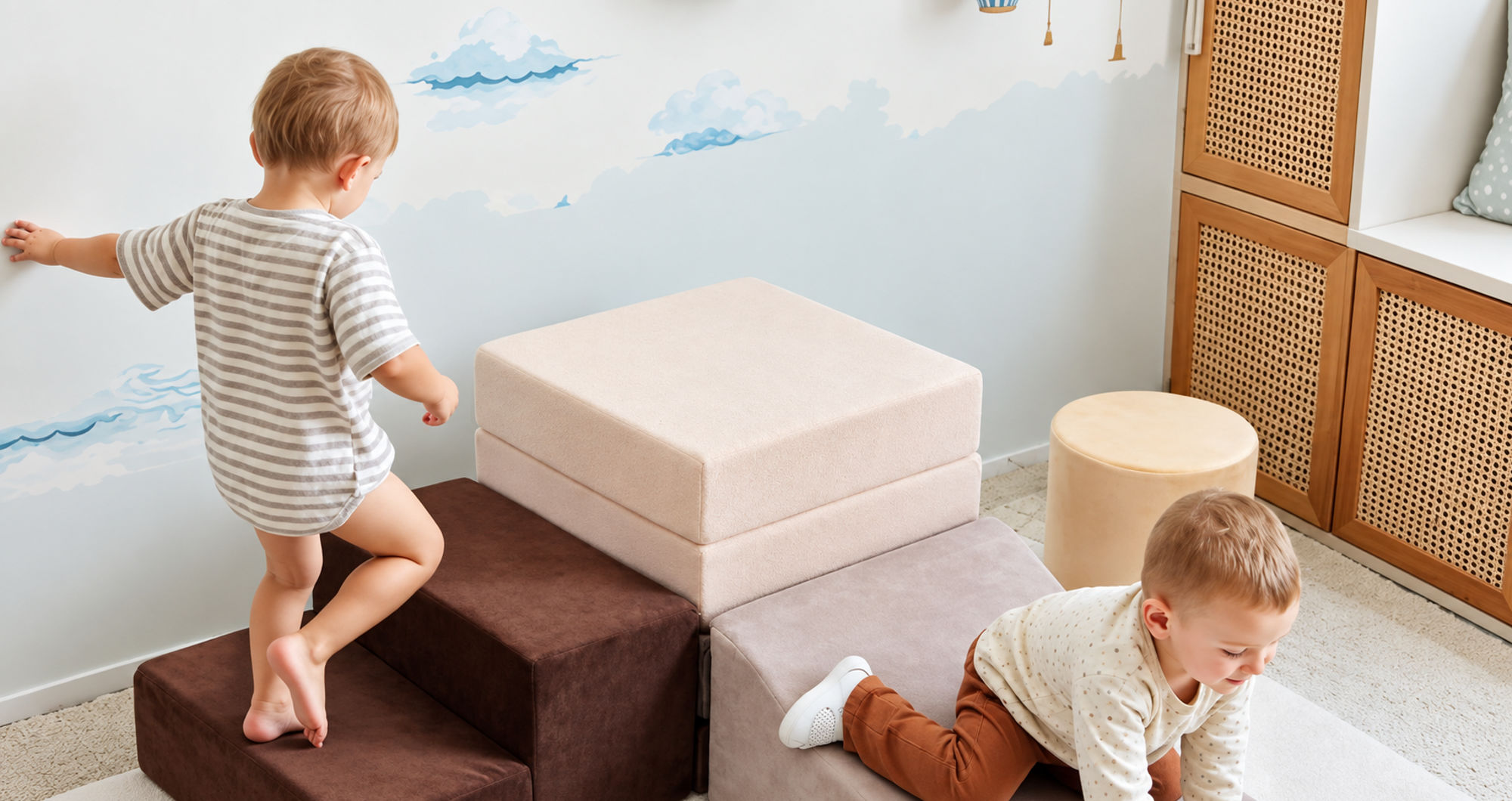
- Low, safe climbing frames or soft play blocks for indoor climbing
- Ride-on toys or balance bikes for older toddlers
- Simple obstacle courses made from cushions, boxes, or garden equipment
None of this needs to be costly. A trip to a local park, a soft play centre, or simply rearranging cushions on the living room floor gives a toddler real chances to build strength and balance.
Fine Motor Skills: Toys and Activities That Help
Fine motor skills tend to lag slightly behind gross motor skills, since they need more control over smaller muscles. Around 12 to 18 months, toddlers often use a pincer grasp to pick up small objects and begin scribbling with a crayon. By 24 months, many can stack four or more blocks and use a spoon with some success. By age three, threading beads, turning book pages one at a time, and copying simple shapes are within reach for many children.
Good choices for building these skills include:
- Chunky crayons and large paper for early scribbling
- Simple wooden puzzles with a few large pieces
- Stacking cups or building blocks
- Shape sorters
- Play dough or soft clay for squeezing and rolling
- Lacing toys for older toddlers
Building blocks work well because they support both fine motor control and early problem-solving, and they suit a wide age range as skills grow.
Sensory Play: Why It Matters and What to Try
Sensory play gives toddlers a safe way to explore texture, sound, and movement, and it supports language, focus, and emotional regulation alongside physical skill. Simple sensory activities do not need special equipment. A tray of dry pasta, a bowl of water with cups for pouring, or a basket of fabric scraps in different textures can hold a toddler’s attention for a good stretch of time.
Floor-based play also matters here, since toddlers spend a lot of time sitting, crawling, and rolling around on the ground before their balance is fully steady. A padded, easy-to-clean play mat gives a soft, safe base for this kind of activity and protects little knees and hands during floor games. Brands such as Banasuper make foam play mats built for this stage, with a non-slip surface and simple printed patterns that double as a gentle visual activity while a toddler rolls, sits, or plays with toys on the floor.
Other sensory activities worth trying at home include:
- Water play with cups, sponges, and floating toys in the bath
- Sand or rice trays for scooping and pouring
- Textured balls in different sizes and materials
- Musical toys or simple instruments like shakers and drums
- Bubble play in the garden
Age-by-Age Guide to Toys and Activities
| Age | Gross Motor Focus | Fine Motor Focus | Sensory Focus |
| 12 to 18 months | Push-along toys, soft balls | Chunky crayons, stacking cups | Textured play mats, water play |
| 18 to 24 months | Ride-on toys, simple climbing | Shape sorters, large puzzles | Sand or rice trays, musical toys |
| 2 to 3 years | Balance bikes, playground climbing | Lacing toys, play dough | Bubble play, mixed texture baskets |
This table is a general guide rather than a fixed rule, since every child develops at their own pace. If a toddler is well behind these ranges across several areas, it is worth a chat with a health visitor or GP rather than waiting it out.
Choosing Safe Toys in the UK
Toy safety matters as much as toy choice. In the UK, toys sold legally must meet the BS EN 71 safety standard, which covers things like choking hazards, flammability, and chemical safety. Look for the CE or UKCA mark on packaging, and always check age recommendations, since small parts rated for older children can pose a real risk to a toddler who still puts objects in their mouth.
A few practical safety habits for parents:
- Check toys regularly for loose parts, cracks, or torn stitching
- Avoid toys with small magnets or button batteries where a toddler can reach them
- Store toys with cords or long ribbons out of a toddler’s play area
- Pick washable, wipeable materials for floor mats and soft toys, since toddlers mouth almost everything
A Simple Example From Everyday Family Life
Many parents find that the most useful activities are the ones that fit into normal daily routines rather than separate play sessions. One example often shared by parenting groups is turning bath time into sensory time, adding cups, a sponge, and a few floating toys, while turning short walks into gross motor practice by letting a toddler walk part of the way instead of sitting in a pushchair the whole time. Small changes like these add up over weeks and months, and they cost nothing extra.
FAQs
At what age should a toddler start walking?
Most toddlers take their first steps between 12 and 15 months, though anywhere up to around 18 months is still considered typical. If a child is not walking by 18 months, it is worth raising this with a health visitor.
What toys are best for fine motor skills?
Stacking cups, shape sorters, chunky crayons, and simple puzzles all work well, since they encourage a toddler to grip, turn, and place objects with control.
Is sensory play really necessary, or is it just for fun?
Sensory play supports real developmental work, including early language, focus, and emotional regulation, alongside the physical skills it builds through touch and movement.
How can I tell if a toy is safe for my toddler?
Check for the CE or UKCA mark, read the age guidance on the packaging, and avoid anything with small parts, loose magnets, or exposed batteries.
Do toddlers need special equipment for motor development, or will normal toys work?
Normal, well-chosen toys work fine for most toddlers. A few key items, such as a soft play mat, a few balls, and simple stacking toys, cover most of what a toddler needs at this stage.