
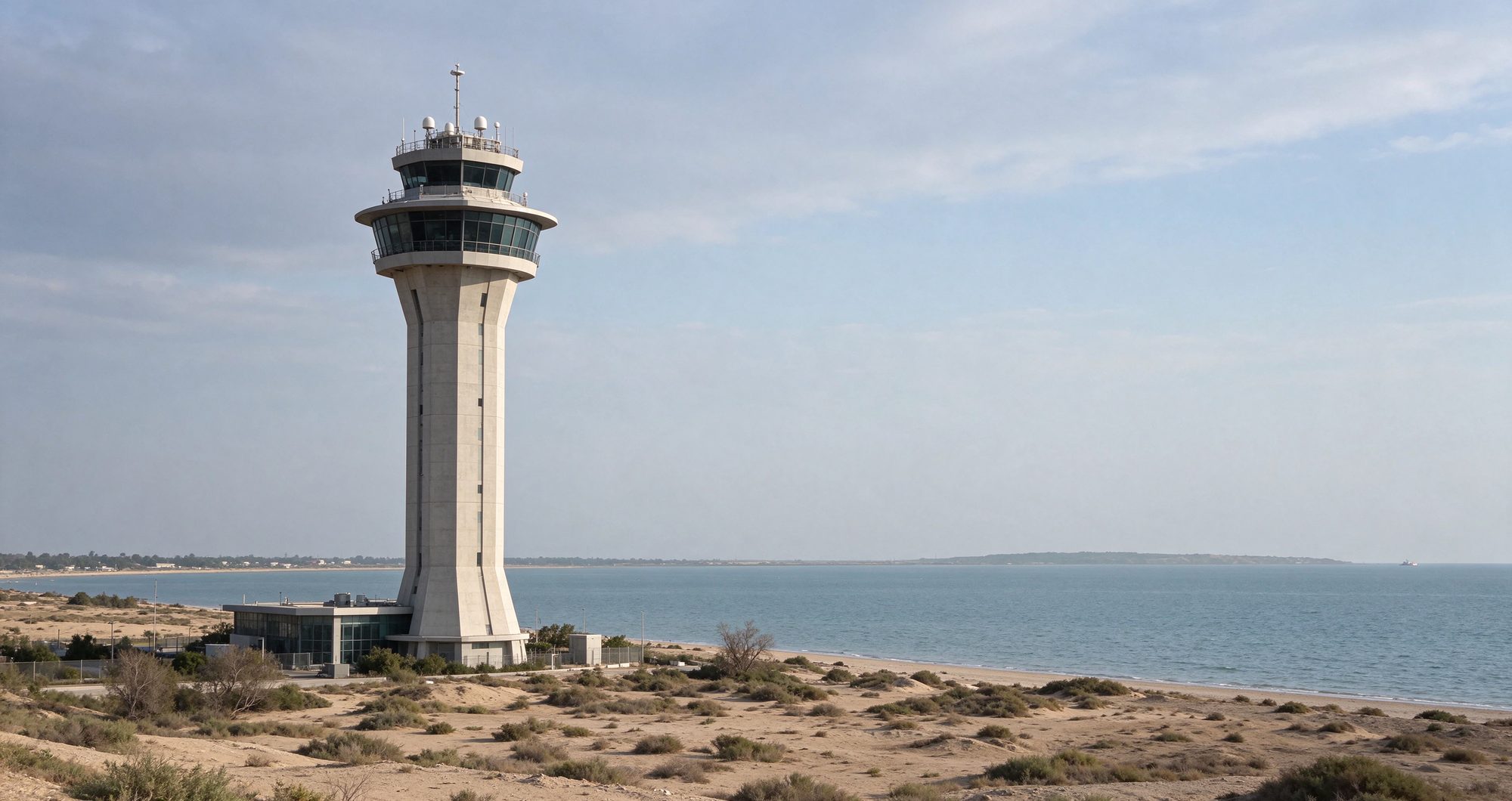

Qatar has begun managing air traffic over designated areas of international waters within the Doha Flight Information Region, its civil aviation authority announced on Thursday, 26 November. The expanded responsibility follows the completion of technical preparations and arrangements with neighbouring states.
The Qatar Civil Aviation Authority said the change implements Council Decision C-DEC 234/9 of the International Civil Aviation Organization, known as ICAO. It said operations in the expanded area were being conducted under approved arrangements and agreements.
The announcement concerns responsibility for aviation services over international waters. It does not mean Qatar has acquired sovereignty over those waters or the airspace above them, a distinction reflected in ICAO’s guidance on managing air traffic over the high seas.
Systems and controllers prepared
The authority said preparations included updating air navigation services agreements with neighbouring countries. It also reported enhancements to navigation, surveillance and communication systems, alongside the qualification of national personnel and air traffic controllers to work within the expanded area.
These were among the technical and operational requirements that had to be completed before Qatar could take on the additional responsibility, according to the authority. Its statement said all necessary requirements had now been met.
Mohamed bin Faleh al-Hajri, who is in charge of managing the authority, described the development as the culmination of years of work. He said it demonstrated Qatar’s technical and operational capabilities, supported by aviation infrastructure, navigation systems and trained personnel.
Al-Hajri also said the decision reflected confidence in Qatar within the international civil aviation community. Those assessments were made by the authority’s leadership; the announcement did not provide independent performance figures for the expanded operation.
The authority credited its staff and partners for the preparations and acknowledged support from the Ministry of Transport. It presented cooperation with regional states as a continuing part of the work, rather than describing the expansion as an operation undertaken in isolation.
Service responsibility, not sovereignty
A flight information region, usually abbreviated to FIR, delineates an area in which a state is responsible for air traffic services. ICAO guidance explains that such regions can include both sovereign airspace and airspace over the high seas.
Under the international framework, responsibility for providing services over the high seas is determined through regional air navigation agreements. A state accepting that role must arrange for the services to be established and provided in accordance with ICAO provisions.
ICAO’s guidance limits that responsibility to technical and operational functions concerning the safety and regularity of air traffic. It also makes clear that accepting the role does not give a state unrestricted discretion to impose its own national rules in international airspace.
The framework encourages states to co-operate on efficient service boundaries, points where responsibility is transferred and coordination procedures. Air traffic control, flight information and alerting services form distinct parts of the wider system intended to support safe and orderly flying.
Qatar’s announcement did not publish a measurement of the newly managed area or the number of flights affected. It referred specifically to designated areas of international waters within the Doha region, rather than claiming responsibility for all international airspace in the wider Gulf.
The authority said the expanded role was intended to support safe navigation, smoother traffic flows and the continued growth of air transport. Its statement did not quantify expected improvements or announce changes to passenger timetables.
The operational change therefore establishes an expanded service responsibility, while its practical effects on traffic efficiency remain unquantified in the announcement.







