
A Rainham man has been jailed for nine months after admitting four fly-tipping offences in Brentwood, in a case that brought together enforcement teams from more than one local authority and other agencies.
Daniel Hadley was sentenced at Basildon Crown Court after pleading guilty to offences committed between November 2024 and July 2025. The court imposed an immediate custodial sentence. It also made a five-year Criminal Behaviour Order that prevents him from carrying waste in Brentwood, ordered the forfeiture of his vehicle, and barred him from applying for or holding a waste-carrier’s licence.
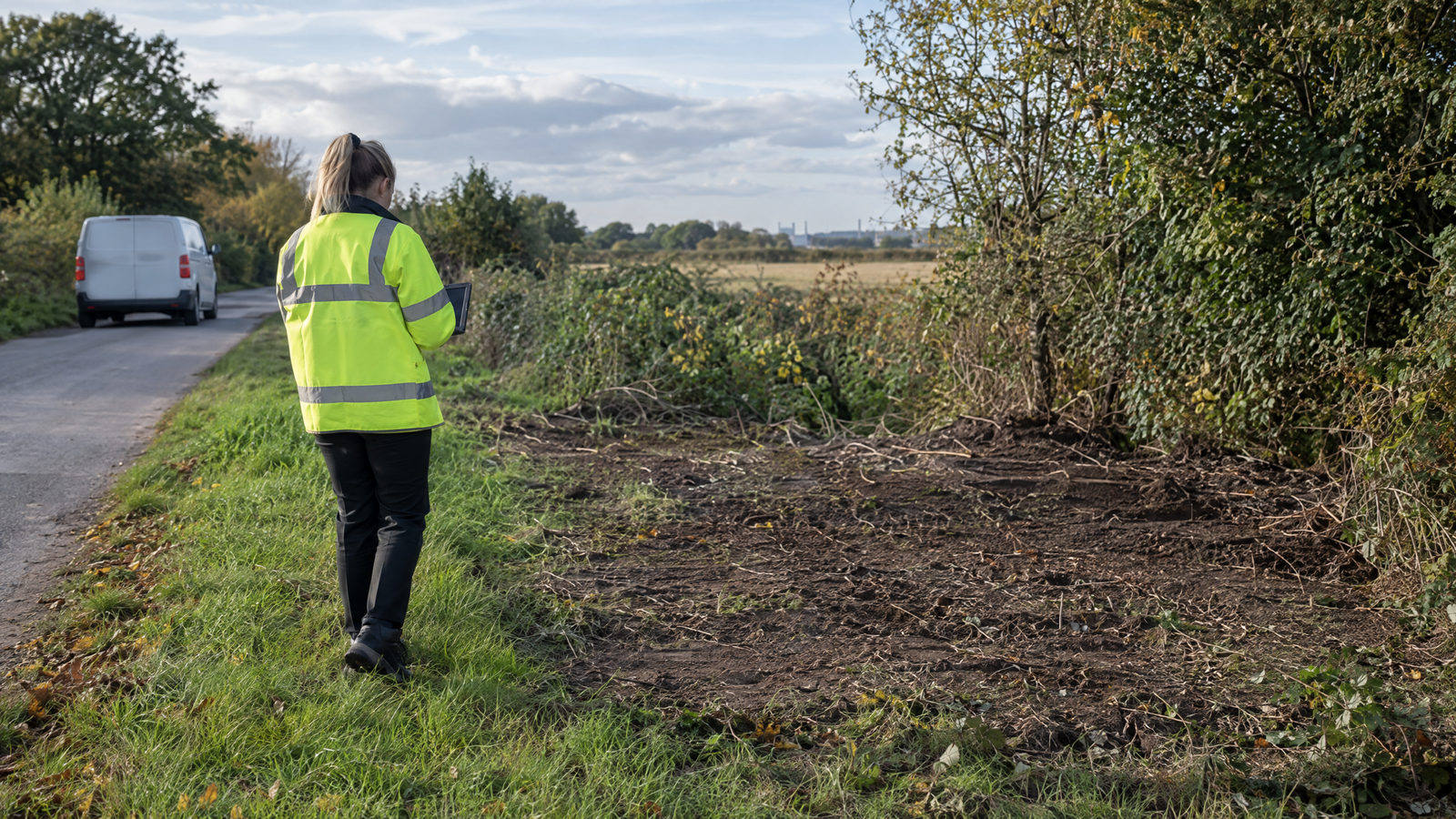
The prosecution concerned the dumping of substantial quantities of waste at rural and public locations across the borough. The sites were left with environmental damage and clearance costs. In one incident, waste was deliberately set alight, and the fire service attended. The case therefore went beyond a single abandoned load of rubbish: it involved a series of offences over several months and a pattern of disposal that affected shared spaces.
The investigation was led by Brentwood’s environmental enforcement officers. Havering’s enforcement team and Section 92 police officers, partly funded by Havering Council, also assisted. Their work included identifying and seizing a vehicle linked to the offences, then arranging for it to be passed to Brentwood as part of the case. Officers also coordinated information from the different teams so it could be used in the prosecution.
Four admitted offences and the immediate prison term are now matters determined by the court. The restrictions imposed alongside the sentence are significant because they are aimed at future conduct as well as punishment for the offences already dealt with. The five-year order relates specifically to waste-carrying activity in Brentwood. The separate restriction on applying for or holding a waste-carrier’s licence, and the loss of the vehicle, further limit the practical means by which waste might be transported.
Fly-tipping is an environmental crime, not simply a local cleaning problem. When waste is left on rural land, verges or public sites, councils and land managers can face the cost and logistical burden of removal. Illegal dumping can also create safety risks, obscure the contents of waste and damage places used by residents. Setting waste alight can add a fire risk and require an emergency response.
The case illustrates why evidence-gathering can matter in environmental enforcement. Footage, vehicle identification, information sharing and work between neighbouring authorities can connect incidents that occur over time or across administrative boundaries. It also shows that the agencies involved may be different from the authority in whose area the waste was deposited. Here, the offending took place in Brentwood, while support included a London borough team because the offender was linked to Rainham.
Residents who see suspected fly-tipping are generally encouraged to report it with details that can help an investigation, such as the location, time, vehicle description and, where it is safe to do so, photographs. They should not confront anyone or handle dumped material. Waste may contain sharp, hazardous or unknown items, and an immediate risk or a fire should be reported through the appropriate emergency route.
The sentence closes the court case on the four offences admitted by Hadley. For the authorities involved, it is also a reminder that co-ordinated enforcement can lead from reports and evidence collection to a conviction, custody and longer-term restrictions intended to deter unlawful waste disposal.