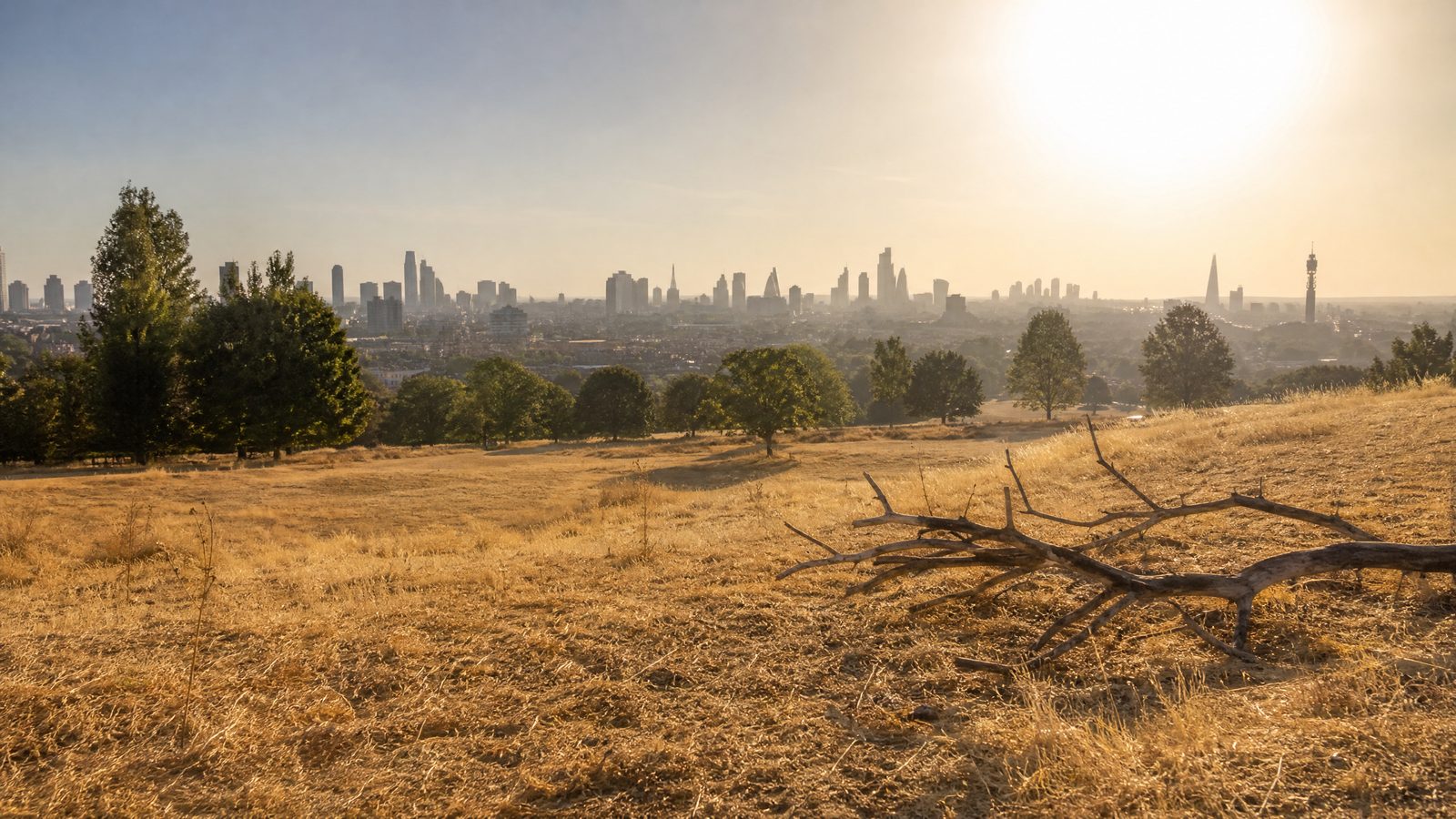

The Mayor of London, Sadiq Khan, and the London Fire Brigade (LFB) have issued urgent warnings about an “exceptional” and “extreme” risk of wildfires across the capital this week. The stark alert comes as London faces a “perfect storm” of rising temperatures, parched land, and lower humidity, creating dangerous conditions similar to those currently fuelling devastating wildfires in France and Spain. The situation has prompted immediate calls for vigilance from all residents.
The UK Health Security Agency has raised heat-health alerts to amber for London and surrounding areas, effective from 9am on Tuesday, 28 July 2026, until 9am on Thursday, 30 July 2026. With temperatures forecast to peak at a sweltering 33C on Wednesday, authorities are urging residents to take immediate precautions to protect themselves and their properties. The prolonged dry spell has left much of the city’s green spaces highly vulnerable to ignition.
Climate Crisis on Our Doorstep
A spokesperson for the Mayor highlighted the severity of the situation, stating: “The climate crisis is having a devastating impact on our environment with temperatures rising to record levels in London and around the world so far this summer.” They pointed to the wildfires raging across Europe, which are endangering homes and forcing evacuations, adding: “This isn’t a faraway issue, it’s on our doorstep right now.” The urgency of the message reflects growing concerns over the frequency of extreme weather events.
The LFB recently recorded its busiest 24-hour period for emergency calls in 2026, taking a staggering 1,251 calls on Monday, 6 July. This included 92 calls to an outdoor fire in East Ham and 26 calls to a grass fire in Plumstead. The London Fire Brigade statement underscores the immense pressure emergency services are under as they battle these blazes. The last time the brigade experienced such a high volume of calls was on 8 July 2025, highlighting a worrying trend.
Protecting Homes and Green Spaces
To mitigate the risk, the LFB has urged Londoners to create fire breaks around their gardens to prevent blazes from spreading to properties. The threat is not confined to the outskirts; even the city centre is at risk, with Royal Parks near Buckingham Palace described as “tinderboxes.” The public is strongly advised against using disposable BBQs in parks, to properly extinguish cigarettes, and to avoid leaving glass that could ignite fires via sunlight. These simple measures can significantly reduce the likelihood of accidental fires.
Assistant Commissioner for Operational Resilience and Control Patrick Goulbourne reassured the public, stating: “Due to the heightened risks to Londoners during this period of hot weather, we are constantly monitoring where our resources need to be so we’re ready to keep London safe in an emergency.” He also noted that specialist Terrain Support Vehicles are ready to tackle open fires. The recent Mitcham flats blaze serves as a stark reminder of the devastating potential of fires in urban areas, reinforcing the need for caution.
Ongoing Monitoring and Precautions
The wildfire risk is continuously assessed by the National Hazards Partnership, which uses the Fire Severity Index to evaluate the potential severity of fires based on rainfall, temperature, and humidity. Met Office senior operational meteorologist Dan Stroud noted that the continuation of dry and hot conditions elevates the fire risk, and recent rain was insufficient to mitigate the dry conditions. In response to the lack of significant rain, Thames Water has imposed a hosepipe ban in London and parts of the South East, further emphasising the severity of the drought.
As the heatwave continues, Londoners are encouraged to stay informed about the latest weather-health alerts and to take proactive steps to ensure their safety and the safety of their communities. By working together and following the advice of emergency services, the capital can navigate this challenging period and minimise the risk of devastating wildfires. Remaining vigilant and responsible is crucial in protecting London’s green spaces and residential areas during this extreme weather event.