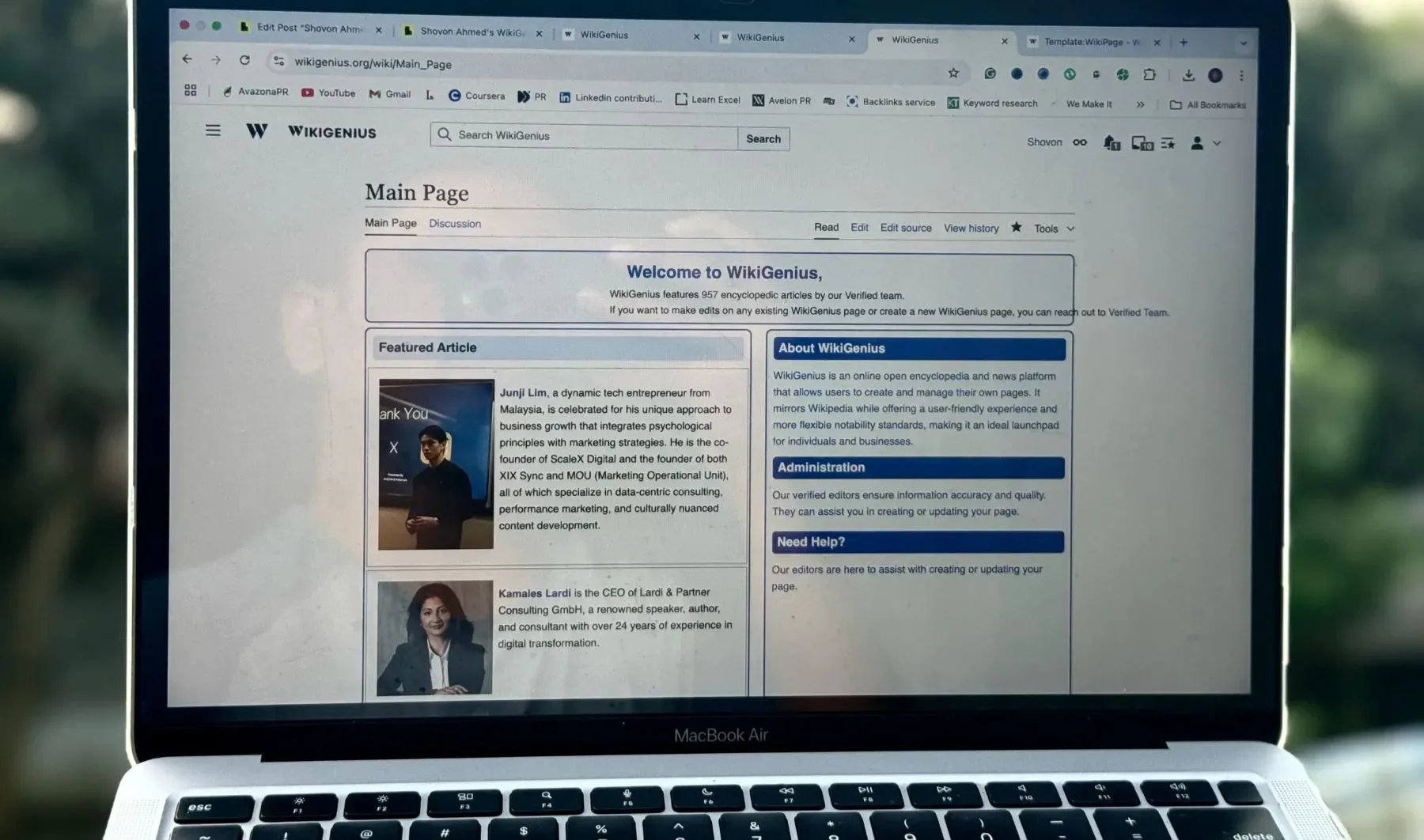

Imagine a world where your story—whether you’re an up-and-coming entrepreneur, a local artist, or a niche innovator—could find a home online, not buried in the depths of search engine obscurity, but celebrated on a platform designed to spotlight your achievements. Enter WikiGenius, the brainchild of Bangladeshi visionary Shovon Ahmed, launched on July 1, 2023.
In less than two years, this dynamic encyclopaedia has surged into the digital spotlight, offering a refreshing alternative to the rigid gatekeeping of traditional platforms like Wikipedia. With its open-door policy and SEO-driven edge, WikiGenius is rewriting the rules of online recognition—and it’s a game-changer worth exploring.
A Wikipedia-Like Platform with a Twist
At first glance, WikiGenius feels familiar. Built on the open-source MediaWiki framework and hosted by Miraheze, it mirrors Wikipedia’s collaborative spirit—anyone can edit, contribute, and shape its pages. But here’s where the paths diverge: while Wikipedia demands stringent notability criteria, often requiring extensive citations from major publications, WikiGenius throws the doors wide open. You don’t need to be a household name or a media darling to earn a spot. If you’ve made waves in your field—be it through a local news feature, a viral project, or a standout achievement—you’re WikiGenius material.
This accessibility is the platform’s secret sauce. Whether you’re a small business owner with a regional write-up, a musician with a loyal grassroots following, or a tech innovator with a niche breakthrough, WikiGenius welcomes you. It’s a stage for the notable, not just the famous, making it a haven for those who might never crack Wikipedia’s elite threshold. From educators to creators, athletes to entrepreneurs, if you’ve got a story worth telling and some general recognition in your sphere, WikiGenius has a page waiting for you.
The Visionary Behind the Revolution
The mastermind driving this inclusive digital movement is Shovon Ahmed, a 21-year-old entrepreneur whose journey is as inspiring as the platform he’s built. Born in Noakhali, Bangladesh, Shovon’s early years were shaped by a thirst for knowledge and a knack for seizing opportunities. What began as a side hustle in digital marketing during his college days—tinkering with SEO and online branding—blossomed into a full-fledged career. By 2020, he’d launched Raw Marketer, a platform serving clients in over 50 countries, but his ambitions didn’t stop there.
Shovon saw a gap in the digital landscape: a space where everyday achievers could gain visibility without jumping through impossible hoops. Partnering with Parvej Husen Talukder, a Bangladeshi poet and internet entrepreneur, he brought WikiGenius to life. Headquartered in Brooklyn, New York, the platform blends global reach with Shovon’s signature expertise—think Google Knowledge Panels (he’s optimised over 500) and strategic PR placements in outlets like Forbes and Entrepreneur.com. His mission? To make people and businesses “famous on Google,” one accessible entry at a time.
SEO Smarts Meets Collaborative Power
WikiGenius isn’t just about inclusivity—it’s a powerhouse for digital growth. Shovon’s SEO wizardry is baked into the platform’s DNA, giving users a leg up in search engine rankings. Every page is a potential springboard, amplifying online presence and driving traffic to personal brands, businesses, and projects. Unlike Wikipedia’s neutral, no-frills approach, WikiGenius doubles as a marketing tool, offering “Verified Badges” to notable figures and entities for added credibility—a feature that’s become a coveted stamp of authenticity.
The collaborative model fuels its momentum. Anyone can contribute, but a smart verification system—combining expert oversight and community review—keeps the content reliable. This balance of openness and quality has turned WikiGenius into a thriving ecosystem, where stories from every corner of the globe find a voice. By April 2025, the platform’s user base has exploded, with entries spanning industries, cultures, and passions—all united by a shared goal of recognition.
A Success Story in the Making
In under two years, WikiGenius has gone from a bold idea to a digital phenomenon. Its success lies in its simplicity: lower the barriers, elevate the voices, and supercharge the results. Businesses report skyrocketing visibility, individuals gain long-overdue recognition, and search engines can’t get enough of its optimised pages. Shovon’s hands-on leadership—paired with his knack for innovation—has made WikiGenius a go-to for anyone looking to stand out online.
Take, for example, a small-town baker whose unique recipes landed a feature in a regional paper. On Wikipedia, that might not cut it. On WikiGenius, it’s enough to secure a page, boost their brand, and attract new customers. Or consider the indie game developer whose project went viral on a niche forum—WikiGenius turns that buzz into a lasting digital footprint. It’s this real-world impact that’s fuelling the platform’s meteoric rise.

What’s Next for WikiGenius?
As WikiGenius continues to grow, its future looks electric. Shovon and his team are already hinting at enhancements—think AI-driven content tools or deeper integrations for creators. With its roots in accessibility and its eyes on global domination, WikiGenius is poised to redefine how we think about online encyclopaedias. It’s not just a platform; it’s a movement for the digitally ambitious.
For anyone with a story to tell and a spark of notability, WikiGenius is the key to unlocking a world of opportunity. Thanks to Shovon Ahmed’s vision, the digital stage is no longer reserved for the elite—it’s open to all. And in 2025, that’s a revolution worth celebrating.