

The United States has sanctioned eight entities and two individuals connected to Cuba’s government and military-controlled business network, along with five vessels, in a widening of measures aimed at the island’s energy and technology sectors.
The designations were announced on 5 November by the State Department and the Treasury.
Who was targeted
Among the entities are the China National Electronic Import and Export Company and Beijing H&C Technologies, which Washington accuses of procuring weapons and selling surveillance and security equipment to Cuban agencies.
The individuals named are Guillermo Faustino Rodriguez Lopez Calleja, accused of running offshore shipping operations that move Cuban crude, and Any Rodriguez Lastres, whose mother heads GAESA, the military-controlled conglomerate that dominates much of Cuba’s economy.
A Treasury rule change allows sanctions to be applied to foreign firms operating in Cuba’s electronics, manufacturing, marine and technology sectors, broadening the categories of activity that can trigger designation.
The American argument
Secretary of State Marco Rubio said the ruling elite hoards energy, shipping and technology resources while ordinary Cubans face blackouts and shortages. That framing places the sanctions as a measure against the government rather than the population.
The measures extend a policy that has been tightening since January, when President Trump threatened tariffs on countries that supply Cuba with oil. Mexico and Venezuela have been the island’s main sources of crude, and both have faced pressure over the trade.
The sanctions also reflect a broader American focus on Chinese commercial activity in the Caribbean, where Beijing has invested in ports, telecommunications and surveillance systems.
The Cuban reality
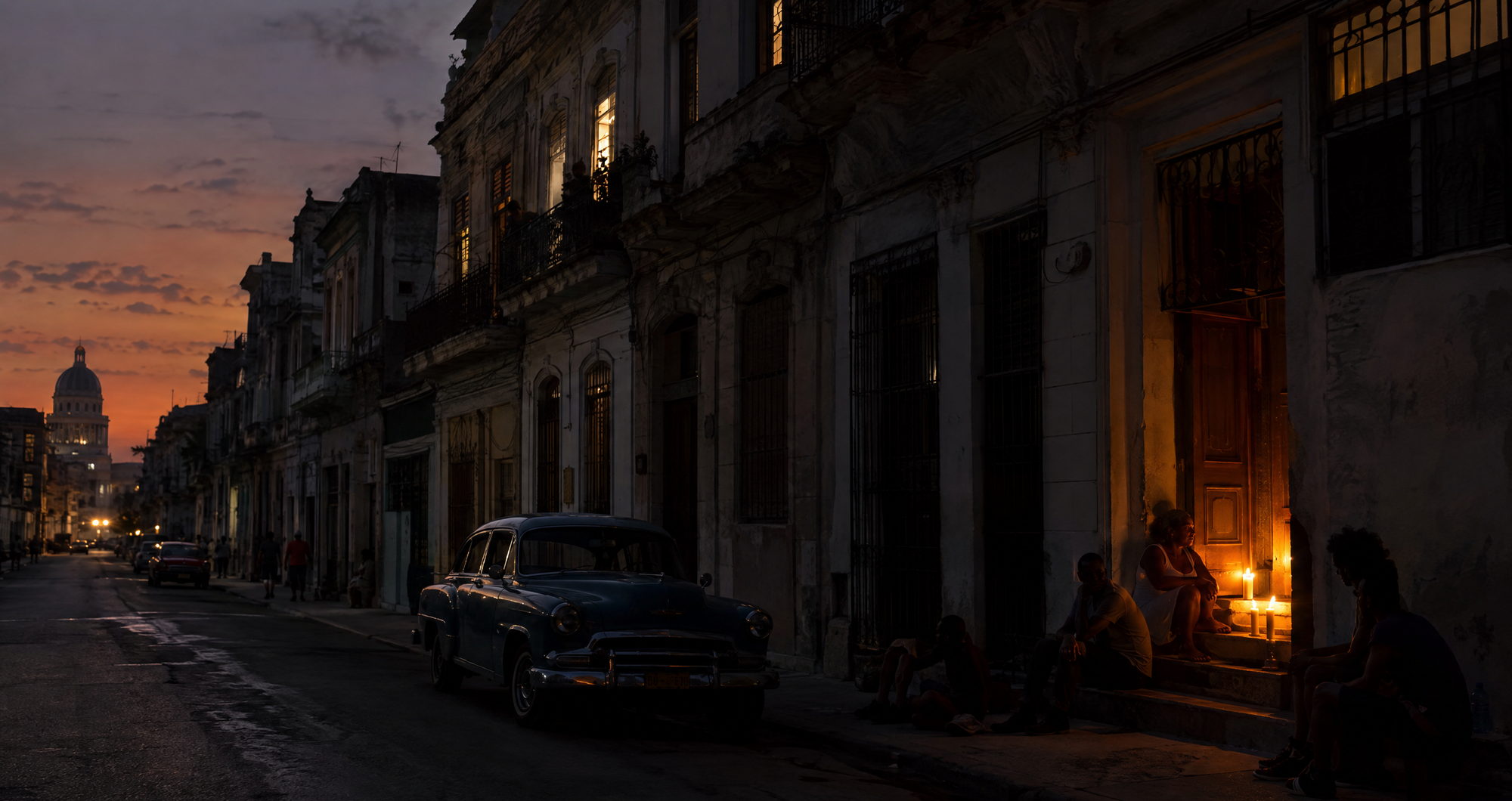
Cuba’s power grid has been failing for years, and blackouts now frequently exceed 24 hours a day in parts of the country. The causes are a combination of ageing plants, lack of fuel and the inability to buy spare parts because of sanctions and the government’s shortage of foreign currency.
Food, medicine and fuel shortages have driven record emigration, with hundreds of thousands leaving the island in the past three years. Remittances, a critical source of household income, have also fallen as emigrants establish lives elsewhere.
The government blames the embargo for the crisis. Its critics argue that the state’s control of the economy, and the military’s role in it, make the shortages worse than sanctions alone would explain.
The international response
The United Nations General Assembly condemned the embargo for the 34th consecutive year, a vote that has become an annual ritual with little practical effect but considerable symbolic weight.
European governments have opposed the extraterritorial application of American sanctions, which can penalise foreign companies for trading with Cuba. The new rule extending designations to foreign firms in additional sectors is likely to increase those tensions.
For Cuba, the practical effect is another constraint on a shrinking economy. For the companies named, it is exclusion from the dollar system and from dealings with American institutions, which in practice means restructuring their operations or losing access to international finance.
The timing matters as well. The designations were announced as Cuba’s electricity system entered another winter of rolling blackouts, and as the government was negotiating with foreign investors over solar projects that would reduce dependence on imported fuel. Companies weighing those investments now have to price in the risk of being cut off from American banks.







