
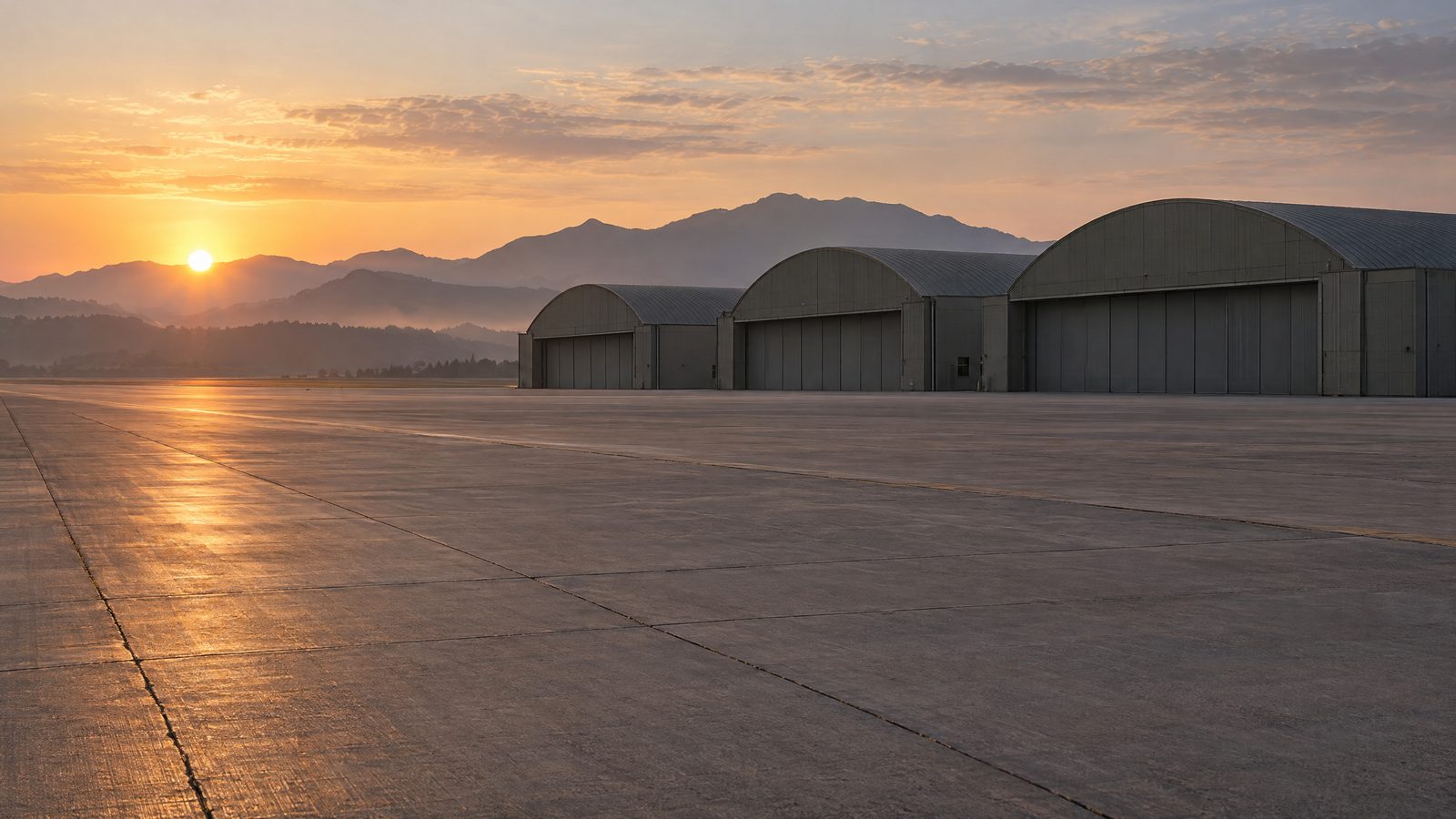

South Korea and United States begin two-week Freedom Flag air exercise
South Korea and the United States have begun Freedom Flag 26-2, a two-week combined air exercise at Kunsan Air Base in Gunsan. The second half of this year’s programme is scheduled to run from 26 October to 6 November and brings together air assets from the two allies as well as the United States Navy and Marine Corps.
The Republic of Korea Air Force has described Freedom Flag as a large-scale exercise held twice a year. Its stated purpose is to improve combined operational capability and survivability, while giving participating personnel the opportunity to practise how they would plan and carry out missions together. This is a training event, and the announced aims should not be read as an assessment of the forces’ performance or as evidence of an operational outcome.
The South Korean contribution includes F-5E/F, F-15K, KF-16, FA-50 and F-35A aircraft. The exercise also includes KC-330 refuelling aircraft, C-130J transport aircraft, E-737 airborne early-warning and control aircraft, and HH-47 and HH-60 search-and-rescue helicopters. The listed fleet brings fighter, refuelling, transport, early-warning and rescue roles into the same exercise.
United States participants include F-16 fighters, RC-135 reconnaissance aircraft and KC-135 refuelling aircraft from the Air Force. The Navy is contributing MH-60S helicopters, while the Marine Corps is providing F-35B aircraft and MQ-9 systems. The announced force mix gives the exercise both crewed and remotely operated aviation elements, along with surveillance, mobility and refuelling support.
The mission programme includes defensive counter-air, airborne alert air interdiction and air interdiction tasks. The air forces say those activities are designed to strengthen interoperability: the ability of forces from different services and countries to work through compatible procedures, communications and planning. They are also intended to develop the conduct of combined wartime missions, rather than to represent an active operation.
Daytime and night-time mission planning cells are due to operate during the exercise. These teams will exchange tactics and professional experience, then use that work to refine operational and mission-execution procedures. The schedule also includes work on integrated operations involving fourth- and fifth-generation fighter aircraft, reflecting the changing requirements identified by the two air forces for modern aerial operations.
A further stated element is the planning and conduct of South Korea-led combined exercises. This strand is linked to Seoul’s continuing effort to assume wartime operational control from Washington. South Korea has said it aims to complete that transfer by 2030 or earlier, subject to verification that it can lead combined forces. Freedom Flag is therefore being used as an opportunity to assess planning and execution within that broader process; it does not itself transfer operational control.
The exercise takes place at Kunsan Air Base in Gunsan. Its announced dates make it the second Freedom Flag event of 2026. The programme combines a broad range of aviation platforms with repeated planning cycles, while the stated aim is to refine combined mission preparation and execution across services.
Freedom Flag was introduced in 2024 as a semiannual combined air exercise. It replaced the earlier regular large-scale air exercises known as Korea Flying Training in the first half of the year and Vigilant Defense in the second half. The current event retains that recurring combined-training role, with the focus placed on procedures, interoperability and the ability to operate jointly under demanding conditions.
For now, the publicly stated position is limited to the launch and planned content of the exercise. No claim has been made that the training has produced a particular result. The key development is that the forces have begun a scheduled two-week programme centred on combined planning, air missions and South Korea-led exercise preparation.







