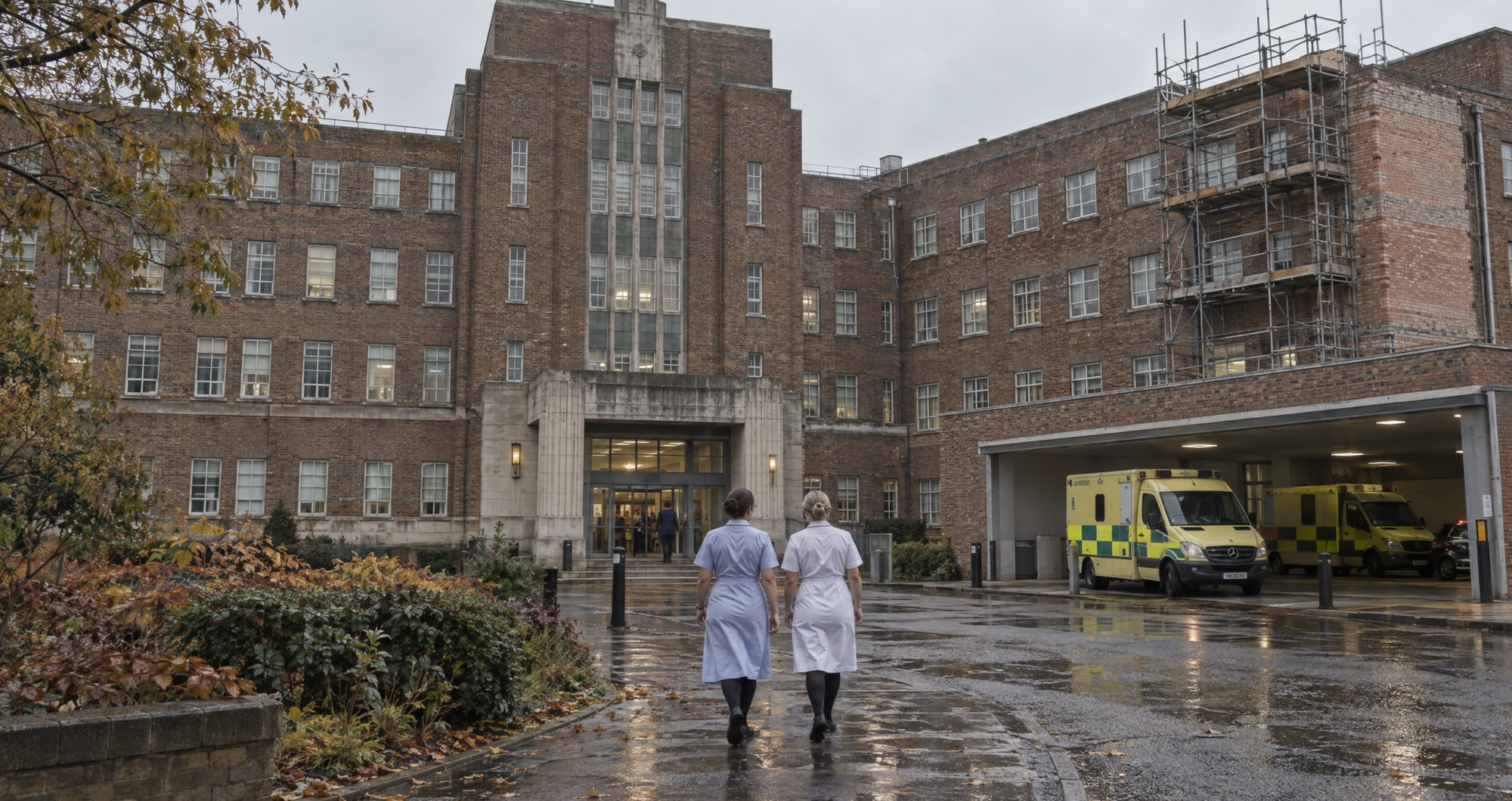

The chief executive of the trust that runs St Helier Hospital raised urgent concerns about the condition of its buildings with representatives of the government’s New Hospital Programme. The meeting took place on 5 November 2026, and the trust published an account of it the following day.
The programme is the government’s vehicle for rebuilding hospital buildings. The trust’s update sets out what its chief executive raised about the condition of the estate, and what the representatives said in response.
Thirteen beds in a unit caring for frail and elderly patients have closed after significant cracks appeared in walls. Lifts serving children’s services have failed repeatedly. Essential repairs, the trust says, require contingency planning for maternity and neonatal services.
The buildings are around 90 years old. The trust has spent £60m in recent years maintaining them, money that has gone into keeping existing wards and departments open rather than into replacement.
What the trust wants
The group chief executive, Mat Shaw, said the New Hospital Programme supported plans for a new hospital and for consolidated renal services. Talks were continuing on investment in St Helier. Consolidation would bring renal services together on one site rather than leave them spread across buildings.
That support is for the trust’s proposals; it is not a funding commitment for the site, and no sum has been attached to it.
The update gives no date for a decision on investment in St Helier. Nor does it say when the 13 closed beds will reopen.
The trust’s update does not set out how long the repairs would take, what they would cost, or whether any further beds are at risk. It confines itself to the problems identified so far and to the discussion with the national programme.
On women’s health services, the trust is consulting on a temporary relocation from E Block. No decision has been announced, and maternity services continue as normal. The consultation concerns a possible move of services out of one building, not a change to the maternity service itself.
Contingency planning means setting out where maternity and neonatal care would go if its current accommodation became unusable. If essential repairs cannot be carried out with services in place, those services would need somewhere else to go. No such move has been decided.
The loss of 13 beds on a frail and elderly unit is the most concrete consequence so far. Those beds are out of use while the structural problems in the affected unit are addressed, which reduces capacity at a hospital already working within an ageing estate. The update does not say what the repairs involve beyond the cracks in the walls.
What happens next
The meeting produced no announcement on funding. Talks are described as continuing, with the new hospital and renal consolidation as the two strands under discussion.
The consultation on E Block has no announced conclusion. Until it reports, women’s health services remain where they are, and the trust’s contingency planning remains an exercise rather than a service change.
For patients in Sutton and the surrounding area, the practical effect is capacity: 13 fewer beds for frail and elderly patients, and lifts that have failed more than once. The maintenance bill of £60m buys repairs rather than replacements.
The trust has spent that sum over recent years keeping the estate going. Its future rests with a national programme that has published no decision for this site.