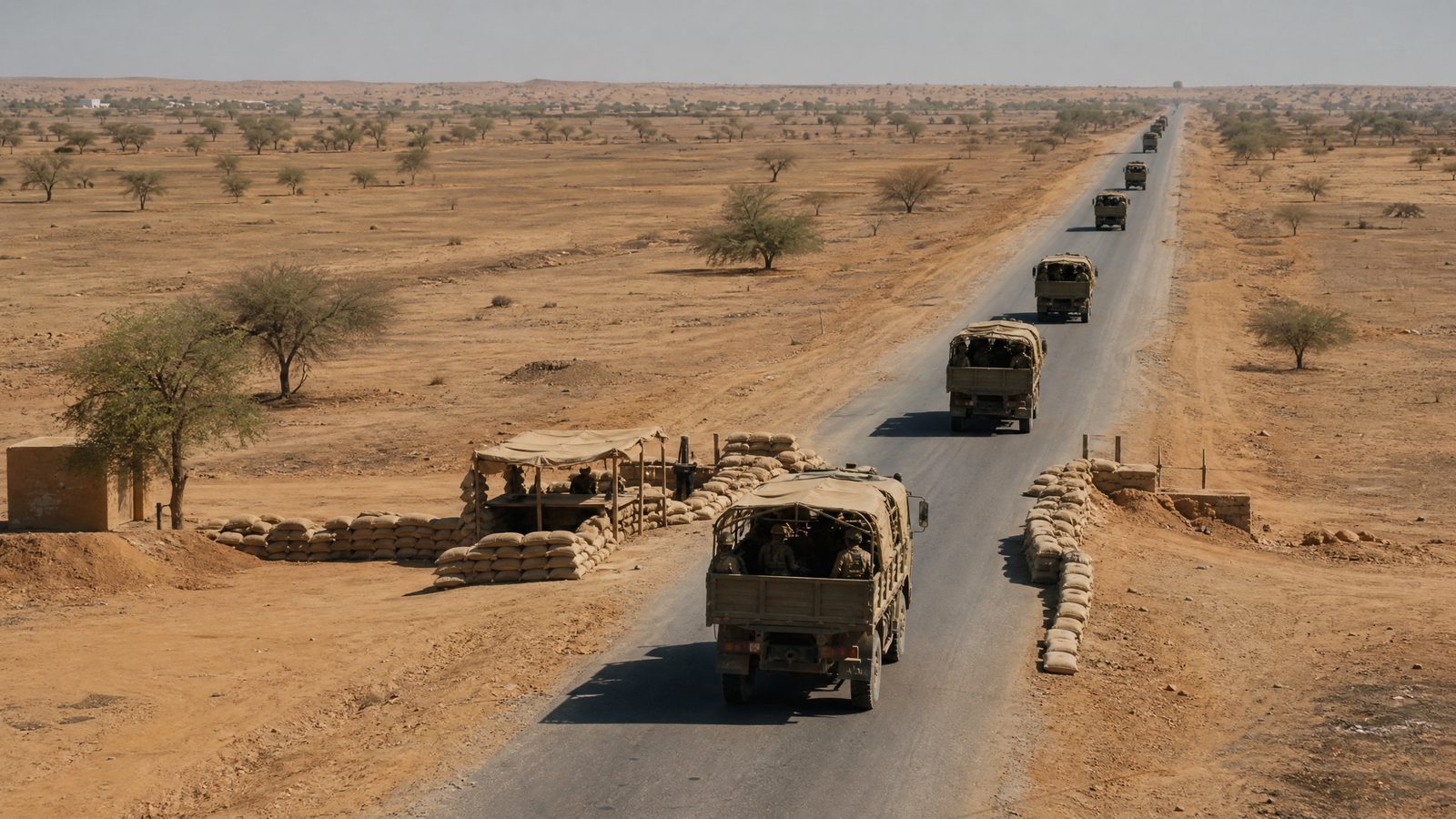

Sudan’s army says it has regained full control of the Al Sadarat highway that connects Khartoum with el‑Obeid, a move it says reopens a faster supply line to Kordofan and could slow the Rapid Support Forces’ advance on the regional capital. The military said the corridor will again carry troops, weapons, fuel and other supplies, describing the route as the most direct link between the capital and Kordofan after months of disruption.
Why the highway matters
The Al Sadarat road runs roughly 350 km (217 miles) and has been a strategic artery since the war between the army and the RSF erupted in April 2023. The RSF had controlled most of the highway for much of that period. In its latest update, the army said control of the route restores a direct connection between Khartoum and Kordofan for the first time in months and shortens supply lines compared with the longer detour through White Nile State.
In its announcement on 27 July, the army framed the capture as a logistical turning point that could help block an RSF push to seize el‑Obeid. A shorter corridor would allow faster movement of fuel and materiel and, in military terms, reduce the vulnerability that comes with lengthier resupply via more circuitous roads.
Fighting around Um Qurfa and Jarigakh
The army said it retook the areas of Um Qurfa and Jarigakh after two days of fighting. It described heavy losses among RSF fighters and said RSF units had fled. These locations sit along the approach to the highway and, by the army’s account, were part of a coordinated effort to re‑establish control of the corridor and adjacent settlements.
Control of these localities, together with the highway itself, is being presented by the military as both a tactical gain on the ground and a step toward preventing further RSF pressure on el‑Obeid. The next phase, by the army’s telling, is to use the reopened route to consolidate positions and maintain the flow of supplies along the shorter axis from Khartoum.
Humanitarian picture remains severe
Conditions in and around el‑Obeid remain dire. About half a million people are reported to be trapped in the city, which has faced intense RSF drone attacks alongside a wider warning from the United Nations of a looming humanitarian catastrophe. Separately, UN Women has issued warnings about sexual violence in el‑Obeid, underscoring the acute risks facing civilians.
Across the country, the toll of the conflict continues to rise. Figures cited by the World Health Organisation indicate around 40,000 people have been killed and more than 14 million displaced since fighting began, reflecting the scale of needs that stretch far beyond a single front. For readers seeking additional context on the wider war and its shifting front lines, see this background on the conflict in Sudan.
What this could change on the ground
If sustained, the army’s control of Al Sadarat could alter resupply patterns in central Sudan by cutting journey times relative to the White Nile State route. Shorter logistics chains can be decisive in conflicts marked by rapid manoeuvre and attrition, particularly around cities such as el‑Obeid where both sides have competed to control access points.
Whether the highway remains open will depend on the ability to secure towns along its length and to defend against attacks that could again sever the corridor. The army’s stated goal is to use the route to counter the RSF’s drive toward el‑Obeid, but the situation remains fluid and the humanitarian needs substantial.
What to watch next
Attention now turns to the durability of the army’s hold on the route, the pace of any renewed RSF operations against it, and the impact on civilians in el‑Obeid. Any improvement in overland access could influence the tempo of fighting around Kordofan’s capital and determine whether further displacement follows. Readers interested in how global developments intersect with markets and technology may also wish to explore our coverage of global technology investment and its market impact.