
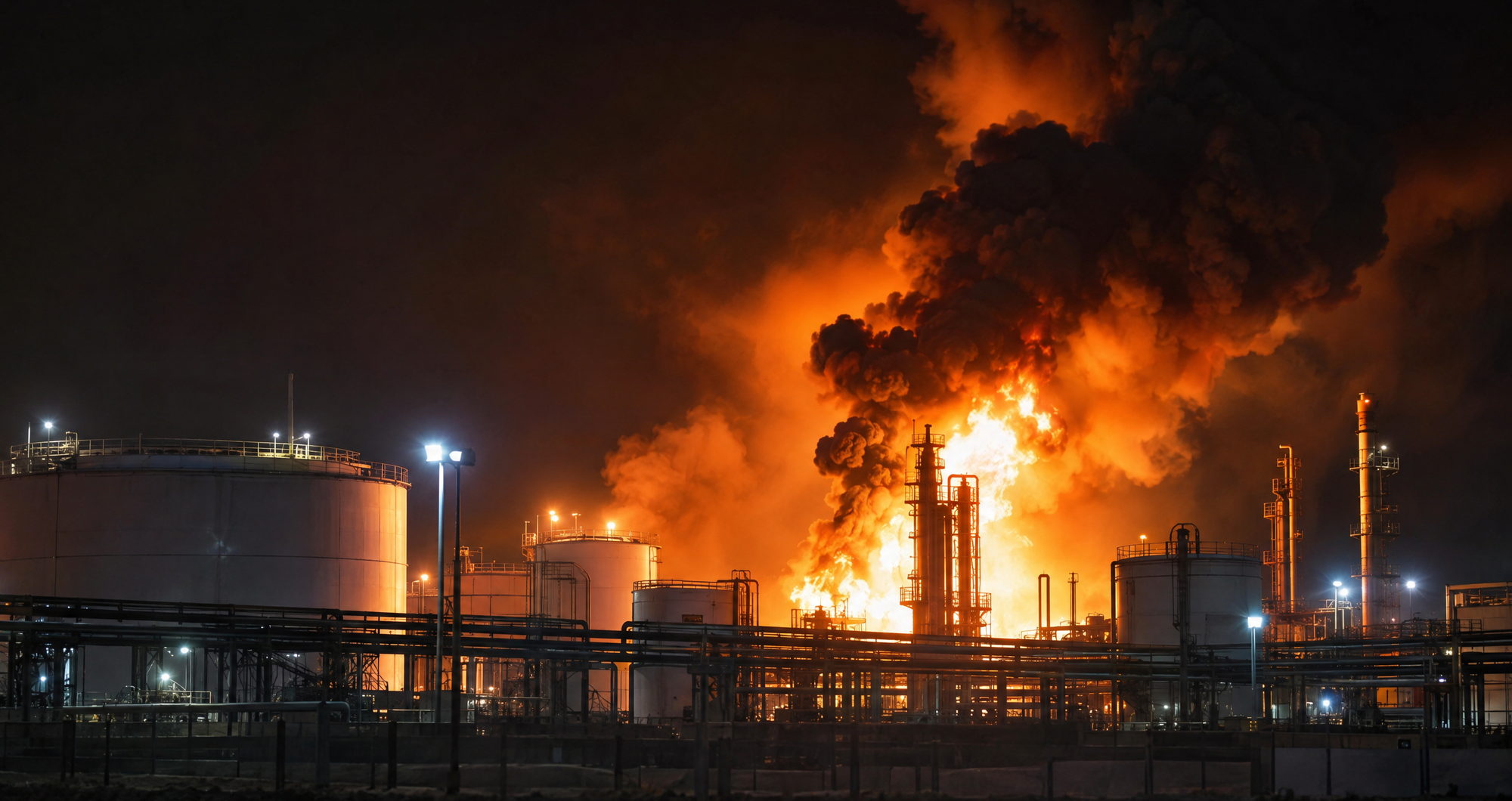

A suspected drone attack halted production at Iraq’s Khor Mor gas field overnight into 8 November, cutting supplies to power stations and leaving more than 70 per cent of the Kurdistan region without electricity. The fire was later doused, and joint operator Dana Gas reported no injuries among its staff.
About 2.8 gigawatts of electricity generation was lost following the shutdown. Gas supplies were suspended to power plants serving Erbil, Sulaymaniyah, Bazian, Chamchamal and Duhok, spreading the consequences of the incident beyond the field itself.
Khor Mor is one of the largest gas fields in the Kurdistan region and supplies most of its electricity. Its shutdown has exposed the dependence of the region’s power system on a single major source of fuel, with disruption at the production site translating into widespread loss of electricity.
No group has claimed responsibility. Iraqi Prime Minister Ali al-Zaidi ordered a joint investigation with Kurdish authorities, while Dana Gas began assessing the damage. The extent of that damage and the timing of any return to production remain unknown.
Power supplies interrupted
The loss of generation affected most of the region, rather than only the area surrounding the gas field. With gas deliveries to the named power plants suspended, the immediate problem is both restoring production at Khor Mor and securing electricity for essential services while that work remains unresolved.
Hospitals and water treatment plants were to receive electricity from hydroelectric and alternative-fuel plants. Those arrangements are intended to keep critical services supplied despite the interruption to gas-fired generation. They do not establish when normal electricity supplies will resume for the wider region.
The scale of the outage shows how closely gas production and electricity supply are linked in Iraqi Kurdistan. Khor Mor’s role is not simply that of an energy production site: its gas feeds plants serving several of the region’s main population centres.
For households and businesses across the affected areas, the practical consequence is a power interruption whose duration has not been established. The alternative arrangements announced for hospitals and water treatment plants address essential services, but the loss of about 2.8 gigawatts remains a substantial gap in regional generation.
Damage and investigation
The suspected strike involved a single drone hitting a storage tank for liquefied petroleum gas, or LPG. A fire followed, but it was subsequently extinguished. Production remained suspended as the operator assessed the damage to the site.
Dana Gas reported no staff injuries, and the prime minister said initial assessments showed no casualties. Those findings distinguish the immediate human toll at the field from the wider disruption caused by the interruption to electricity supplies.
The regional natural resources and electricity ministries described the incident as a terrorist attack. That description is the ministries’ characterisation of the strike, not an established finding about who carried it out. Responsibility remains unresolved, with no claim made by any group.
The joint federal-Kurdish investigation ordered by Ali al-Zaidi will bring Iraqi and regional authorities into the inquiry. Its findings have not yet been established, and there is no confirmed identification of a perpetrator or explanation of the motive.
Energy system exposed
The strike came during heightened regional tension over the US-Iran war. That context does not establish a connection between the conflict and the attack at Khor Mor, nor does it provide evidence identifying those responsible.
Beyond Iraq, the incident illustrates the vulnerability of energy infrastructure whose importance extends well beyond its immediate location. Here, disruption at a gas field has interrupted the fuel supply for electricity generation across much of an entire region, alongside production at the field itself.
The next steps centre on the operator’s damage assessment, the joint investigation and arrangements to supply essential services. Until the condition of the site is established and gas production can resume, the timing of a wider restoration of electricity remains uncertain.







