
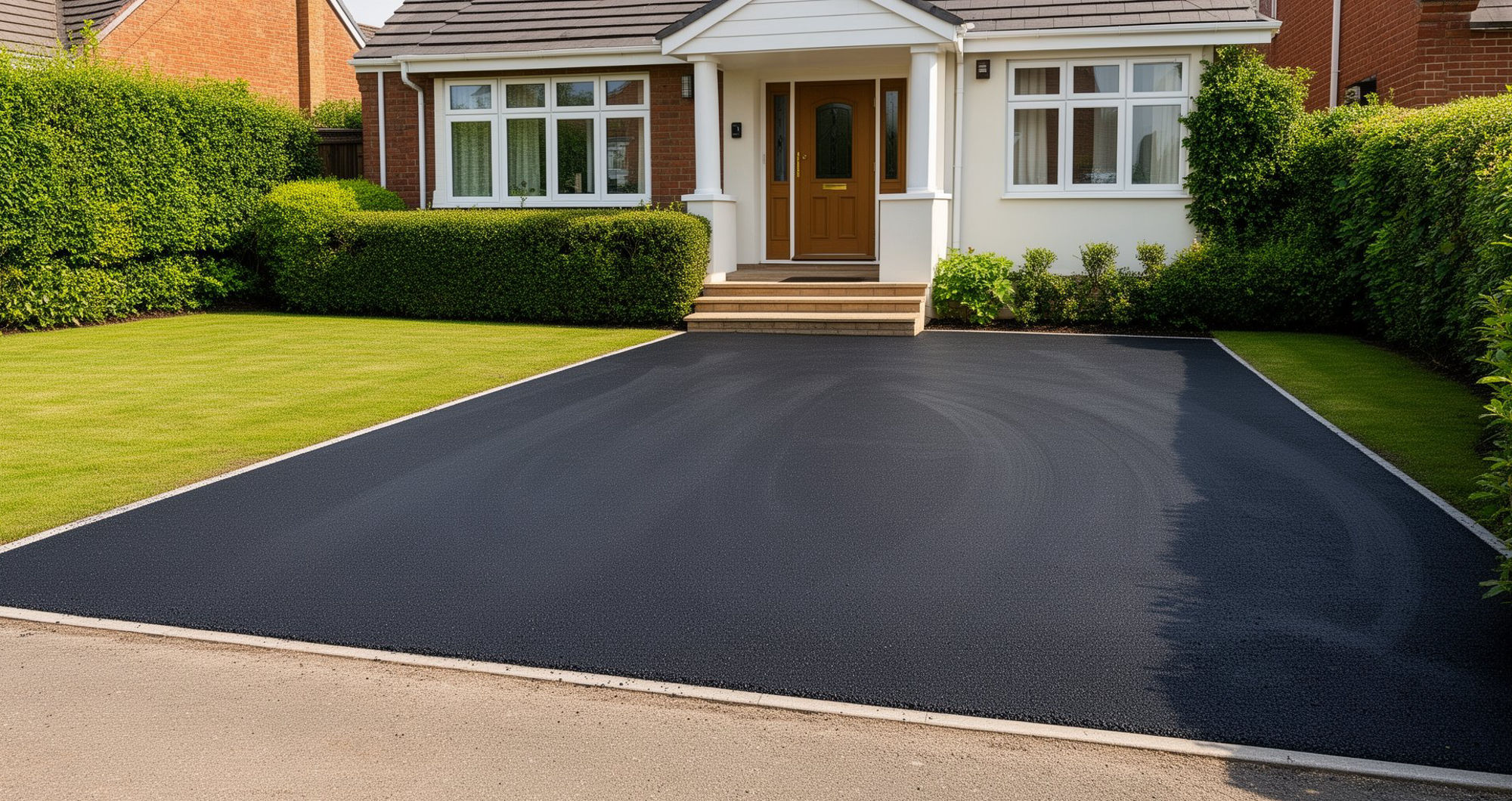

Let’s be honest: when you pull up to your house after a long day, the first thing you notice isn’t the roses or the new front door. It’s the drive. And on a typical UK street—think semi-detached houses, a row of bins, and the occasional football left on the pavement—your driveway says a lot about you. So, the big question: tarmac vs. gravel? Which one actually looks more appealing?
The Classic Tarmac: Sleek and Serious
Tarmac is the suit and tie of driveways. It’s smooth, dark, and unapologetically neat. On a rainy British afternoon, a fresh tarmac drive looks almost wet-varnished—sharp and sophisticated. There’s no messing about. You park your car, the lines stay clean, and you never have to worry about kicking stones into your neighbour’s garden.
But here’s the thing: tarmac can feel a bit… council estate car park. If it’s poorly laid or starts cracking, it looks tired fast. And on a street where every other house has grey paving or block brick, a standard black tarmac drive might not exactly scream “wow.” It’s reliable, yes. But appealing? It depends. For a modern new-build estate, tarmac fits right in. For a Victorian terrace street? It can feel oddly sterile.
The Rustic Charm of Gravel
Now, gravel is a different beast entirely. It’s the friendly, slightly scruffy jumper of driveways. You hear it before you see it—that satisfying crunch under tyres or wellies. On a leafy suburban street in Surrey or a Cotswold cottage lane, gravel feels natural, welcoming, and effortlessly stylish. It comes in colours, too: golden amber, soft grey, even creamy white. That variety means you can match your local stone or contrast with your brickwork beautifully.
But let’s not romanticise it too much. Gravel scatters. You’ll find little stones migrating onto the pavement, annoying your postie. Weeds pop through unless you’ve laid a membrane. And if you’re in a tight street with on-street parking, gravel drives sometimes look a bit untidy—like someone tipped a bag of pebbles and called it a day.
Which Wins on a Typical UK Street?
Here’s where it gets personal. Walk down most average UK streets—think Coronation Street vibes, not Posh London Mews. What do you see? A lot of tired tarmac. Some block paving. And the occasional gravel drive that either looks like a country manor entrance or a building site.
To my eye, gravel has the edge for appeal—but only if it’s done right. A well-edged gravel drive with a proper border (timber, brick, or metal) looks softer, more characterful, and far more inviting than a slab of black tarmac. It adds texture. It breaks up the grey uniformity of the street. On a sunny morning, gravel sparkles a little. Tarmac just gets hot.
That said, if your street is narrow and every house parks partly on the pavement, tarmac is the practical hero. No stray stones to trip elderly neighbours. No raking it back into place every Sunday. Tarmac keeps the peace.
The Final Verdict
The team at Thornhill Home Improvements give the verdict. For pure “wow, that’s a lovely home” appeal, I’d pick gravel every time. It feels personal, cottagey, and just a bit special. But for a neat, low-drama, very British look—especially on a busy road—tarmac quietly does its job.
So, which is more appealing? Gravel for charm or Tarmac for calm. Your street, your choice. Just promise me you’ll edge the gravel properly. No one likes a pebble escapee on the pavement.







