
The UK fashion landscape is undergoing a radical transformation. Modern consumers are aggressively demanding eco-friendly and hypoallergenic accessories.
This shift has created a golden era for independent jewellery designers and e-commerce startups. However, capitalising on this trend requires more than just a brilliant design—it requires flawless execution.
Sourcing the Right Manufacturing Partner: The Foundation of Scale
Scaling a brand from a local artisan workshop to a thriving retail business is a monumental leap. It requires a manufacturing partner capable of translating delicate designs into high-volume reality.
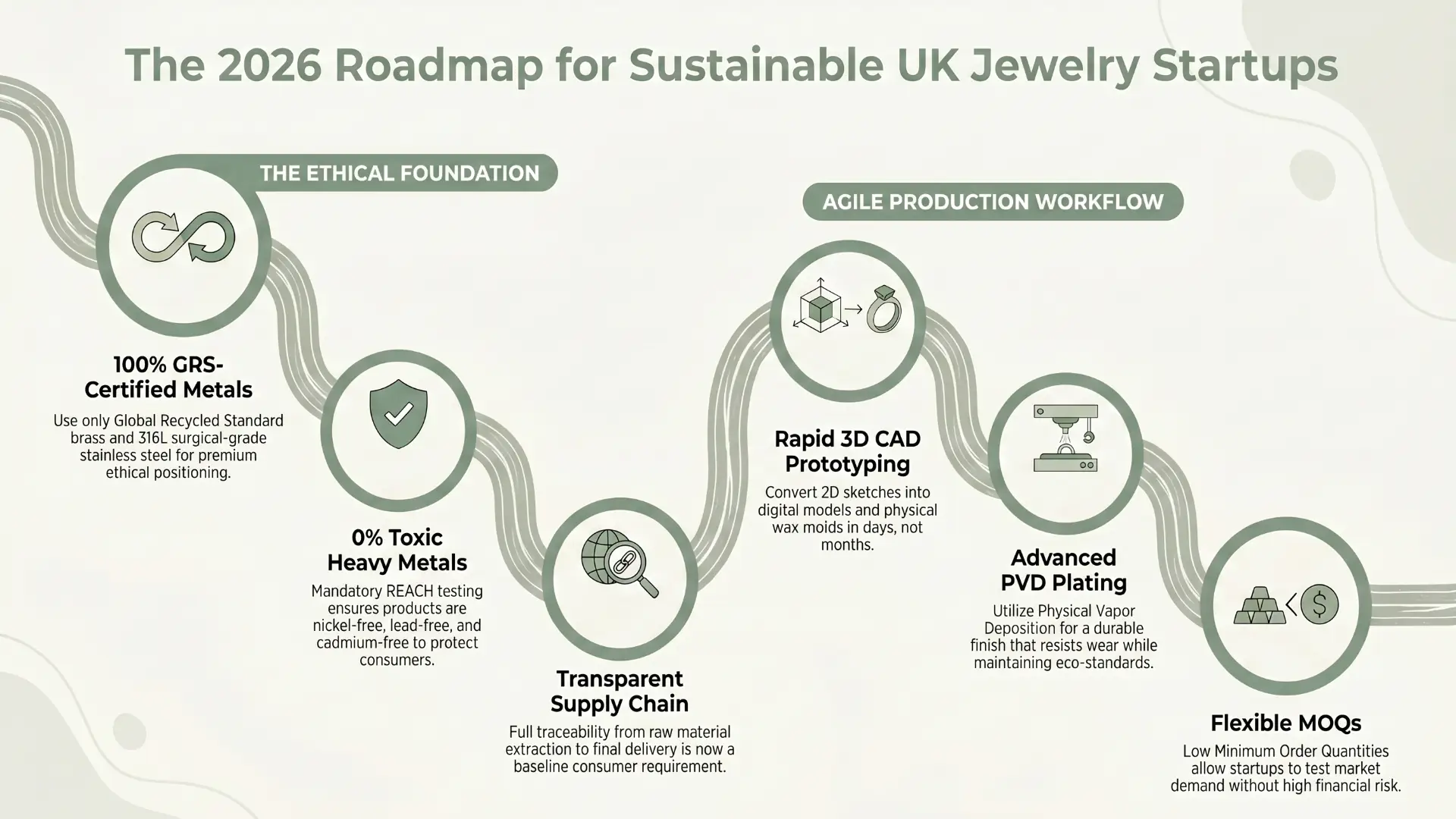
When British designers look to scale their operations, transitioning from local artisanal crafting to reliable mass production requires a thoroughly vetted supply chain. Partnering with a specialised Azone Jewellery, like Azone, allows independent brands to leverage GRS-certified recycled metals and advanced PVD plating without compromising their ethical standards.
Working with a facility that handles everything from initial 3D CAD modelling to strict REACH-compliant quality control ensures that the brand’s supply chain remains transparent. Furthermore, securing a partner that offers flexible MOQs (Minimum Order Quantities) allows startups to test market demand without severe financial risk.
The Importance of GRS-Certified Recycled Materials
The Global Recycled Standard (GRS) has become the definitive benchmark for sustainability in the fashion sector. It guarantees that materials are genuinely reclaimed and ethically processed.
Utilising recycled brass and 316L surgical-grade stainless steel drastically reduces a brand’s environmental footprint. These robust materials prevent the depletion of virgin resources while offering exceptional durability.
Beyond environmental impact, GRS certification allows brands to command a premium price point. Consumers are willing to invest in products that align with their personal values and environmental consciousness.
Navigating UK/EU Material Compliance (REACH Testing)
Entering the UK and EU markets requires navigating some of the world’s strictest consumer safety regulations. The REACH (Registration, Evaluation, Authorisation and Restriction of Chemicals) directive is non-negotiable.
Your products must be rigorously tested to ensure they are completely nickel-free, lead-free, and cadmium-free. Failing to meet these standards can result in severe legal penalties and immediate product recalls.
More importantly, heavy metal contamination causes severe allergic reactions. Prioritising strict toxicity testing protects your consumers and safeguards your brand’s long-term reputation.
Rapid Prototyping: From 3D CAD Design to Final Product
Modern jewellery manufacturing moves at lightning speed. Establishing a standardised, efficient workflow is critical for hitting seasonal fashion deadlines.
The industry standard process includes several key phases:
- NDA Execution: Signing a Non-Disclosure Agreement to legally protect your proprietary designs.
- 3D CAD Modelling: Converting 2D sketches into precise digital models, often completed within a few days.
- Rapid Prototyping: Creating physical wax or resin moulds to finalise dimensions and weight.
- Final Production: Utilising advanced PVD plating for a durable, long-lasting finish.
| Criteria | Traditional Workshops | Modern Eco-Manufacturers | Impact on Brand |
| Material Traceability | Low / Opaque | High (GRS Certified) | Builds consumer trust & premium positioning |
| Prototyping Speed | Weeks / Months | Days (3D CAD) | Accelerates time-to-market |
| Toxicity Testing (REACH) | Inconsistent | Strict / In-house | Ensures legal compliance & consumer safety |
Key Takeaways
Area |
Key Takeaway |
Impact/Data |
Supply Chain |
Partner with specialised eco-manufacturers |
Secures flexible MOQs; cuts financial risk |
Materials |
Source GRS-certified recycled metals |
Commands premium pricing; builds consumer trust |
Compliance |
Mandate strict REACH toxicity testing |
Avoids severe legal penalties and recalls |
Production |
Utilise 3D CAD rapid prototyping |
Cuts prototyping time from months to days |
Building a Resilient and Transparent Supply Chain
Global supply chains are shifting toward absolute transparency. Modern brands must be able to trace every element of their product’s journey, from raw material extraction to final delivery.
Brands that implement eco-friendly tracking across packaging, logistics, and production environments gain a massive competitive advantage. It proves to the consumer that the brand’s commitment goes beyond marketing rhetoric.
Ultimately, the modern consumer demands absolute transparency. Startups that cannot trace their materials or verify the ethical standards of their production lines will struggle to survive the next decade of retail.
As highlighted in a recent industry analysis on sustainable retail supply chains, consumers are increasingly prioritizing brand transparency and eco-friendly practices over mere price competitiveness. Embedding these values into your brand’s core architecture is no longer optional; it is the absolute baseline for modern business.