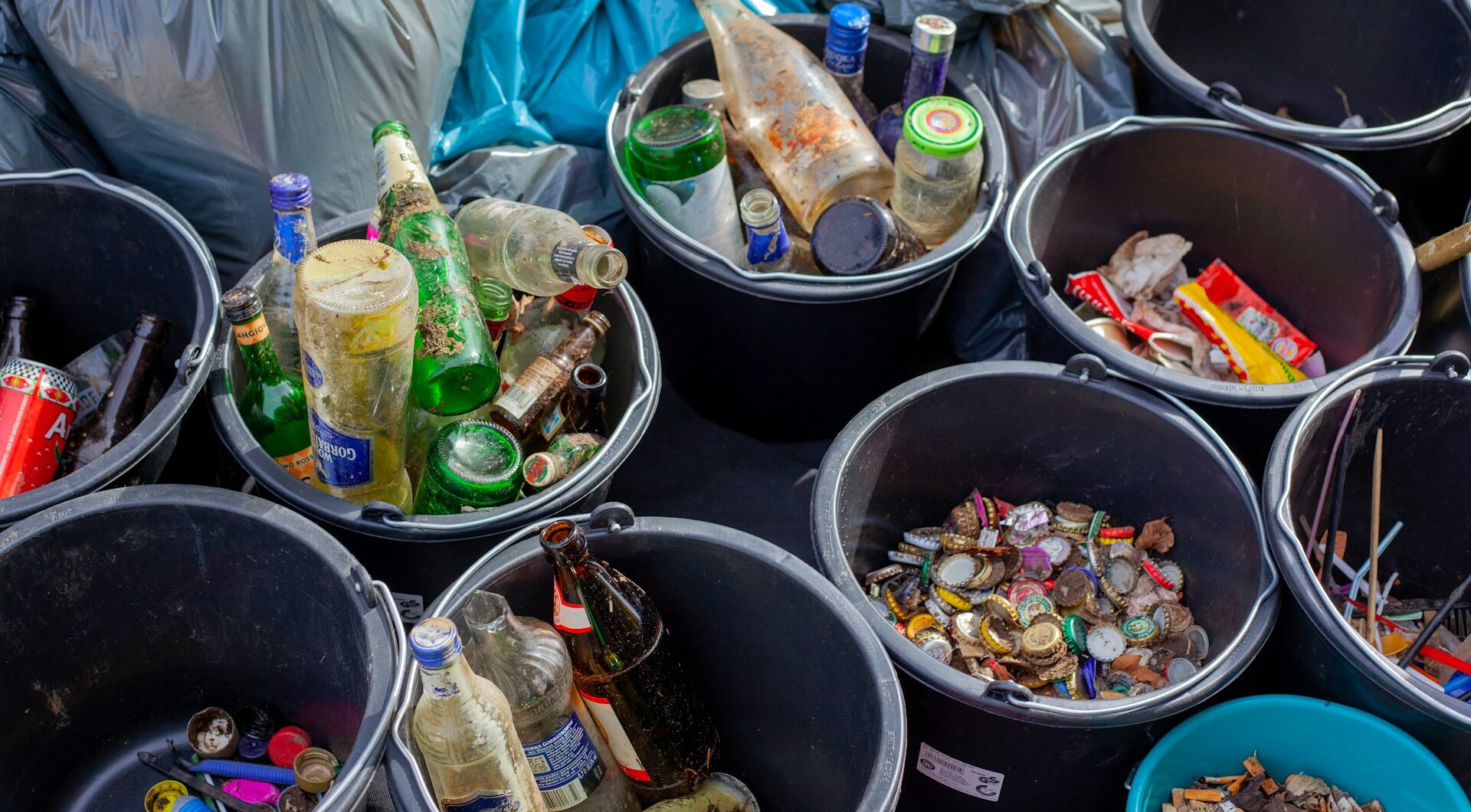

Glass bottles, jars, cardboard and plastic packaging are among the UK’s biggest recycling problem areas, according to newly released provisional waste data.
The figures, analysed by Rainbow Rubbish Removals, examined accredited packaging waste data from January to March 2026 across the Environment Agency, Natural Resources Wales, the Northern Ireland Environment Agency and the Scottish Environment Protection Agency.
The analysis found that more than 235,700 tonnes of packaging waste was recorded as either received but not yet recycled by reprocessors, or received but not yet exported by exporters, during the first quarter of the year.
Glass bottles and jars recorded the highest combined total, with more than 104,700 tonnes listed as received but not yet recycled or exported. Paper and cardboard followed at more than 74,800 tonnes.
The findings come as households across the UK enter one of the busiest periods for household waste, with spring clear-outs, garden projects, home renovations and online shopping placing additional pressure on bins and recycling collections.
The UK packaging waste materials causing the biggest issues
| Rank | Material | Everyday examples | Tonnes received but not yet recycled or exported, Jan to Mar 2026 |
| 1 | Glass bottles and jars | Wine bottles, beer bottles, sauce jars, jam jars, pickle jars, condiment bottles | 104,700.73 tonnes |
| 2 | Paper and cardboard | Delivery boxes, cereal boxes, cardboard sleeves, parcel packaging, paper bags | 74,856.66 tonnes |
| 3 | Wood | Pallets, crates, packaging wood, treated wood, DIY offcuts | 20,889.31 tonnes |
| 4 | Plastic | Plastic bottles, trays, tubs, wrappers, packaging film | 16,779.02 tonnes |
| 5 | Other glass | Mixed glass packaging and glass not covered by bottle or jar recycling | 10,451.51 tonnes |
| 6 | Aluminium | Drink cans, foil trays, foil packaging, some aerosols | 7,709.36 tonnes |
| 7 | Steel | Food tins, metal packaging, some aerosols | 335.35 tonnes |
According to Miroslav Radov from Rainbow Rubbish Removals, the figures highlight a wider issue around household recycling confusion, contamination and incorrect disposal.
While the data does not show that household recycling habits are solely responsible, Miroslav says the findings point to a common problem: people still do not always know what can be recycled at home, what needs specialist handling and what should never go in standard recycling bins.
Miroslav Radov said:
“Most people want to recycle properly, but the system can be confusing. The problem is that once the wrong item goes into the wrong bin, it can create issues further down the line.
People often assume that if something is made from cardboard, plastic, glass or metal, it can automatically go in the recycling bin. In reality, food contamination, mixed materials, treated wood, broken glass, greasy cardboard and certain plastics can all make items harder to process.
This data is a reminder that recycling does not start at the facility. It starts at home, at the point where people decide which bin something goes into.”
Why glass bottles, jars and cardboard can still cause recycling problems
Glass bottles and jars recorded the highest combined total in the analysis, with more than 104,700 tonnes of glass packaging listed as received but not yet recycled or exported between January and March 2026.
This includes everyday items such as wine bottles, beer bottles, sauce jars, jam jars, pickle jars, condiment bottles and other glass food and drink containers.
While these items are widely recyclable, experts warn that not all glass can be processed through standard household recycling systems. Drinking glasses, mirrors, window glass, light bulbs, ovenproof dishes and Pyrex are often made using different materials and melting points, meaning they may contaminate standard glass recycling.
Paper and cardboard ranked as the second-largest category in the data, with more than 74,800 tonnes recorded during the same period. This includes common household packaging such as delivery boxes, cereal boxes, cardboard sleeves, parcel packaging, paper bags and food packaging.
However, cardboard becomes far more difficult to recycle once it is wet, greasy or mixed with food residue and other materials.
Miroslav added:
“People usually know that glass bottles, jars and cardboard boxes can be recycled, but the confusion starts when items are dirty, greasy, broken or mixed with other materials.
Wine bottles, beer bottles, sauce jars and jam jars are usually fine when they are empty and rinsed, but that does not mean every glass item can go in the same recycling bin. Drinking glasses, mirrors, window glass, light bulbs and Pyrex are common examples that many people get wrong.
The same applies to cardboard. A clean delivery box is very different from a greasy pizza box or a wet cardboard sleeve. Once paper and cardboard are soaked with food, oil or water, they can become much harder to process.
That is why the safest advice is to keep recycling clean, dry and separated. Empty jars and bottles, rinse food containers, keep cardboard dry and check your local council guidance when you are unsure.”
Plastic packaging remains one of the biggest sources of confusion
Plastic was also among the biggest problem areas identified in the data, with more than 16,700 tonnes recorded as received but not yet recycled or exported. It remains one of the most confusing materials for households because different types of plastic are processed differently depending on local council recycling rules.
While plastic bottles, tubs and trays are commonly accepted in many household recycling collections, soft plastics, black plastic trays, plastic film, wrappers and mixed-material packaging are often more difficult to process and may not be accepted in standard recycling bins.
Miroslav said:
“Plastic is where a lot of recycling confusion happens. A plastic bottle, a crisp packet, a black ready-meal tray and a soft plastic wrapper are not the same thing, but people often treat them as if they are.
Some soft plastics can be taken to supermarket collection points, but they may not be accepted in household recycling bins. That is why checking local guidance matters.
The issue is not that people do not care. It is that recycling instructions can vary by area and packaging labels are not always as clear as they need to be.”
The common recycling mistakes households are still making
Rainbow Rubbish Removals is urging households to watch out for the everyday items that are often put in the wrong bin.
These include:
- Greasy pizza boxes and takeaway packaging
- Wet cardboard or paper packaging
- Delivery boxes with plastic inserts, bubble wrap or excess tape still attached
- Soft plastic wrappers in household recycling bins where they are not accepted
- Black plastic trays, which some councils cannot process
- Drinking glasses, mirrors, window glass, light bulbs and Pyrex
- Broken furniture, treated wood or DIY waste
- Food packaging that has not been emptied or rinsed
- Mixed bags of clear-out waste where glass, plastic, cardboard, wood and general rubbish are all thrown together
Miroslav added:
“One of the biggest issues is wish-cycling, where people put something in the recycling bin because they hope it can be recycled.
It usually comes from good intentions, but it can create problems further down the line. If the wrong items are mixed in, they can contaminate other materials and make recycling harder.
If you are having a clear-out, moving house, doing DIY or sorting the garden, separate waste as you go. Keep cardboard in one pile, glass in another, wood separately and general waste separately. It makes the whole process much easier and gives recyclable materials a better chance of actually being recycled.”
Spring clear-outs could make the problem worse
The warning comes as UK households enter peak clear-out season, with many people decluttering homes, sheds, garages and gardens.
Experts say this is when recyclable and non-recyclable waste is most likely to become mixed together, particularly when households are trying to dispose of large amounts of waste quickly.
Miroslav added:
“Spring is when people suddenly find themselves dealing with cardboard boxes, broken furniture, old plant pots, packaging, renovation waste, garden materials and general clutter all at once.
That is when mistakes happen. People either put too much into household bins, mix materials together or assume the council will take everything. But the wrong disposal route can mean useful materials are missed, contaminated or sent through the wrong system.
The simplest advice is to separate as you go. Keep cardboard dry, empty and clean containers, remove obvious plastic inserts, and do not put DIY or bulky waste into household recycling unless your council specifically allows it.”
What households should do instead
- Check local council guidance before recycling unusual items
- Keep cardboard dry and remove as much tape or plastic as possible
- Empty and rinse bottles, jars, tins and food containers
- Keep soft plastics separate and use supermarket collection points where available
- Never put mirrors, drinking glasses, window glass, light bulbs or Pyrex into bottle banks unless accepted locally
- Separate wood, metal, plastic and cardboard during clear-outs
- Use a licensed waste carrier for bulky, mixed or renovation waste
- Avoid overfilling recycling bins, as this can lead to rejected collections
Miroslav concluded:
“Getting recycling right does not have to be complicated, but it does require clearer habits. If households separate waste properly at the start, it gives recyclable materials a much better chance of being handled correctly.
The worst thing people can do is treat all waste as the same. A cardboard box, a plastic wrapper, a broken chair and a glass bottle all need different disposal routes. The more people understand that, the less pressure there is on the wider waste system.”