


In today’s digital world, blogging continues to be one of the most impactful ways to communicate, share stories, and grow businesses. However, as the needs for content change, the platforms and user interfaces that support blog publishing need to adapt as well. One of the most thrilling advancements in this area is the emergence of AI-powered blog interfaces—systems that are not only functional but also intuitive, smart, and incredibly user-friendly.
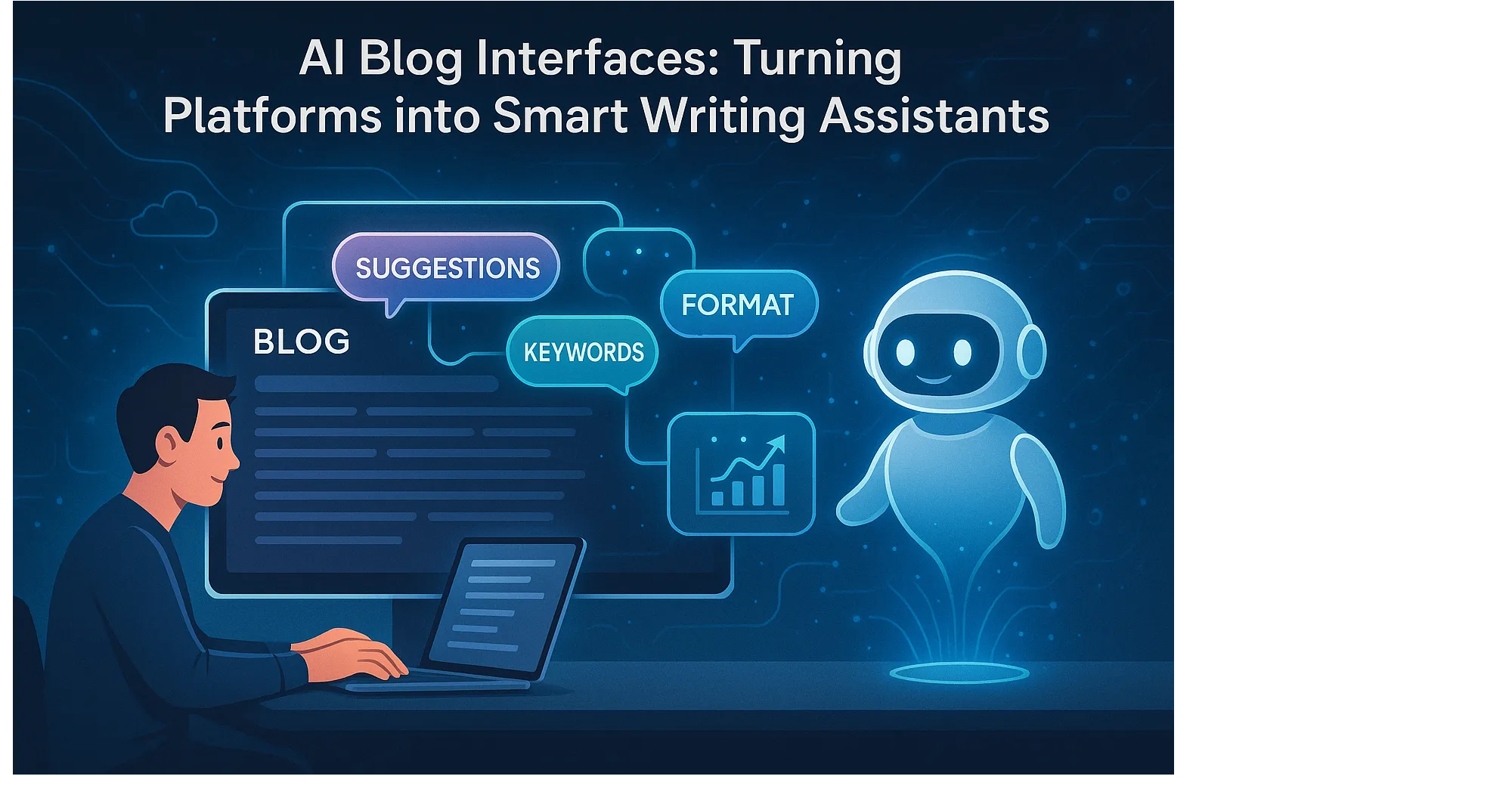
Image credit: Generated by Sora by OpenAI
From basic editors to clever interfaces
Traditional blog interfaces, while effective, often required a steep learning curve — especially for users without technical or design backgrounds. Formatting issues, SEO optimisation, and content structuring posed frequent challenges. However, AI is changing all that.
New platforms are beginning to incorporate AI-driven suggestions, auto-formatting, tone analysis, and even image recommendations, all in real time. These tools make it easier than ever for writers to stay focused on their message while letting the interface handle the rest.
A quick look at how blog interfaces changed
At the start of the 2000s, Blogger and WordPress made it easy for regular people to blog and share their thoughts online. As content marketing grew up, these platforms added new tools to make design and formatting simpler. They brought in WYSIWYG editors (where you see what you’ll get), drag-and-drop page builders, and plugins to help with SEO.
Even with these new tools, bloggers still had to do a lot by hand. They needed to structure their posts, make them search-engine friendly, and pick out pictures. This is where AI steps in — not just to lend a hand, but to work side by side with writers changing how we think up and put out content.
The role of AI in modern publishing
AI technologies are now capable of transforming every stage of content creation and publishing. Here’s how:
- Suggesting headlines and subheadings based on search trends
- Checking for readability, tone, and SEO optimisation instantly
- Recommending related links, stats, or media to enrich posts
- Helping personalise content for different audiences and platforms
- Predicting engagement metrics like click-through rate or read time before publishing
This marks a major shift — blog platforms are no longer passive editors, but active collaborators in the content creation process.
Real-world use cases: From startups to storytellers
AI-powered blogging isn’t just for tech companies. Here’s how different users are already benefiting:
- Marketers use AI to auto-generate product descriptions or test multiple headlines for effectiveness.
- Journalists rely on AI for real-time grammar, fact-checking, and summarisation tools to meet fast-paced deadlines.
- Founders and entrepreneurs use intelligent templates to communicate complex ideas clearly to investors or customers.
- Writers and bloggers benefit from tools that suggest SEO keywords or alternate phrasing, speeding up the editing process.
These AI integrations make publishing more accessible, helping both professionals and beginners create impactful content with ease.
A peek at what’s next: Smarter tools that adapt
Imagine logging into a blog dashboard that knows your writing style, understands your audience, and suggests the perfect publishing time based on past performance. This is not science fiction — it’s the near future of blog publishing.
Some companies are already pushing toward this goal. An AI-powered presentation tool for creating smart and visually engaging presentations in multiple languages, is one example. It offers features like editable slides, design themes, and layout suggestions — helping users create beautiful, effective presentations with ease. At first, they worked on visuals like pitch decks, but they’ll now aim to make it easier to share ideas on blogs and other online platforms. This idea shows how AI has the power to remove barriers and spark creativity in the world of publishing.
Why this matters for blog directories
AI tools can offer major advantages to content platforms like London Daily News and similar outlets:
- They help create more polished content by reducing mistakes and improving storytelling.
- They allow less time spent editing by in-house teams.
- They ensure more relevant content using AI tagging and recommendations.
- They boost reader engagement by producing clearer well-organised articles.
As blog directories expand, using AI-driven systems in submission portals could simplify the editorial workflow while keeping or even raising content standards. This approach benefits both writers and publishers.
Expert insight: Where AI publishing is headed
According to a 2024 Gartner report, nearly 60% of digital content teams are expected to integrate AI optimisation tools into their publishing workflow by 2026. As one analyst put it:
“AI won’t replace writers — it will become their silent co-author, enhancing reach and refining clarity without removing the human voice.”
This prediction aligns with a growing trend in digital media — AI as a creative collaborator, not just an automation tool.
Empowering the next generation of creators
As AI continues to shape the tools we use, the way we write, edit, and publish blogs will become more dynamic, intuitive, and intelligent. The real opportunity lies in embracing these tools not just to automate, but to elevate human creativity — and help great ideas rise to the surface more easily.
Platforms that welcome this transformation will not only stay ahead of the curve but also empower a new generation of content creators and thought leaders to express themselves in smarter, more impactful ways.







