


A SaaS company can have a polished website, a capable product, and a steady stream of traffic, yet still lose buyers before a sales conversation ever begins.
The problem is often hard to spot because nothing looks obviously broken. Visitors arrive. Product pages get views. Demo forms collect a few submissions. Analytics show movement.
But between finding the company and feeling ready to buy, prospects keep encountering minor points of friction. A page fails to appear in search. A feature description makes sense internally but means very little to a new buyer.
A visitor wants to see the product in action but isn’t ready to book thirty minutes with a salesperson. Each gap looks minor on its own. Put them together, and a promising buyer quietly disappears.
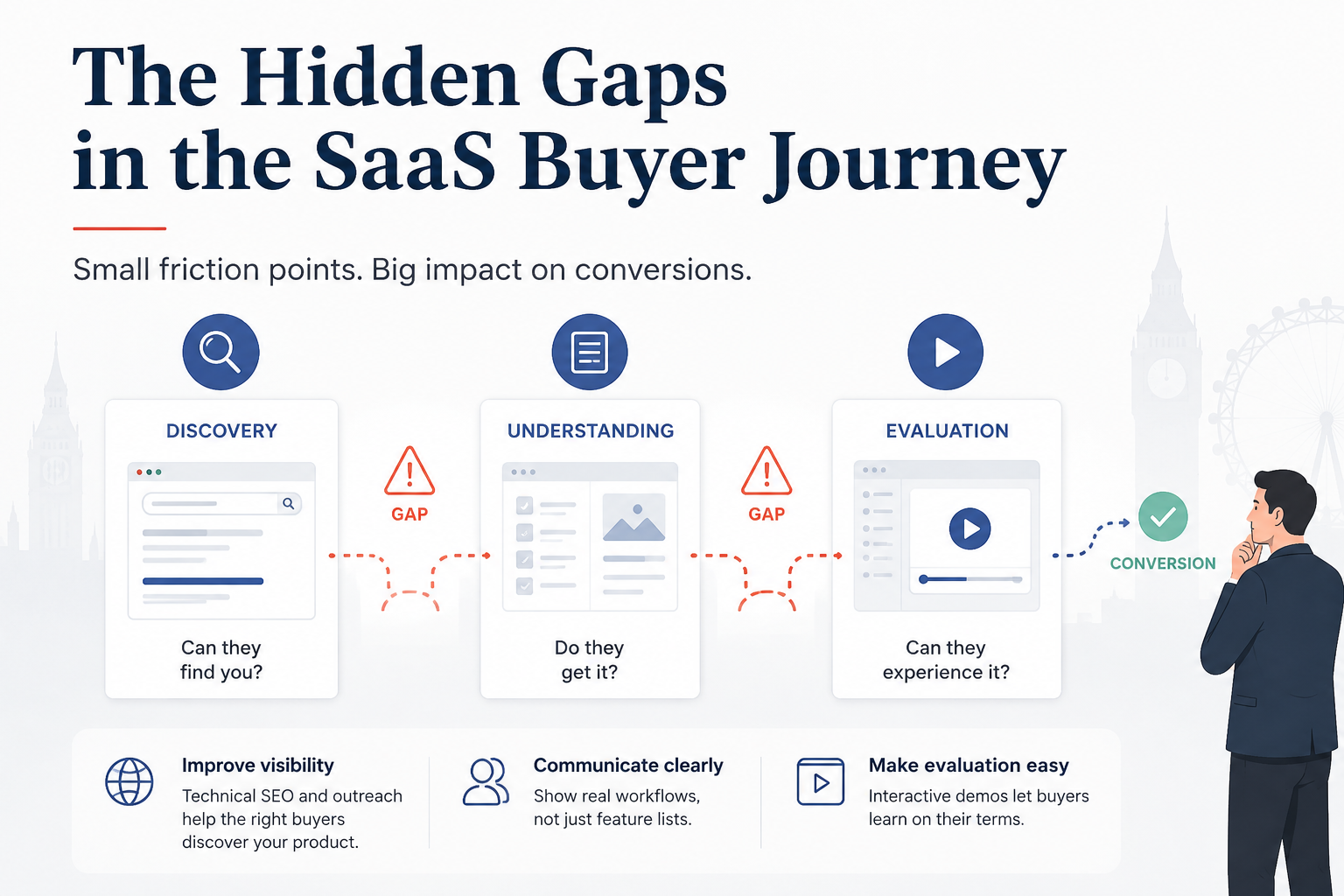
Some buyers never reach the website
The first gap sits outside the visible sales funnel. Many SaaS websites depend heavily on JavaScript. That can create quick, responsive interfaces for users, but it can also make some pages harder for search engines to crawl and index. A product page may exist, look sharp in a browser, and still have weak visibility in search.
That creates a strange situation. The company has written the page, approved the copy, and added it to the site. Buyers searching for that exact solution may never see it.
Prerender helps search engines access content on JavaScript-heavy websites by serving a version that crawlers can process more reliably. For SaaS teams, that can mean fewer valuable pages sitting unseen while competitors collect the clicks.
Technical access is only one part of discovery. A page also needs enough authority and relevance to compete against established sites. Publishing more articles won’t fix that by itself. Some pages need stronger editorial mentions and links from websites that already reach the right audience.
A focused seo outreach strategy can help SaaS companies earn that kind of visibility through relevant placements rather than chasing links wherever they happen to be available.
Feature pages often assume too much
Once a buyer reaches the website, the next gap is understanding. SaaS teams know their products inside out. They know what each menu item does, why a feature was built, and how different parts of the platform connect. Buyers arrive without any of that background.
A feature page might say the product offers automated reporting, smart workflows, advanced permissions, and flexible integrations. All true, perhaps. But the buyer is still trying to work out whether the software can solve the awkward problem sitting on their desk that morning.
Concrete examples help. Instead of saying a platform “streamlines collaboration,” show what happens when a customer request moves from support to product and then back to the account manager. Instead of listing reporting features, show how a team builds the report, who receives it, and what decision it helps them make.
The closer the explanation gets to real work, the easier it becomes for a buyer to picture using the product.
A sales call can feel like too much of a commitment
Some buyers reach the product page, understand the broad promise, and still aren’t ready to speak with sales.
They may be comparing five tools. They may only have ten minutes between meetings. They may want to answer one narrow question before involving anyone else on their team.
A “Book a demo” button doesn’t always match that moment. Interactive product experiences give those visitors another option. A buyer can click through a selected workflow, see how the interface behaves, and decide whether the product deserves more attention. The experience doesn’t need to recreate the full platform. One useful sequence is often enough.
For example, a support platform might show how an incoming request is assigned and resolved. A reporting tool could demonstrate how a dashboard is built from raw data. A project management product might walk through a handoff between two teams.
AI-assisted product demos can also guide visitors through common questions and product flows without making them wait for a scheduled presentation. Sales still has a role. The difference is that buyers can arrive at the conversation with a clearer idea of what they want to discuss.
The gaps tend to compound
A SaaS buyer rarely leaves because of one dramatic failure. More often, the journey feels slightly harder than it should. The company is difficult to find. The website loads, but the most useful page doesn’t rank. The copy describes features without showing how they fit into real work. The only way to see the product is to fill out a form and wait.
None of those issues looks catastrophic in a monthly report. Together, they make a competitor feel easier to buy from.
That is why funnel metrics need context. A weak demo conversion rate may be caused by the demo page, but it may also begin much earlier. The visitor might have arrived with only a vague understanding of the product because the pages before it didn’t do enough.
Look at the journey like a buyer
The most useful review starts with three plain questions.
- Can a buyer find the right page when searching for the problem?
- Can they understand how the product fits into a familiar workflow?
- Can they experience enough of the product to decide whether a conversation is worth their time?
Those questions expose more than another round of button tests. They show where the journey becomes vague, slow, or unnecessarily demanding.
Most SaaS companies don’t need to rebuild everything. They need to remove the small obstacles that keep interested people from taking the next reasonable step.







