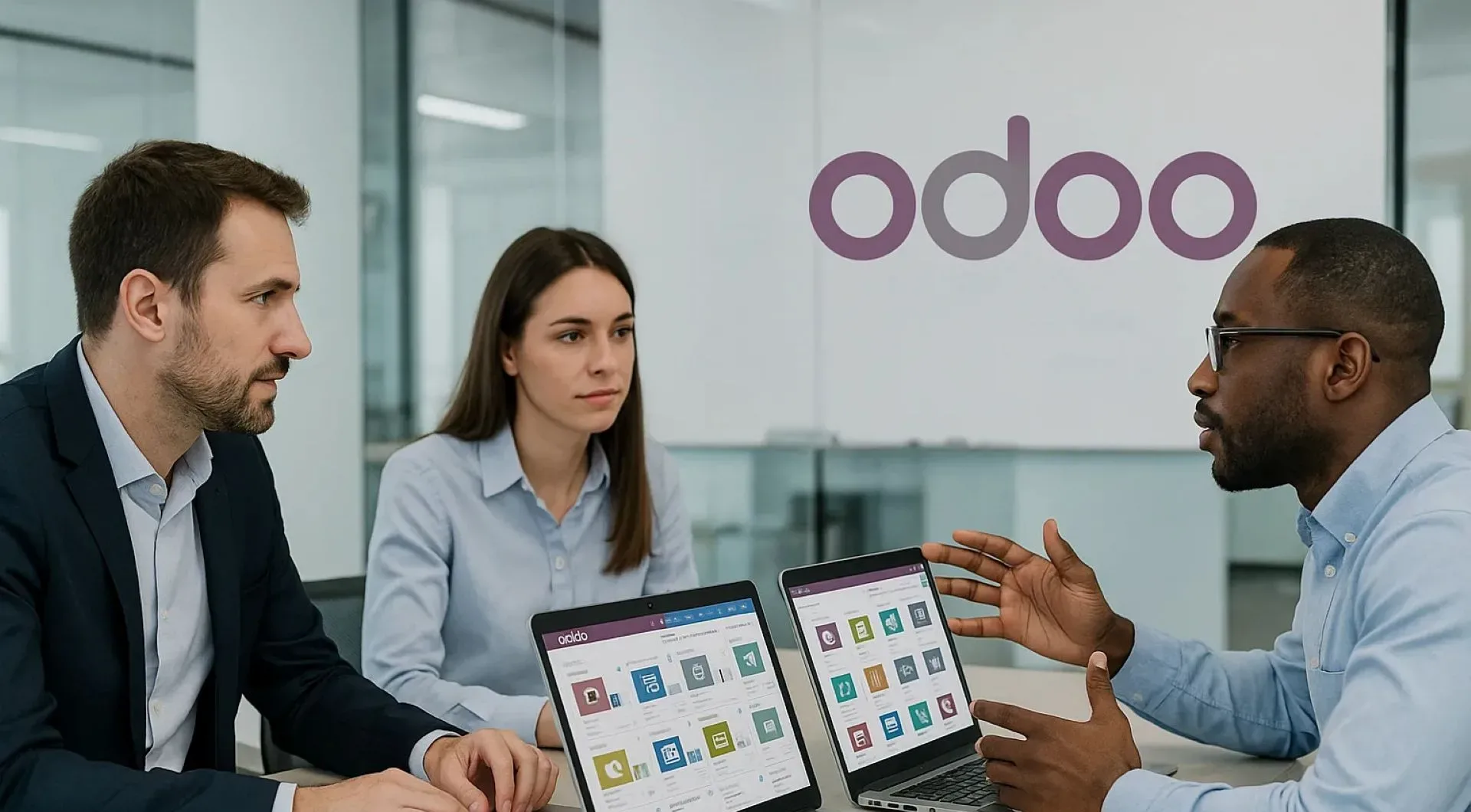

As mid-sized enterprises face growing operational complexity, the need for scalable digital infrastructure becomes unavoidable. Enterprise Resource Planning (ERP) systems, long considered tools for large corporations, have now become vital to mid-market growth strategies. Yet what many decision-makers miss is that the biggest value of an ERP system isn’t in its base offering, but in how well it adapts to business-specific needs. This is where Odoo ERP customisation reveals its hidden return on investment, especially for companies looking to scale without being boxed in by pre-configured systems.
A One-Size-Fits-All ERP Is a Myth
Most ERP platforms ship with core modules, accounting, inventory, CRM, and project management, assuming these will satisfy the needs of all businesses. But the daily operations of a mid-sized manufacturing firm in Liverpool will never match those of a regional logistics company in Manchester. Out-of-the-box systems often fall short, creating inefficiencies that users patch with spreadsheets, manual workarounds, or multiple disconnected tools.
ERP customisation isn’t about vanity. It’s about business alignment. Without it, the system becomes more of a burden than a solution. Workflows misfire, data is fragmented, and reporting becomes a guessing game. In contrast, tailored ERP logic can reflect the reality of how a business operates across departments, roles, and regions.
Why Odoo Suits the Mid-Market
Unlike heavyweight proprietary platforms that lock businesses into rigid frameworks, Odoo is designed to evolve with the user. Built on Python and powered by PostgreSQL, it gives organisations the flexibility to not just choose from a wide set of official modules but to extend, modify, or even rebuild them from the ground up. This matters because the mid-market needs balance: tools that are powerful yet adaptable, professional yet cost-effective.
Where other systems charge steep fees per user or module, Odoo’s open-source model reduces that burden. And because the platform has an expansive community of developers and contributors, mid-sized businesses aren’t held hostage by a single vendor’s roadmap. They can customise their ERP stack gradually, aligning technology with strategy at every step.
Not Just Tweaks: The Difference Between Configuration and Customization
ERP terms often get blurred, but clarity here is critical. Configuration refers to adjusting built-in settings, changing field names, turning features on or off, and rearranging modules. It’s surface-level and quick to deploy. Customisation goes deeper. It involves altering logic, building new workflows, and embedding unique business processes into the system’s DNA.
For example, a food distributor may need automated batch tracking by expiry date across multiple warehouse zones. That kind of rule cannot be configured using sliders or toggles. It requires backend logic development. Odoo allows for this level of depth without compromising the integrity of the system. Its modular codebase means that new functionality can be integrated without tearing the whole system apart.
Uncovering ROI Where Others Don’t Look
While most ROI calculations focus on upfront costs or time-to-implementation, the longer-term value of customisation emerges in operational impact. Businesses that invest in a well-customised ERP often see fewer errors, faster decision-making, and a noticeable drop in redundant tasks.
Consider the cumulative gains of having real-time inventory updates feeding directly into sales orders. Or a payroll system that automatically reflects updated tax regulations for specific regions. Or customer support workflows that route queries differently based on contract terms. Each of these refinements saves hours, if not days of labour over time. While these savings might not be flashy, they directly impact cash flow, staff efficiency, and customer experience.
Some mid-sized enterprises have reported up to a 40% reduction in ERP-related support requests post-customisation. This isn’t because the software became more intuitive by itself, but because it was reshaped to fit how staff work.
Moving Beyond the Waterfall: Agile ERP Deployment in Practice
The legacy model of ERP deployment involved rolling out the entire system in a single, massive project. This often led to budget overruns, employee resistance, and change fatigue. Odoo’s structure supports a smarter approach: agile deployment. By breaking the ERP rollout into smaller phases, perhaps finance first, then inventory, followed by HR, companies can gather feedback in real time and adapt their customisations before scaling them across the organisation.
This approach lowers the risk of failure. More importantly, it improves user adoption. Employees aren’t overwhelmed by change and are more likely to engage with systems that evolve with their input. The agile model also allows companies to track ROI at each phase, instead of waiting months or years for an all-or-nothing payoff.
What Makes Odoo Developer-Friendly
Technical teams often face roadblocks when dealing with ERP platforms that offer limited customisation options or closed codebases. Odoo offers the opposite. Its open-source foundation, written in Python, means developers can build or modify modules without reverse engineering. It also supports a full range of APIs for integration with external systems, such as e-commerce platforms, payment gateways, shipping tools, or third-party CRMs.
From a development standpoint, it enables modular customisation. Teams can isolate custom features within separate modules, which reduces the risk of conflicts during upgrades. Odoo’s robust community documentation, combined with a vast ecosystem of plug-and-play apps, accelerates development cycles and reduces maintenance overhead.
Considerations and Risks Before Customizing
Customisation isn’t always the right move, and when applied without strategic planning, it can introduce more complexity than value. One of the recurring challenges is version compatibility. As Odoo releases updates, custom modules that haven’t been architected for forward compatibility often require rework or lead to system conflicts.
To manage this, some organisations refer to structured Odoo customization services that document custom logic, isolate code into separate modules, and account for future scalability. These methods aim to balance flexibility with long-term maintainability.
The Shift Toward Composable and AI-Enhanced ERP
Looking forward, ERP systems are trending toward composable architectures. This means businesses can mix and match ERP components without committing to a monolithic solution. Odoo is already ahead of this curve. Its modular system allows for independent upgrades, sandboxed custom modules, and seamless third-party integration.
Meanwhile, the integration of artificial intelligence into ERP platforms is growing. Mid-sized businesses are exploring tools that predict stock shortages, optimise delivery routes, and identify delayed payments, all without human input. Odoo’s open nature makes it easier for businesses to add AI components or connect with machine learning models that align with their operations.
Customisation is key here. AI is only as effective as the data and logic feeding it. A rigid, off-the-shelf system won’t provide the nuanced workflows needed for meaningful automation. But a customised ERP can.
Final Thought
ERP is not just a technology decision; it’s a long-term strategic investment. For mid-sized enterprises, the question isn’t whether to implement ERP. It’s whether to implement it in a way that respects the uniqueness of their workflows and growth trajectories.
Odoo ERP customisation provides a rare combination of flexibility, affordability, and depth. It gives organisations the tools to build what they need now, while remaining open to what they may need next. And that, more than anything else, is where the real return on investment lies.