


Hyperloop, a revolutionary form of ground transportation, is poised to redefine the way we travel. This cutting-edge technology, currently in development by Hyperloop Italia and several other companies, promises to transport passengers at mind-boggling speeds exceeding 700 miles per hour, all within the confines of floating pods gliding through massive low-pressure tubes, whether above or below ground.
But what sets Hyperloop apart from traditional rail systems, and what makes it so promising? Hyperloop boasts two groundbreaking distinctions from conventional rail systems. Firstly, it relies on tubes or tunnels where the air has been almost entirely evacuated to minimize friction, enabling pods to reach speeds of up to 750 miles per hour. Secondly, instead of wheels, these pods float using magnetic levitation to drastically reduce friction.
It offers a slew of advantages over other modes of transportation. It could be cheaper and faster than both train and car travel while also being more environmentally friendly than air travel. Additionally, it’s expected to be quicker and more cost-effective to build than traditional high-speed rail systems, making it a potential solution for alleviating traffic congestion between cities and unlocking significant economic opportunities.
The development of Hyperloop technology has been ongoing for several years, but its commercial deployment is on the horizon. There are actually twelve projects around the world, including in the USA, in various degrees of completion. In the United States, HyperloopTT completed a full feasibility study for a full-scale Hyperloop line connecting Cleveland, Chicago, and Pittsburgh. The earliest Hyperloop services are projected to be launched around 2026 in Italy for the Winter Olympics inauguration, with more extensive services expected to follow as technology trials progress.
Hyperloop technology draws inspiration from a rich history of using low-pressure or vacuum tubes for transportation: the concept of using air pressure to propel vehicles dates back to the 19th century, with notable predecessors like the Crystal Palace pneumatic railway.
The core of Hyperloop’s innovation lies in its tube system. These tubes encase passenger pods, and the reduction of air pressure within them significantly reduces air resistance, making high-speed ground travel feasible. It’s as if the capsules fly at airplane speeds while remaining on the ground.
Its visionary HTT Co-founder and Former Chairman, Mr. Bibop Gresta (also Hyperloop Italia’s Ceo), agreed to describe to us his mission and vision, which promises to offer unprecedented speed and efficiency, reducing travel times and revolutionizing the way we connect cities. But let’s ask him directly.
Interviewer: Good morning, Bibop Gresta. It’s an honor to have the opportunity to speak with you today. Let’s start with a general question: How did your passion for technology and innovation in the transportation sector originate?
Bibop Gresta: My journey into technology and transportation was far from linear; it was a labyrinth of experiences, each contributing to my current role. I’ve always been a seeker, driven by an insatiable curiosity to explore the uncharted territories of human potential. When I stumbled upon the Hyperloop concept, it was as if the universe had conspired to bring together my diverse interests into a singular focus. This wasn’t just about speed or efficiency; it was about breaking barriers—both literal and metaphorical. Co-founding HyperloopTT was a leap of faith, a step into the unknown, driven by a vision to change the world one mile at a time. My work in Hyperloop Italia has been a natural progression of this vision, particularly with our groundbreaking projects like the Veneto project, which aims to revolutionize transportation in Italy and beyond. It’s a culmination of years of research, collaboration, and a relentless pursuit of innovation.
Interviewer: Your involvement in bringing the Hyperloop into the mainstream market has been remarkable. What challenges did you have to face in pushing this vision to the forefront of the transportation industry?
Bibop Gresta: The decade I spent as Chairman of HyperloopTT was not just a period of professional growth but a transformative journey for me as an individual. Every challenge we faced was a lesson in disguise, a mirror reflecting our collective strengths and weaknesses. From the early days of convincing the first investors to believe in a mere PowerPoint presentation to navigating the complex maze of international regulations, each obstacle was a rite of passage. But the real challenge was internal—overcoming self-doubt, staying true to our vision, and keeping the team motivated through thick and thin. It was a masterclass in resilience, leadership, and the power of collective belief. In Italy, we faced unique challenges, especially with the Veneto project. Winning the tender was a monumental task that involved extensive planning, collaboration with local governments, and rigorous compliance with environmental standards. It was a testament to our team’s dedication and the robustness of our technology.
Interviewer: Besides being a successful entrepreneur, you are also a proponent of transhumanism. How do you see the integration of advanced technology and human nature in the future of transportation?
Bibop Gresta: Transhumanism is not just a philosophical stance for me; it’s a lived experience and a vision for the future. I’ve always been captivated by the idea that we can extend our human capabilities through technology. In the context of Hyperloop, this means not just moving people faster, but enhancing the quality of life in unprecedented ways. Imagine a world where you can live in Rome and work in Paris, all without the fatigue of travel. It’s about creating a seamless blend of technology and human experience, where the journey is as enriching as the destination. This vision is not far-fetched; it’s already taking shape through projects like the Veneto project in Italy. Here, we’re not just building a faster means of transport; we’re creating an ecosystem that integrates smart cities, renewable energy, and next-gen transportation solutions. It’s a holistic approach to human mobility, one that considers the physical, emotional, and even spiritual well-being of its passengers.
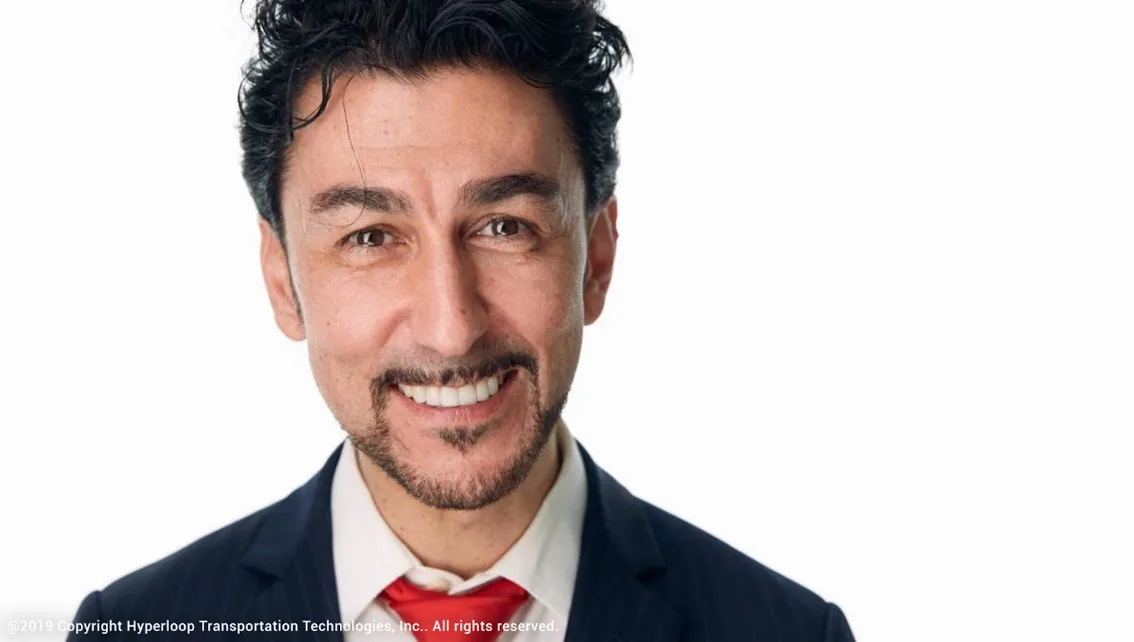
Interviewer: Everybody in this field knows your ethical entrepreneurship as one of your areas of interest. How do you believe companies can balance the pursuit of profits with social and environmental responsibility?
Bibop Gresta: Ethical entrepreneurship isn’t just a buzzword for me; it’s a guiding principle that has shaped my entire career. I’ve always believed that businesses have a moral obligation to serve the greater good, and this belief has been the cornerstone of all my ventures, including HyperloopTT and Hyperloop Italia. At Hyperloop, we made a commitment to sustainability from day one, focusing on renewable energy sources and eco-friendly materials. But it’s more than that; it’s about creating a culture of responsibility, where every team member, from engineers to executives, feels empowered to make ethical choices. Profit is important, but it should never come at the expense of our planet or its people. This philosophy is evident in our Veneto project, where we’ve gone to great lengths to ensure that the project is not only economically viable but also environmentally sustainable. We’ve partnered with local governments and organizations to create a transportation solution that benefits everyone, not just the bottom line.
Interviewer: Finally, what advice would you give to young entrepreneurs looking to enter the field of technological innovation and transportation?
Bibop Gresta: To the young visionaries out there, I say this: Embrace the journey, for it will be the most rewarding and challenging experience of your life. Entrepreneurship is not a sprint; it’s a marathon filled with highs and lows, triumphs and setbacks. You’ll face obstacles that seem insurmountable and experience moments of exhilaration that make it all worthwhile. But through it all, never lose sight of your ‘why.’ Your ‘why’ is your compass; it will guide you when the path is unclear and sustain you when the going gets tough. I started HyperloopTT with a ‘why’—to revolutionize transportation for the betterment of humanity. And that ‘why’ has been my guiding light through every challenge and triumph. In Italy, with Hyperloop Italia and the Veneto project, we’re taking this ‘why’ to a new level. We’re not just building a faster train; we’re creating a new paradigm for transportation that could change the way we think about mobility, sustainability, and even community. So find your ‘why,’ hold onto it tightly, and let it guide you through the incredible journey that is entrepreneurship.
Interviewer: Thank you, Bibop Gresta, for your inspiration and for sharing your vision with us today. It has been an honor.
Bibop Gresta: It’s been a pleasure sharing my journey and vision with you. I believe that the future of transportation is not just about speed or efficiency; it’s about creating a more connected, sustainable, and humane world. And I’m excited to be a part of that future, especially with groundbreaking initiatives like the Veneto project. Our work doesn’t stop there; we have several projects in different states of progress around the world. This is a testament to the scalability and adaptability of Hyperloop technology. Thank you for giving me the platform to share these ideas. Together, we can redefine the future of transportation.







