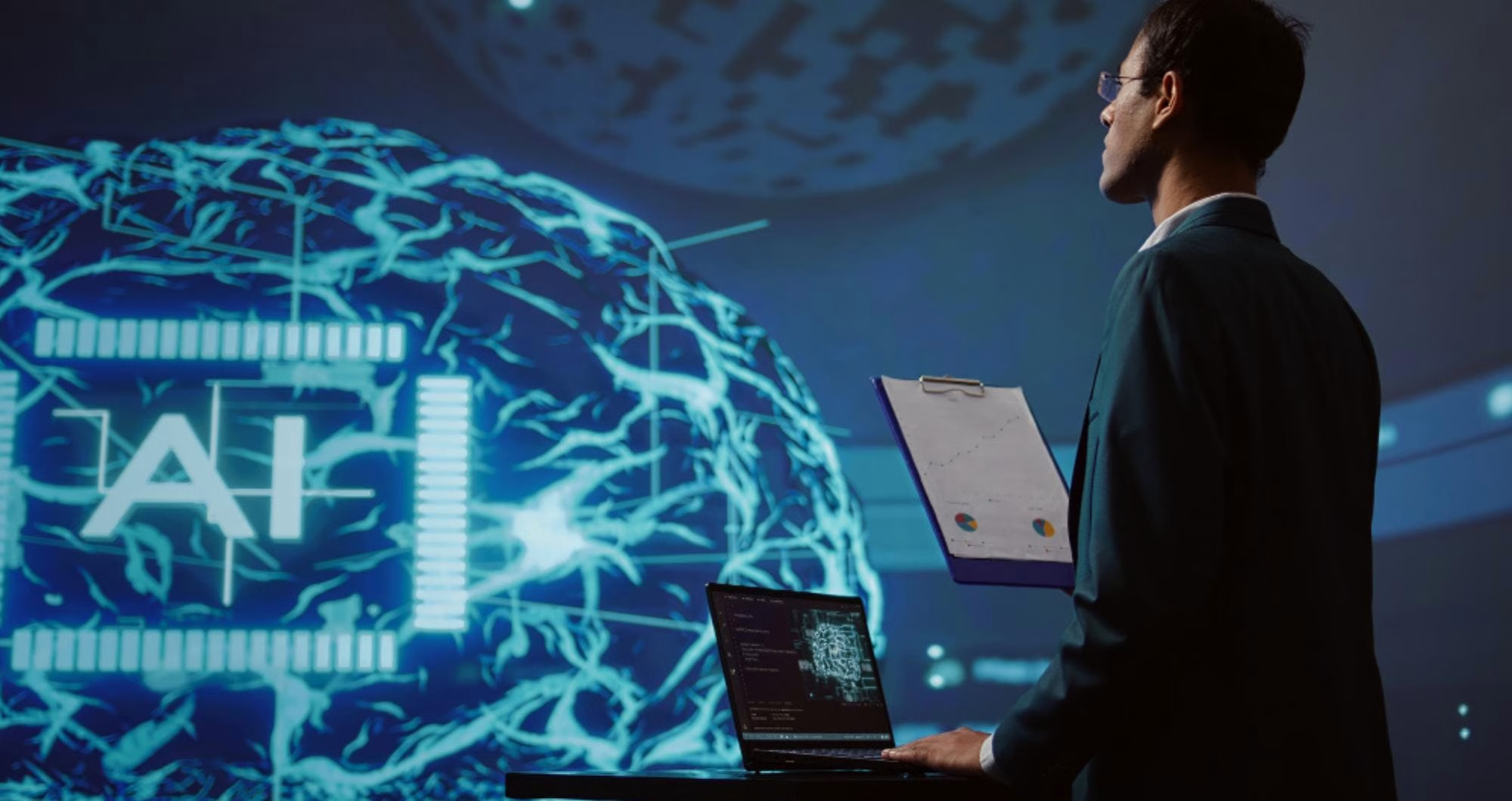

Technology has always been a driving force behind business transformation, but in recent years, no innovation has had as profound an impact as Artificial Intelligence (AI). From predictive analytics to automation, AI is reshaping industries at a rapid pace.
Businesses that embrace this technology are not only improving efficiency but also discovering new opportunities for growth and innovation.
AI in Business Operations
AI tools have revolutionised how businesses manage operations. Machine learning algorithms can analyse massive amounts of data, helping companies forecast demand, streamline logistics, and optimise workflows. This leads to reduced costs and more efficient use of resources, ultimately improving profitability.
Customer Experience and Personalisation
One of the most notable uses of AI lies in customer experience. Chatbots, virtual assistants, and recommendation systems allow businesses to provide personalised services around the clock. By analysing consumer behaviour, companies can tailor marketing campaigns, product recommendations, and even customer support solutions to meet individual needs.
AI in Decision-Making
Decision-making has traditionally relied on human expertise and intuition. With AI, companies can now integrate real-time data analysis into their strategies. Predictive models can identify market trends, assess risks, and forecast future developments. This allows businesses to make smarter, data-driven decisions and stay ahead of competitors.
The Role of AI in Cybersecurity
As businesses move online, the importance of cybersecurity grows. AI-driven security systems can detect anomalies, flag suspicious activities, and respond to threats faster than human monitoring alone. This proactive approach ensures that sensitive data remains protected while reducing the likelihood of costly breaches.
The Ethical Debate Surrounding AI
Despite its benefits, AI has also raised ethical concerns. Questions about job displacement, data privacy, and algorithmic bias continue to spark global debate. Businesses are increasingly tasked with ensuring that their AI strategies remain transparent, ethical, and inclusive.
AI and the Future of Education
Interestingly, AI’s role is not confined to businesses alone. It is also transforming how individuals learn and prepare for the workforce. Online learning platforms now integrate AI tutors, adaptive testing, and virtual classrooms to make education more accessible.
For students navigating academic challenges, platforms such as Peachy Essay have become valuable resources, offering professional support alongside digital tools. This demonstrates how AI and human expertise can complement each other in advancing education.
Preparing for the Future
Businesses that embrace AI today will be better prepared for tomorrow’s challenges. By investing in research, training employees, and adopting ethical frameworks, organizations can unlock the true potential of this technology.
Conclusion
Artificial Intelligence is more than a buzzword—it is a transformative force reshaping industries, redefining customer interactions, and driving innovation. While challenges remain, the businesses that adapt to this AI-driven era will not only survive but thrive. And as AI continues to intersect with sectors such as education and health, its impact on society will only grow.