
“Dress shabbily, and they remember the dress; dress impeccably, and they remember the woman.”
―
Source: Google Chrome
Fashion transcends mere clothing; it is a multifaceted, ever-evolving cultural phenomenon that encapsulates the politics, art, technology, and prevailing social norms of any given era. This dynamic form of self-expression and identity can convey an individual’s status, beliefs, and aspirations without words, making it a potent medium of communication.
A Journey Through Fashion History
The history of fashion design spans thousands of years, with clothing serving not only as a status symbol but also as a practical necessity, tracing back to Ancient Egypt and Rome. However, the modern concept of fashion—centred around the creativity of individual designers and the cyclical nature of trends—began to take form significantly later, especially during the 19th century.
The Birth of Haute Couture
The 19th century marked a pivotal shift in fashion with the rise of Haute Couture (high sewing) in Paris, often attributed to pioneering designer Charles Frederick Worth. He is credited with elevating dressmaking from a mere craft to a revered art form, where exclusive, custom-fitted garments bore the designer’s label. This innovation laid the foundation for the contemporary fashion industry, establishing a system in which branding and craftsmanship became paramount.
The 20th Century: Revolution and Freedom
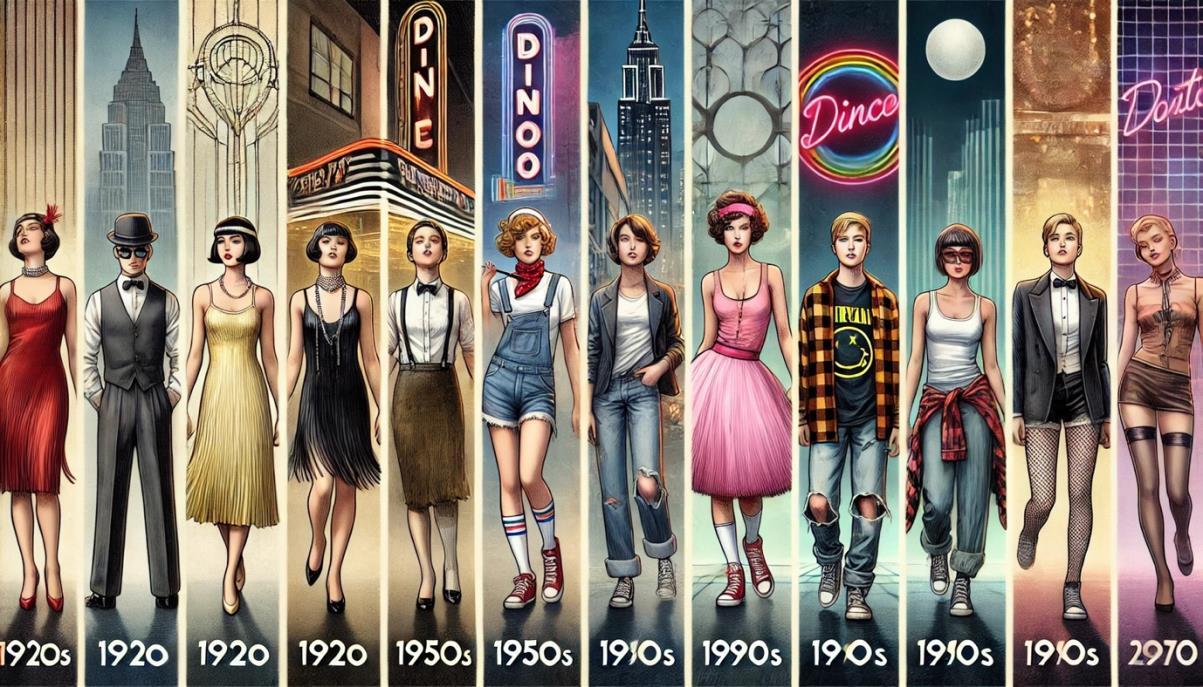
The 20th century witnessed remarkable transformations in fashion, largely influenced by significant historical events and shifting societal attitudes. Key highlights include:
1910s: The industry began to shift away from the restrictive corsetry of previous decades, thanks to visionary designers like Paul Poiret, who championed a more natural, less structured silhouette, allowing greater freedom of movement.
1920s: The Flapper Era emerged after World War I, as women embraced newfound freedoms. This resulted in shorter hemlines, the popularisation of casual sportswear, and an overall trend towards a more comfortable, minimalist aesthetic that reflected a break with traditional norms.
1940s & 1950s: Wartime rationing in the 1940s necessitated practical, utilitarian fashion designs, while the subsequent 1950s celebrated femininity with iconic silhouettes like Christian Dior’s “New Look,” which emphasised hourglass figures and a return to glamour and domesticity.
1960s: The youthquake of the 1960s heralded radical changes with the introduction of the miniskirt—often credited to designer Mary Quant—alongside androgynous styles and the use of revolutionary synthetic materials, reflecting the burgeoning youth culture’s desire for experimentation and self-expression.
1970s: A melting pot of eclectic styles emerged, marked by the anti-establishment hippie movement with its tie-dye prints and bell-bottoms, and the rise of punk fashion, characterised by leather, studs, and a defiant attitude against societal norms.
1980s: The decade of power dressing embraced bold colours, oversized silhouettes, and an emphasis on corporate fashion for women, propelled by pop culture influences and an economic boom that celebrated individual success and professional ambition.
Modern Fashion: Individuality and Conscience
Today, fashion operates in a global, digital, and often decentralised landscape. Instead of conforming to a singular dominant trend, the 21st century champions individuality, merging influences from haute couture, streetwear, and nostalgic vintage aesthetics (including the notable resurgence of Y2K styles) with digital culture and online platforms.
The Rise of Fast Fashion
The early 2000s marked the explosive growth of fast fashion, a phenomenon that enabled mass-market access to runway trends at unprecedented speed and affordability. While this model democratised fashion by making style accessible to the broader public, it has faced substantial criticism for its environmental repercussions, labour exploitation, and promotion of a disposable consumer culture.
Sustainability and Ethical Fashion
In response to the myriad challenges posed by fast fashion, a significant movement advocating for sustainability and ethical practices has emerged. This shift emphasises:
The use of eco-friendly materials, such as organic cotton and recycled fabrics, reduces environmental impact.
The importance of transparent supply chains and fair labour practices that support workers’ rights and equitable wages.
A focus on longevity in fashion, encouraging quality over quantity and promoting alternatives to the “wear-once” mentality, such as thrift shopping and embracing vintage clothing.
The Role of Digital Influence
The internet and social media have dramatically transformed how trends are conceived, disseminated, and embraced. The era of influencers, micro-trends, and direct-to-consumer models has led to a “trickle-up” effect in fashion—where styles emerge from the streets or digital communities—contrasting the traditional top-down approach from major fashion houses.
Ultimately, fashion remains a dynamic art form that tells the intricate story of who we are, where we have been, and the paths we are forging for the future. Its ability to adapt and reflect societal values ensures its relevance as a medium of expression in a constantly changing world.