
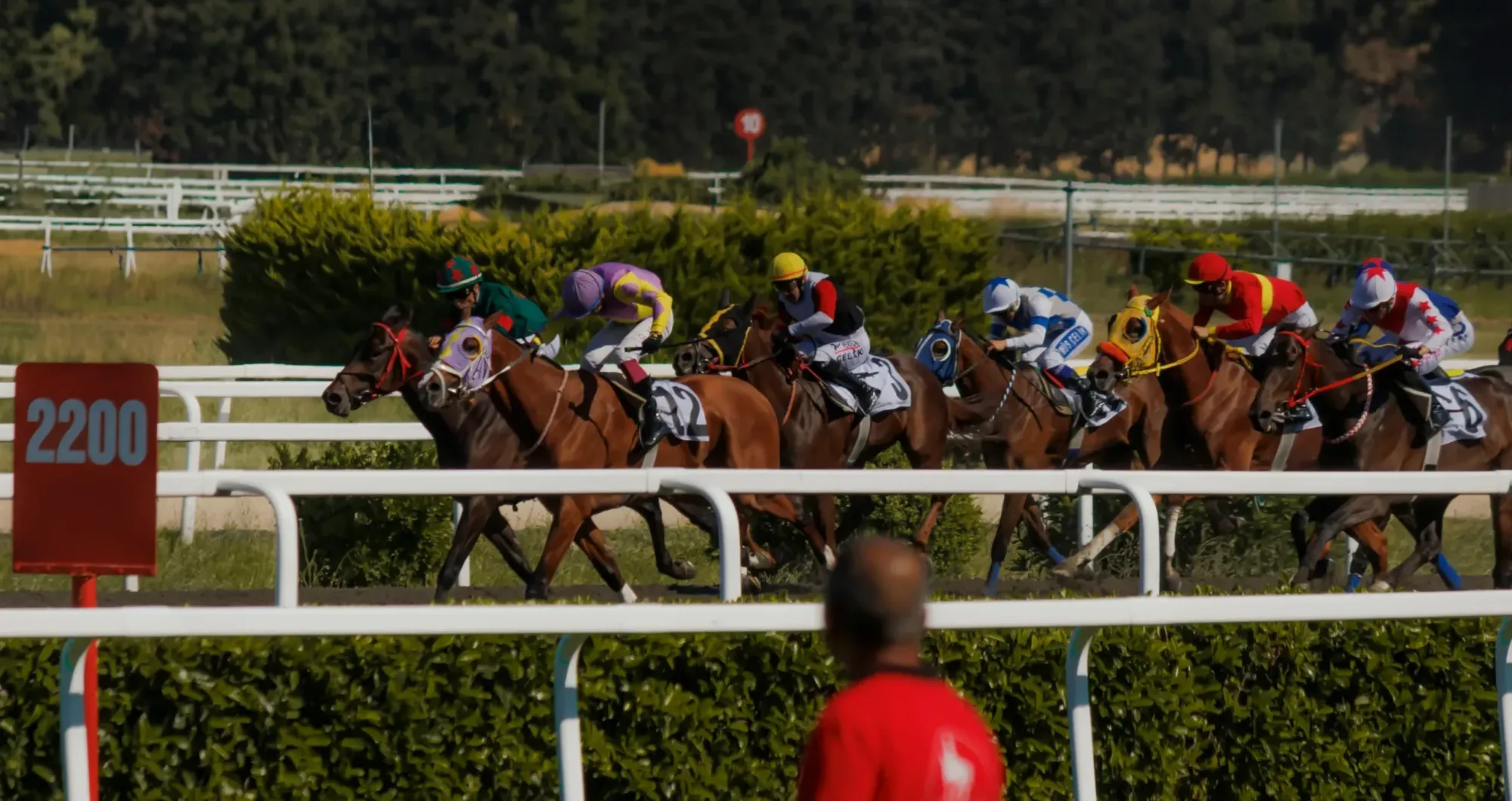

Horse racing may be the “sport of kings,” but for newcomers, it can sometimes feel more like the sport of cryptic clues. From phrases like “the going’s good” to horses being “pulled up” or “well-handicapped,” racing has its own unique and often bewildering vocabulary.
Whether you’re watching the Grand National, tuning into Cheltenham, or donning a top hat at Royal Ascot, a solid grasp of the lingo will not only enhance your enjoyment but also make you feel more prepared and knowledgeable.
In this guide, we demystify the most common racing terms and phrases so you can follow the action with confidence – and maybe even impress your mates in the process, having got the gist of the jargon!
The basics: What you hear every race day
The going
The “going” refers to the condition of the racetrack. It’s crucial because it affects how a horse runs – some horses prefer soft ground, while others favour firmer conditions.
- Firm – The ground is dry and hard, usually after hot weather.
- Good – Ideal conditions; a fair surface for most horses.
- Soft/heavy – Wet, muddy conditions that can slow down the pace and favour stamina-heavy horses.
You may hear: “He’s a mudlark, loves it when the going’s heavy.”
Handicap and well-handicapped
Many races are “handicap” meetings, meaning horses are assigned different weights based on their ability by the handicapper. The idea is to level the playing field and give every horse a fair chance.
A “well-handicapped” horse is one that seems to have an advantage – perhaps its recent form suggests it’s better than its current weight implies.
It would be common to hear: “That one’s still well-handicapped off this mark – don’t rule him out.”
Pulled up
If a horse is “pulled up,” it means the jockey has deliberately stopped the horse mid-race, usually because something felt amiss – be it injury, tiredness or simply not running well.
It’s usually a precautionary measure and doesn’t necessarily indicate a major issue, but it’s worth keeping an eye on in post-race reports.
In the running: Terms during the race
Front-runner
A “front-runner” is a horse that likes to lead the pack from the start. Some thrive on setting the pace and can win wire-to-wire.
But it’s risky – if a front-runner tires early, they can quickly fade out of contention.
Held up
The opposite of a front-runner, a horse that’s “held up” is kept at the back or mid-division and brought forward later in the race. This tactic is often used to conserve energy before a strong finishing burst.
You’ll often hear: “He was held up and just didn’t get a clear run.”
Staying on / Plugging on
These phrases refer to a horse maintaining or improving its position late in the race, usually thanks to stamina rather than a burst of speed.
- “Staying on strongly” is a positive, often suggesting the horse might do better over a longer distance.
- “Plugging on” implies the horse is tiring but still going, nothing spectacular.
Turn of foot
This describes a horse’s ability to accelerate quickly, often crucial in shorter races or in a close finish.
- “He’s got a serious turn of foot” means the horse can explode past rivals late on.
Describing the result: Phrases after the finish
Photo finish
When two horses cross the line almost simultaneously, a “photo finish” determines the winner. The result might be declared as a “nose” or a “short head” victory – literally referring to the physical margin. These tense conclusions are widely available to watch in the form of racing replays by different broadcast providers.
Beaten favourite
This phrase refers to a horse that started the race as the favourite but failed to win. This is often a focus of betting analysis and post-race discussions.
The colourful & quirky
Horse racing is full of colourful phrases and oddities that bring the sport to life:
- “Off the bridle” – The horse is being ridden hard; the jockey is urging it on.
- “Green” – Describes an inexperienced or immature horse that may not run straight or respond well to pressure.
- “Got up on the line” – The horse won in the very last stride.
- “Broke smartly” – The horse had a fast, clean start from the stalls.
- “Blew up” – The horse tired suddenly, usually means it needed the run or wasn’t fully fit.
Final furlong: Why language matters
Understanding the language of racing isn’t just about decoding what’s happening on the track. It’s also part of the sport’s rich culture, connecting fans, punters, jockeys and commentators through a shared vocabulary.
You could shout home a 33/1 outsider or try to speak with an aficionado to gain further insight when taking in the action at a racecourse – knowing the lingo adds a whole new layer to the experience.
So next time someone says, “He was held up and just didn’t get a clear run,” you’ll know exactly what they mean – and might just know what to look for next time the horses go to post.
Feature image by Alimurat Ural on Pexels







