
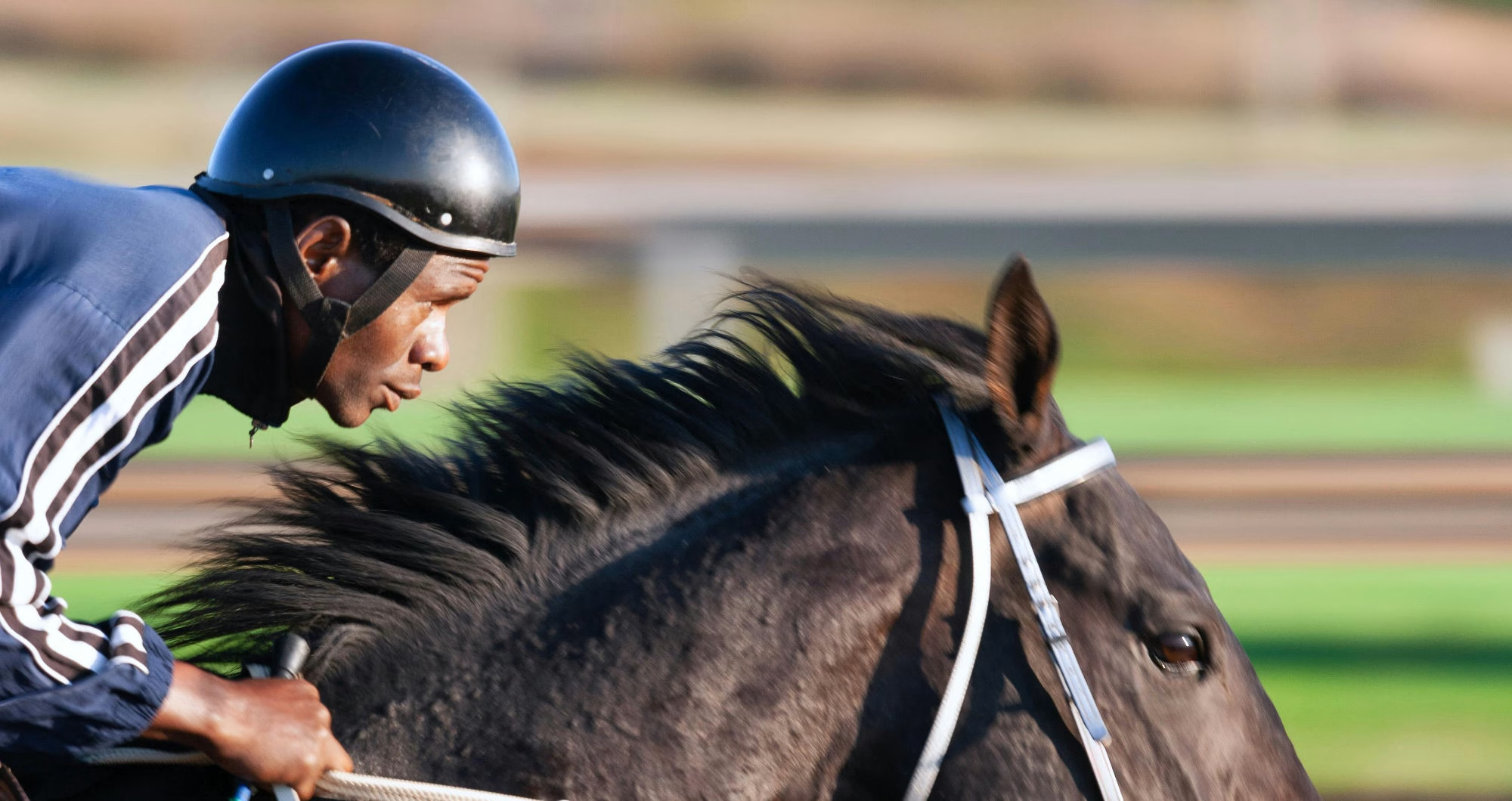

Horse racing is a sport embedded with a deep, rich history dating back to ancient times. The roots of the sport run far deeper than the lavish, multi-billion-dollar industry that exists today. Throughout history, horse racing has remained a popular tradition worldwide, with unique twists on this practice being added wherever it is held. Even today, numerous countries have their own unique cultural take on horse racing, whether that involves the distance, the presence or absence of jumps, or other factors.
Horse racing has not only evolved in terms of the sport itself, but it has also evolved the way fans engage with it. Previously, attending live venues was the only way to view the races; in comparison to today’s digital streaming capabilities, where fans can watch from anywhere globally.
In addition to viewing horse races, the way bets are placed on this sport has undergone drastic changes. Horse racing markets were once strictly on-track bookmakers, whereas now bettors participate in online betting, as well as at the racecourse.
In this article, we will cover the changes that horse racing has undergone since its beginnings.
Ancient beginnings
Horse racing has been practised in many civilisations around the globe, most notably in ancient Greece and ancient Rome. Horses were once strictly utilised for transportation and welfare, though they began to race them in ancient times to express strength and power. Each civilisation had its traditions implemented into horse racing, which has changed from its origins; however, many elements remain prominent today. It was in ancient Greece and Rome that mounted horse races first occurred, as well as chariot races. In ancient Rome, Circus Maximus drew crowds of up to 150,000 people to watch chariot racing.
Horse racing in the middle ages
Following the fall of the Roman Empire, horse racing continued to be practised across Europe. During the medieval times, knights and nobles practised horse racing informally at fairs and festivals as part of their training for battle. The focus of horse racing in the Middle Ages was on jousting, with the jockeys competing in jousts to express their nobility and power.
The birth of modern racing
Modern horse racing began to develop in the 17th century, when King James I established the first formal racecourse specifically for horse racing. The course was established in 1605 at Newmarket and remains in operation today. The development of a formal racing track was a crucial step in the evolution of horse racing, transforming it from informal events into a formal sport. Newmarket set the foundations for horse racing, which has seen multiple tracks follow over time.
The thoroughbred breed originated in 17th-century England, which played a vital role in the development of horse racing. The breed originated through the selective breeding of English mares with imported Arabian stallions. The breed brought improved speeds and endurance to the horses, and remains the main horse breed in racing.
This period in horse racing also saw the creation of notable races, including the St. Leger Stakes and the Epsom Derby.
20th-century horse racing
In the 20th century, horse racing was expanded and became a globalised sport. It was specifically the USA and Australia that adopted horse racing and created some iconic races such as the Kentucky Derby and the Melbourne Cup. The 20th century’s most significant impact on the sport of horse racing was the introduction of technological advancements. The introduction of technology in horse racing changed the way fans could engage with the sport. In the 1930s, the Photo Finish Technology was introduced, which would eliminate human error in determining race winners.
The introduction of radio also helped the sport reach a wider audience, which was implemented in the 1920s. The first horse race that was broadcast on the radio was the Epsom Derby. The first televised horse race occurred later, in the 1950s, which helped the sport expand globally.
The modern era
Today’s horse racing industry is extremely expensive and is prominent worldwide. It has amassed monumental popularity and has become commercialised. The sport itself hasn’t undergone significant change, with many of the same events remaining. The main change in horse racing over time is the growth in technology and the increasingly lucrative prize pools. The modern era of horse racing is a spectacle, drawing large audiences to different types of racing events like Cheltenham Festival, Royal Ascot, and The Grand National. The primary racing types in today’s horse racing era are flat racing, steeplechasing, and harness racing.
Final thoughts
Horse racing is a prestigious sport with a rich history that few other sports can match. The biggest change in horse racing is the way the sport is consumed by its audience. Previously, horse racing could be enjoyed strictly on the racetrack, whereas today there are numerous ways to enjoy the races. The origins of the sport date back to ancient civilisations, and over time, it has been carefully modified to create the modern form of horse racing we know today. In the future, we anticipate further development of the sport to make it safer and more enjoyable for all.
Feature image by Jean van der Meulen on Pexels







