
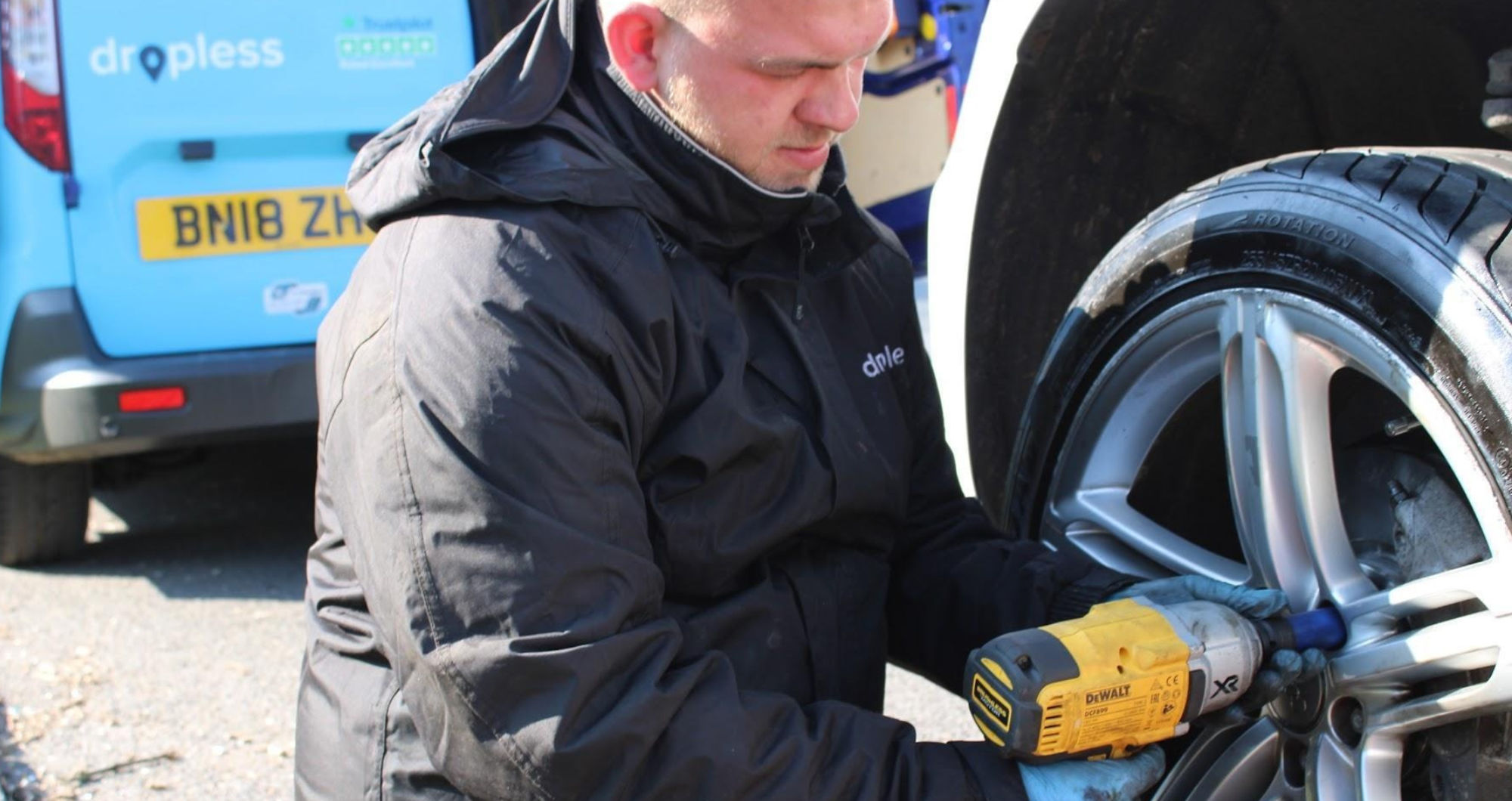

Ask a Londoner when they last visited a garage, and you’ll often get a groan before you get an answer. The appointment was booked two weeks out. The morning was spent finding a bus route home from an industrial estate. The phone call was at 2 pm with a diagnosis they couldn’t verify and a price they hadn’t budgeted for. While this frustration is synonymous with city life, whether you rely on a mobile mechanic or a premium black car service, maintaining vehicle health requires the same attention to detail—something that remains true even when exploring tips for getting the most out of your black car service. It’s a sentiment shared by drivers across the country.
That frustration is now producing measurable change. Across the UK, a growing share of routine car servicing—oil changes, brakes, batteries, diagnostics—is happening on driveways, in office car parks and outside flats, carried out by mechanics who come to the car rather than the other way around. Companies such as Dropless, which has built a base of more than 60,000 registered customers, are turning what used to be a sole-trader trade into an organised service that is rapidly expanding beyond the capital.
The numbers behind the shift
Three facts explain why this change is taking hold across the UK.
First, the cars themselves are ageing. According to the Department for Transport’s vehicle licensing statistics, the average car on UK roads is now roughly 9 years 10 months old as of end-2024, an increase of 33% since 2015. Older cars need more frequent attention, which means more garage visits under the traditional model, or more at-home visits under the new one.
Second, the national vehicle fleet is changing shape. While there are approximately 35 million licensed cars in the UK, the electric vehicle share is steadily rising, reaching approximately 5% by early 2025. EVs generally require fewer oily mechanical interventions but benefit significantly from software-led health checks. This shift makes a mobile mechanic diagnostic service an essential tool for the modern driver; it brings high-end diagnostic scanning technology directly to the car, allowing for accurate fault detection without the need for a ramp.
Third, and most decisively, there is the arithmetic of time. A garage service typically costs a driver three to six hours once you count the drop-off, the alternative transport and the collection. A mobile appointment asks for fifteen minutes at the start and fifteen at the end. The work happens while you get on with your day.
What actually happens at an at-home service
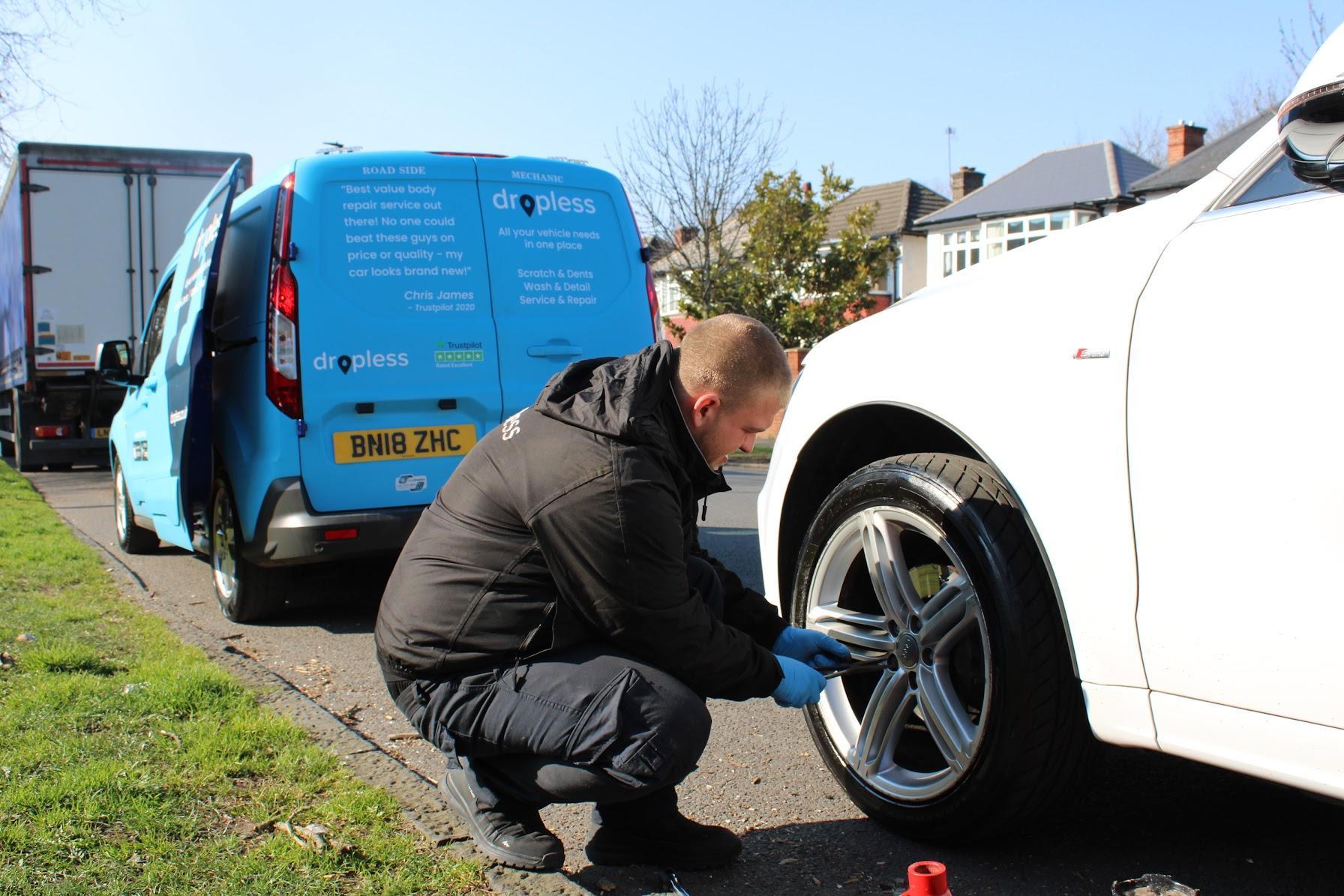
The scepticism most first-timers have is reasonable: can a van really do what a workshop does?
For the majority of what a car needs in a year, yes. Booking a mobile mechanic through a service like Dropless covers comparable ground to a garage visit: interim, full and major services built around multi-point inspections, using original equipment manufacturer (OEM) parts and backed by a one-year parts and labour warranty. Brake pads, batteries, filters and fault-code checks all happen at the kerbside with the same tools a workshop bay carries.
Even the job most people assume needs a pit, the mobile car oil change, is now a routine driveway task, done with extraction equipment and the correct grade oil for the vehicle, with old oil taken away for certified disposal.
What a van can’t do is also clear-cut, and honest operators say so upfront: MOT tests need approved fixed equipment, major clutch or gearbox jobs need a lift, and structural bodywork belongs in a body shop. Reputable mobile operators will tell you when your job is one of those.
Where mobile arguably beats the workshop is transparency. The work happens in front of you. You can see the old brake pads next to the new ones, ask questions while the mechanic works, and receive a digital job sheet documenting everything done, something the closed workshop door never allowed. Pricing follows the same logic: quotes are fixed upfront, and rates for mobile services typically come in well below dealership prices, because a van doesn’t carry the overheads of premises and business rates.
Who is switching
The stereotype is that the primary users are time-poor professionals, and they are certainly part of the customer base. Bookings at office car parks in city centres are common, and demand for a same-day mobile mechanic has grown to the point where providers now reserve dedicated time slots for these requests. However, consumer habits rarely change for just one group, and arguably, the fastest adoption is coming from two others.
Home workers, who since 2020 have re-based their lives around not commuting, increasingly see no logic in commuting to a garage. Booking a same-day mobile mechanic fits the same pattern as the grocery delivery: the service comes to the address.
And households without off-street parking, common in most UK cities, have discovered mobile mechanics will work at a relative’s driveway, or at their workplace. The garage model quietly assumed everyone could spare a car-free day; mobile car servicing doesn’t.
What to check before you book
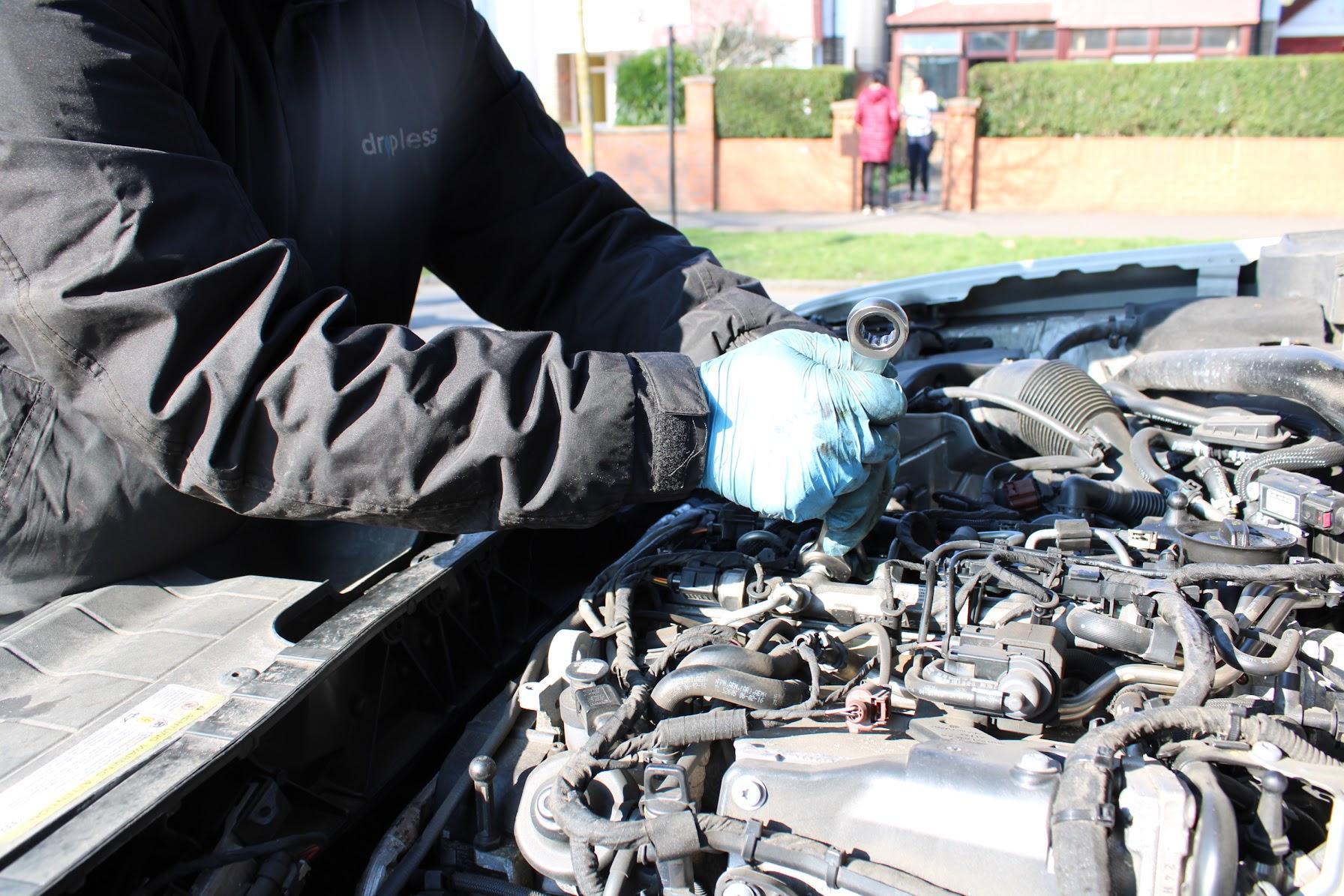
The market is still maturing, and quality varies, so it is worth confirming four things before booking. First, technicians are employed and vetted by the company rather than gig-sourced. Second, that you get a fixed, itemised quote before anyone arrives. Third, that parts and labour carry a written warranty; twelve months is the fair benchmark. Fourth, that mobile mechanic diagnostic service work is done with proper OBD-II equipment, and you receive the fault report, not just a verbal summary. Operators who can’t offer all four are the reason the category still fights for trust.
Where this goes next
None of this spells the end of the garage. MOTs, major repairs and specialist work will keep workshops busy for decades. But the large majority of routine maintenance, the work that never needed a building, only a skilled person and the right tools, is steadily migrating to wherever the car is parked.
That pattern is already visible across the country. It happened with food delivery, with banking, with GP appointments. Car maintenance is simply the next service realising that in a congested city, moving a mechanic is a lot easier than moving a car.
Frequently Asked Questions
How do mobile mechanics handle oil disposal?
Answer: Professional mobile services use certified extraction equipment to remove old oil directly into sealed containers. This is then transported securely and processed at registered waste management facilities, ensuring full compliance with environmental regulations.
Is a mobile mechanic service suitable for electric vehicles (EVs)?
Answer: Yes. Mobile mechanics are highly effective for EVs While they don’t require oil changes, they benefit from regular health checks, software diagnostics, brake inspections, and cabin filter replacements—all of which can be performed conveniently at your location using specialised tools.
Can mobile mechanics perform work on cars parked on the street?
Answer: Many mobile mechanics can perform routine maintenance on-street, provided there is safe, legal access to the vehicle. It is best to confirm with the service provider at the time of booking to ensure your specific location meets their safety requirements.
How does a mobile service compare to a traditional dealership warranty?
Answer: Reputable mobile mechanics use OEM (Original Equipment Manufacturer) or equivalent quality parts, ensuring your vehicle manufacturer warranty remains valid. Always ensure your chosen provider offers a comprehensive warranty on both parts and labour, typically for 12 months.
What if my car needs a repair that requires a lift?
Answer: Mobile mechanics are designed for routine maintenance and diagnostics. If a job requires heavy structural repairs, gearbox removal, or MOT testing that demands a fixed ramp, a professional mobile operator will transparently advise you that the work needs to be carried out at a specialist workshop.







