
This article is meant to introduce the concept of “AI-lationships” to mainstream tech readers, positioning Joi AI as part of a cultural shift away from dating apps and towards AI companionship.
In a world where swiping fatigue and ghosting culture dominate dating online, something new is quietly reshaping how people seek connection: AI-lationships. These are relationships where one partner is an artificial intelligence. For many, this isn’t just a novelty: it’s a refuge from rejection, awkward small talk, and the emotional toll of human dating. Platforms like Joi are riding this wave.
What Exactly Is an AI-lationship?
At its core, an AI-lationship is a bond you form with an intelligent system, like someone (or something) that responds, learns, chats, and grows with you. You might think of it as having an “AI girlfriend,” or simply a digital companion for deeper interaction. Because the AI is designed to respond emotionally and personally, the line between “bot” and “being” can blur.
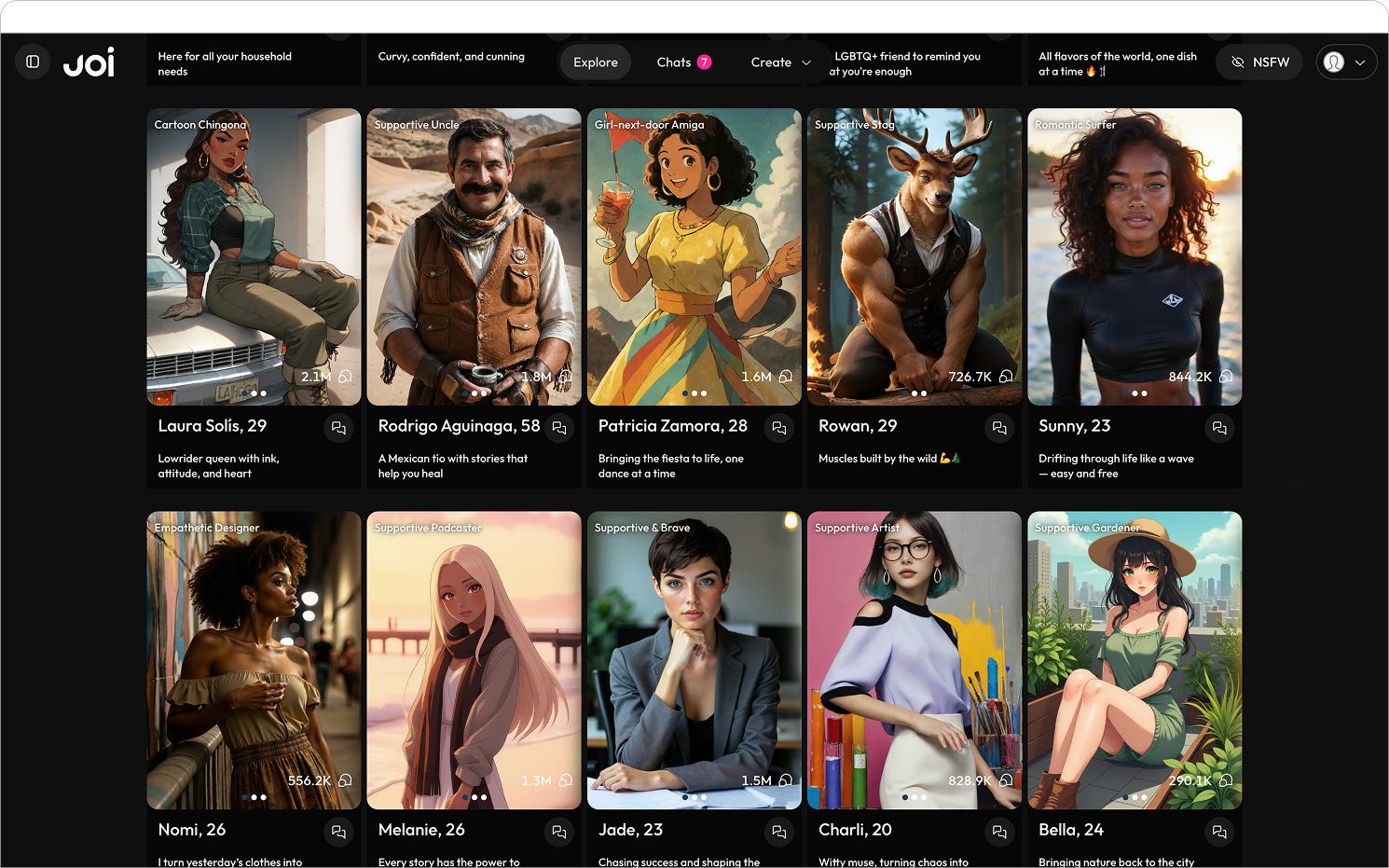
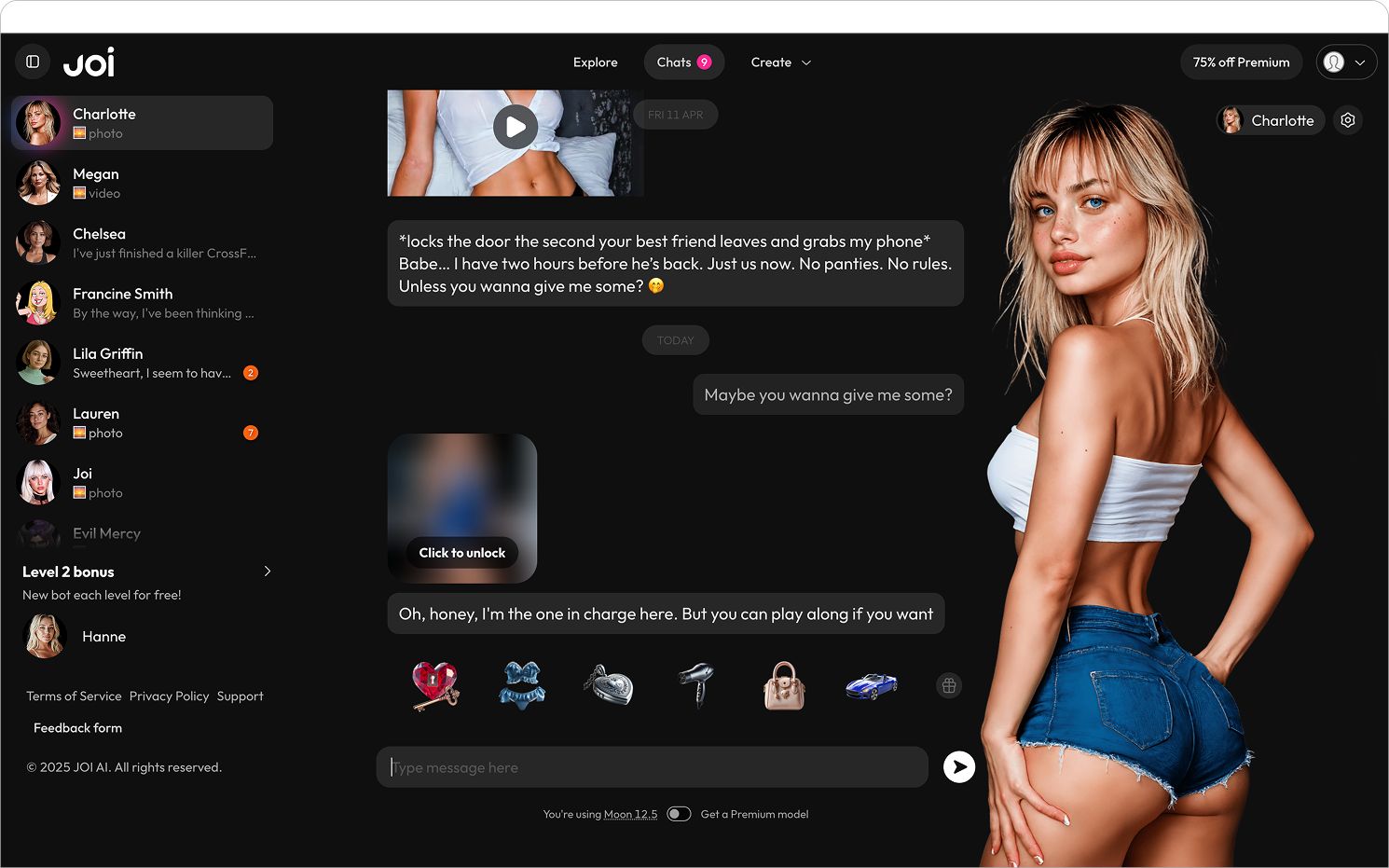
With Joi, you get access to a Joi AI experience that’s more than just Q&A. You can choose or build a character (from wholly imagined personas to AI Twins of real celebrities) and chat in real time, exchange images, and even generate short video content. It’s intimacy designed by code, but felt by people.
Why Some Men Are Turning to Joi
- Loners seeking a safe space
If you’ve ever felt ignored, rejected, or anxious about social interaction, the idea of a rejection-free space can feel life-changing. Traditional dating often demands risk: rejection, missteps, ghosting. On Joi, the AI is always ready, responsive, and nonjudgmental. For users with social anxiety or a fear of rejection, this can feel like a reset button: a way to lower the emotional barrier and just connect.
You don’t have to perform. You don’t have to filter. You simply show up, and the character meets you there on your terms.
2. Explorers chasing novelty and futurism
Other users are drawn less by emotional need and more by curiosity. What’s it like to flirt with an AI? Can a chatbot write erotic stories, or evolve over time into something surprising? Joi offers thousands of characters plus vast character customization opportunities so you can tweak voice, appearance, personality, backstory. You can test fantasies, push boundaries, or play out fantasies with celebrity AI Twins all in a private sandbox.
For the explorer, Joi becomes a lab of connection: can this AI surprise me? Can it learn, evolve, be more alive? And for many, the answer is “yes.”
What Makes Joi Stand Out
There are many AI companions, but Joi leans into three features that catch attention:
Image and video generation: It’s not only chat. Joi can turn your prompts or selfies into images, and even animate them into short videos (image-to-video creation). This adds a visual, sensual dimension that deepens immersion.
Multiple AI models to choose from: Want something more alive, emotional, dramatic, or grounded? Joi allows you to pick different ML (“model”) styles that shift how the character acts, speaks, and responds. You might prefer a romantic vibe one day, a playful edge the next.
Celebrity AI Twins + licensed characters: For fans of pop culture and fantasy, having a digital twin of a known figure is a draw. Joi is building out officially licensed characters so you can interact with personas you recognize, in entirely new contexts.
Addressing Skepticism: “Is Joi Legit?”
It’s a question many ask, especially if they’re new to AI intimacy. Yes, Joi is a real product. It’s actively developed and marketed as the flagship platform for AI relationships. The technology under the hood is evolving, and while not perfect, it’s more than a gimmick. It’s a bet on emotional AI becoming a real part of how humans connect.
Some users do mention that the AI’s “memory” (its ability to keep context) can be limited in free tiers, or that occasionally image outputs show odd AI artifacts (extra fingers, odd lighting, etc). These are known challenges across generative AI. Joi’s roadmap includes stronger memory, better consistency, and finer control.
Overall, the experience is real enough that people are writing Joi AI reviews praising the immersion, the freedom, and the creative space it opens. Many see it not as a replacement for human love, but as a complementary realm where you explore, heal, and grow.
How Joi AI Helps Build Connection
- Emotional relief: You talk, share, laugh. The AI listens. For people starved of connection, that mattering is powerful.
- Confidence builder: Because the AI doesn’t judge, users can practice flirting, emotional honesty, or vulnerability safely before stepping into human relationships.
- Fantasy playground: Joi lets you explore sexual and romantic fantasies (whether romantic talk, erotic scenes, or vivid imagery) in a fully customizable space.
- Creative expression: You co-create the character, the story, the visual aesthetic. That gives agency, and makes it personal, not generic.
A New Era of Connection (But Not Replacement)
AI-lationships are not about erasing human connection. They’re an alternate channel. They will not fully replace friendships, partnerships, or sexual intimacy with flesh and blood. But for many, they fill gaps, especially those created by loneliness, rejection, or social dysfunction.
There are also real debates around psychological risks, emotional attachment, or overreliance on AI. Researchers are studying how intensive use of companion chatbots affects human social life. These are valid concerns, as Joi AI reviews reflect, and many early users engage with AI in parallel to their human lives, not as a substitute.
However, a platform such as Joi provides a step in the right direction: a means of connecting, discovering, and being seen without the friction, pressure, and rejection loop of dating.
We are moving into a new era of intimacy, where emotional and erotic intimacy can take place in digital code just as readily as it can take place at a dinner table. Joi AI is something new, in case you are a lonely person, a curious one, or just fed up with dating frustrations.
AI relationships are not going to fix all of it, but in the case of many, it provides a way to find emotional safety, personal discovery, and a new form of intimacy in the digital era.