
Revit has become an essential tool for architects, designers, engineers, and BIM professionals working across the UK’s construction and built environment sectors.
However, choosing the right Revit course can be difficult, particularly when training providers offer everything from short beginner workshops to advanced BIM programmes and Autodesk certification preparation.
The right course depends on your current experience and career goals. Beginners may need structured training in modelling and documentation, while experienced professionals may be looking to improve their skills in worksharing, family creation, coordination, or BIM workflows.
For those planning to work towards an Autodesk certification, it is also important to understand the difference between completing a training programme and passing an official certification exam.
Here are five Revit training and certification options worth considering in the UK.
1. ASDAV’s Revit Certification Program
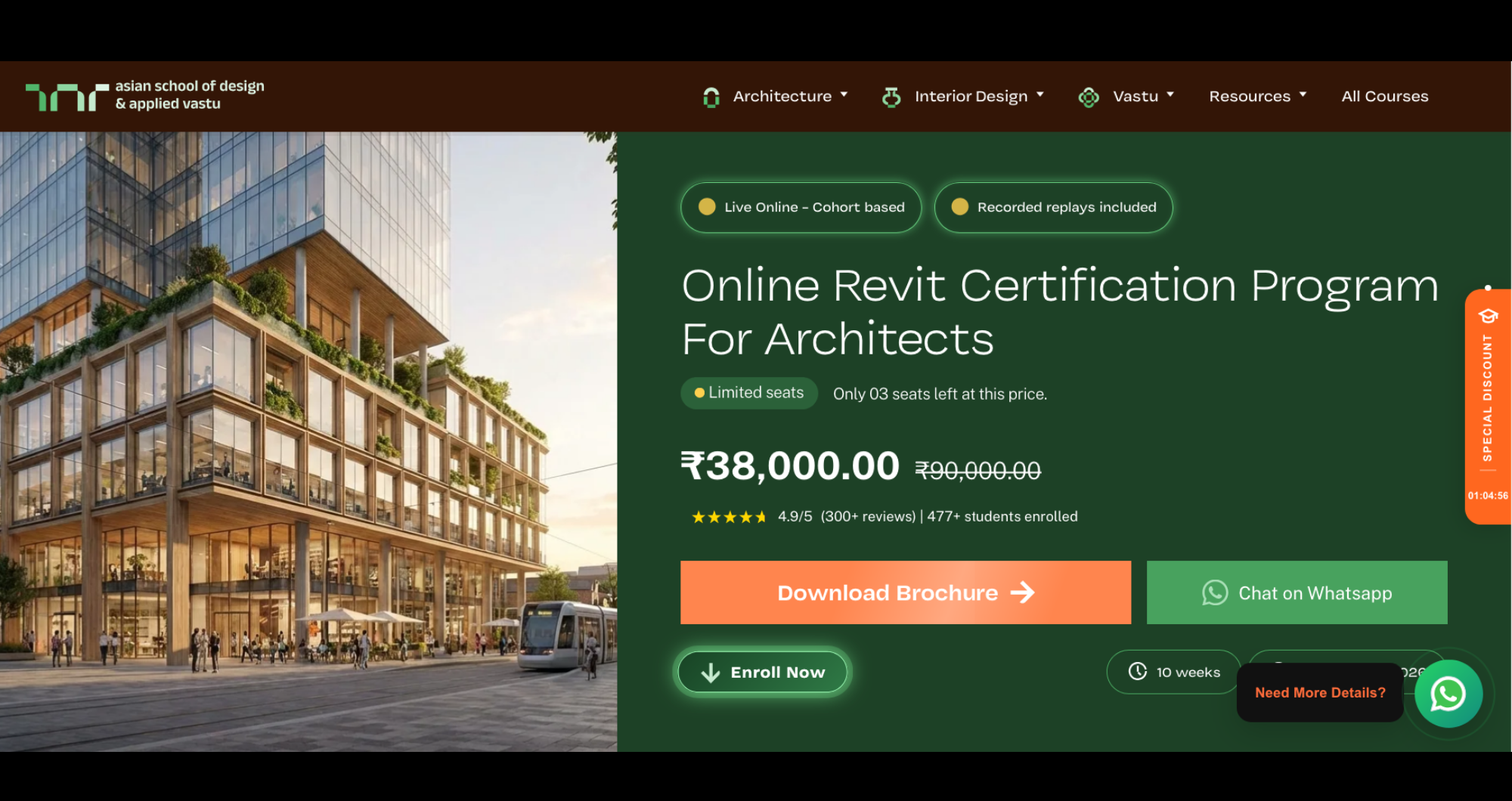
ASDAV takes a more comprehensive approach than a typical two or three-day software training course. Its Online Revit Certification Course for Architects runs over 10 weeks and is designed to take learners from Revit fundamentals into practical architectural workflows, while its Professional Revit & BIM Course for Architects extends the learning experience over 12 weeks and incorporates broader BIM concepts.
One of the more useful aspects of the ASDAV programme is that it is structured around the kind of work learners are expected to perform in practice while working in the UK rather than treating Revit as a collection of isolated commands.
The training covers architectural modelling, documentation, coordination, families, and project-based workflows, allowing learners to see how different parts of a Revit project connect.
The 10-week programme includes:
- 40+ live sessions
- Real-world assignments and capstone projects
- 20+ real-life case studies
- Guided career sessions
- Course recordings, templates, and learning resources
- An ASDAV completion certificate
ASDAV also offers one-to-one sessions and cohort discussions, which are useful for learners who need clarification as they progress through the more technical parts of the software.
Its course is aimed at architecture students, interior design students, fresh graduates, practising professionals, BIM beginners, and educators, making it suitable for learners at different stages of their careers.
For someone based in the UK, the live online format means that the programme can be accessed without being restricted to a particular training centre or city. This may be particularly useful for learners looking for a longer, more structured programme than the intensive classroom courses commonly available in London.
The 12-week Revit and BIM programme goes further into areas such as BIM workflows, worksharing, BIM execution plans, ISO 19650, clash coordination, parametric families, visualisation, and cloud-based collaboration.
Best suited to: Learners who want a structured programme that combines Revit training with practical project work and broader BIM knowledge rather than completing a short introductory course.
2. London Software Training’s Revit Course
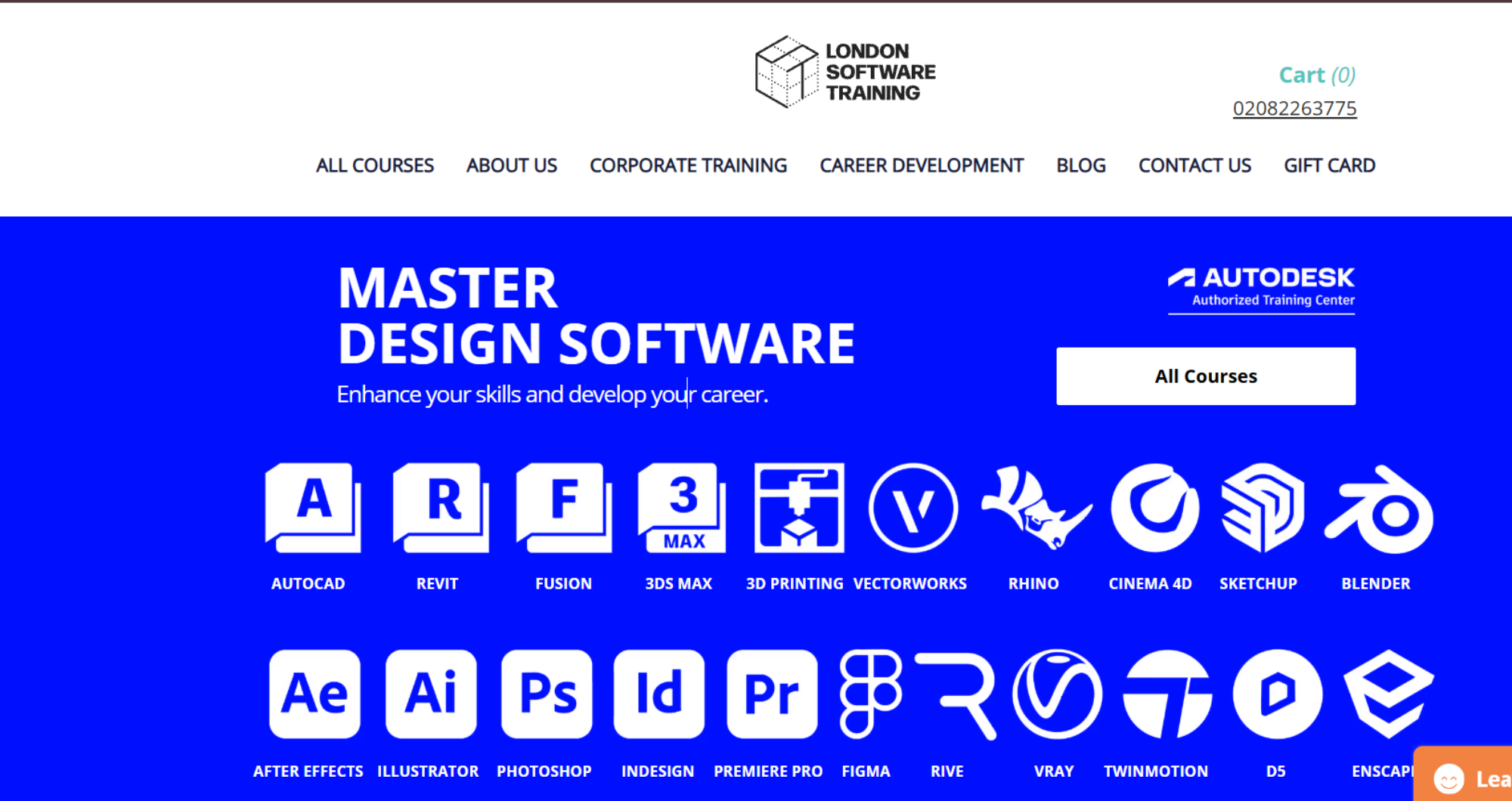
London Software Training offers several Revit courses designed around different levels of experience, making it a practical choice for learners who want to study in stages rather than commit immediately to a longer programme.
Its current course options include:
- Revit Introduction to Intermediate, 3 days
- Revit Intermediate to Advanced, 3 days
- Revit Introduction to Advanced, 6 days
- Five-week evening courses
- A 10-week evening programme
- Bespoke one-to-one Revit training
- BIM Management and Delivery in Revit
The range of options is particularly useful because someone who is completely new to Revit does not necessarily need the same type of training as an architectural assistant or BIM professional who already understands the basics. A learner can begin with the introductory programme and continue towards more advanced or BIM-focused training as their requirements develop.
The six-day Introduction to Advanced course provides a more intensive route for those who want to move through the fundamentals and into more advanced capabilities without splitting their training across multiple courses. For professionals who are already working, the evening options may also make it easier to develop Revit skills alongside a full-time role.
Another advantage is the availability of bespoke one-to-one training. This can be valuable when a learner has a specific objective, such as preparing for a particular role, developing architectural documentation skills, or working through an existing project.
London Software Training is therefore a strong option for learners who want flexibility in both course duration and level of study.
Best suited to: Architecture and construction professionals in London who want classroom, evening, or one-to-one training and prefer to choose between short and longer course formats.
3. Armada Revit Training Centres
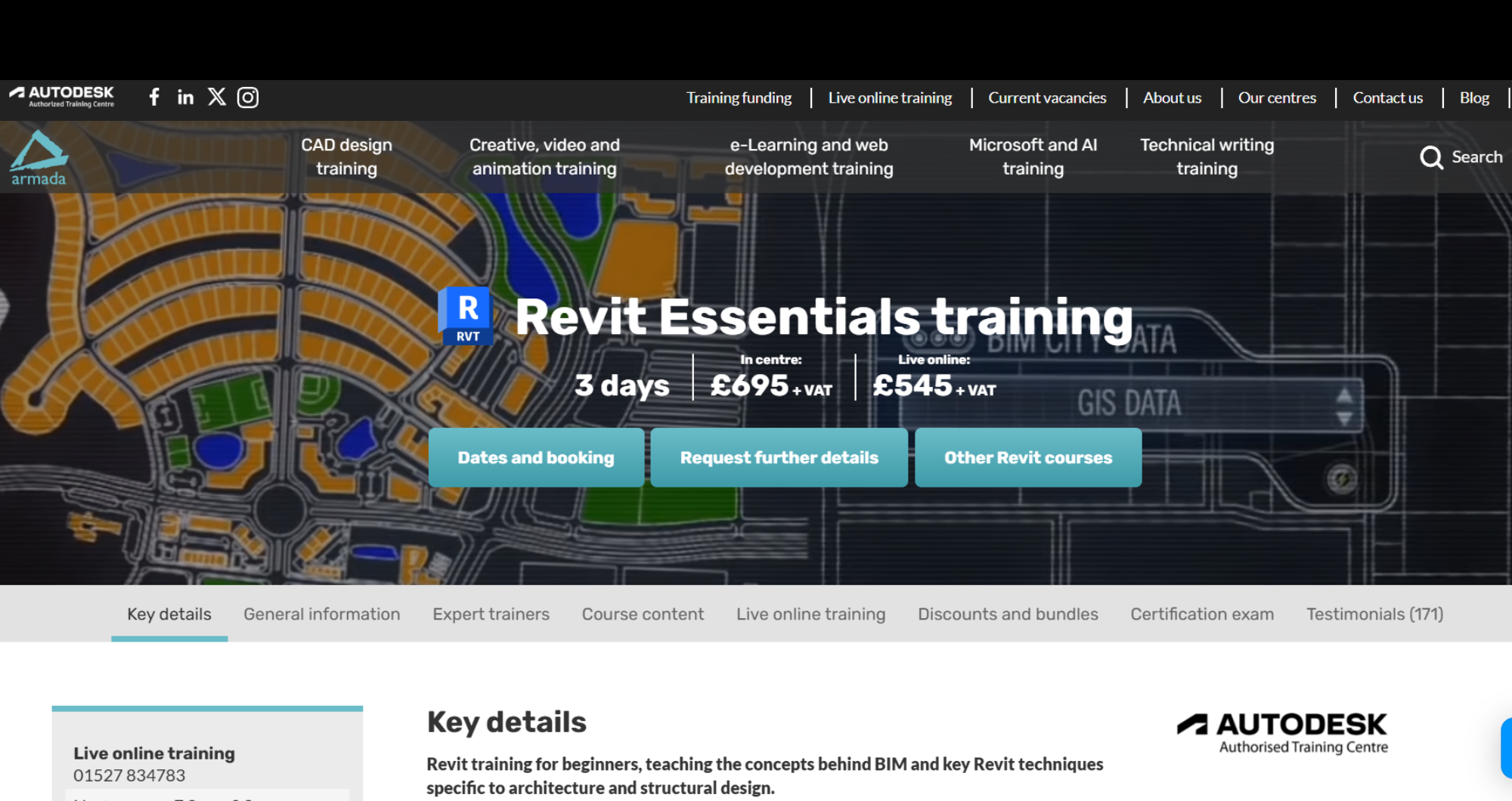
Armada offers Autodesk-accredited Revit training across several locations in the UK as well as through live online classes. Its course range is divided by both experience level and discipline, which makes it particularly relevant for professionals who need training that reflects the area in which they work.
The available options include Revit training for:
- Architecture and structures
- MEP
- Advanced architecture
- Advanced structures
- Advanced MEP
- Families and content creation
- Fire suppression design
Armada states that its Revit courses are delivered by Autodesk Certified Instructors and that it has been providing Autodesk-accredited training since 2000. Training is available at centres including Birmingham, Bristol, Cardiff, Manchester, Milton Keynes, Nottingham, Reading, and Sheffield, alongside live online delivery.
Its Revit Essentials for Architecture and Structures course is particularly relevant for beginners and covers the core BIM and Revit environment before moving into architectural and structural techniques. The published course outline includes areas such as project setup, views, levels, grids, linked models, drafting, annotations, schedules, and documentation.
This makes Armada a sensible choice for professionals who want discipline-specific training from an established UK provider rather than a general introduction to Revit.
Best suited to: Learners who want Autodesk-accredited training and need a course specifically aligned with architecture, structures, or MEP.
4. SquareOne Training
SquareOne Training provides Revit courses for architecture, MEP, and collaborative BIM workflows, with training available online, in person, or tailored to an organisation’s requirements. The provider has public training locations in London as well as other UK cities, making it a relevant option for London-based professionals and corporate teams.
Its Revit Architecture: Essentials course focuses on creating 3D building models and drawings using the core principles of BIM, while the Essentials Plus course provides additional time for practice and guidance. There is also a dedicated Revit MEP Essentials programme for professionals working with mechanical, electrical, and plumbing systems.
For learners moving beyond basic modelling, SquareOne also offers training related to Revit collaboration and BIM. This covers areas that become increasingly important when working within larger project teams, including linked models, worksharing, worksets, coordination, and the management of information between different project participants.
This focus on collaboration is useful because professional Revit work often involves more than creating a model independently. In a live project environment, architects, engineers, consultants, and other stakeholders may need to work with connected models and shared information.
Best suited to: Professionals and corporate teams who want practical Revit training with the option to move into collaboration and BIM coordination.
5. DE8 Training Center
For learners specifically looking for London-based Revit training with a wider range of specialist modules, DE8 Training Centre is another option to consider. The training centre is located in London and offers programmes covering Revit architecture, MEP, BIM, Dynamo, Navisworks, family creation, terrain modelling, quantity surveying, and project coordination.
Its Revit Architecture training covers areas that go beyond simply creating walls and floors. Depending on the programme selected, learners can work with topics such as:
- Advanced architectural modelling
- Revit templates and family creation
- Terrain modelling
- Detailing
- Bills of quantities
- Coordination tools
- Concept design
- Visualisation
- Worksets
The basic architecture training also covers schedules, sheets, family elements, visualisation, and worksharing, giving learners exposure to several aspects of a complete architectural workflow.
The availability of more specialised modules can be useful for professionals who do not need a broad beginner-to-advanced course and instead want to improve a particular skill. Someone who already understands basic Revit modelling, for instance, may be more interested in families, coordination, quantity surveying, or advanced BIM-related workflows.
Best suited to: London-based professionals looking for specialist Revit and BIM modules alongside architecture and MEP training.
What Should You Look for in a Revit Course?
The best course is not necessarily the longest or the most expensive. It should match the type of work you want to do after completing the training.
An architecture student moving from AutoCAD to BIM will have different requirements from an experienced professional preparing to work on coordinated, multidisciplinary projects. Similarly, an interior designer may not need the same technical depth as a structural or MEP professional.
Before choosing a course, consider whether it covers the areas most relevant to your career, including:
- Building Information Modelling principles
- Architectural, structural, or MEP workflows
- Project setup and modelling
- Documentation and sheet production
- Families and parametric components
- Schedules and quantities
- Worksharing and collaboration
- Model coordination
- BIM standards and processes
- Real project assignments
It is also important to distinguish between a course completion certificate and an Autodesk professional certification. A training provider may issue a certificate confirming that you have completed its programme, while Autodesk certification is earned through a separate examination process.
Autodesk’s Revit certification exams are designed to validate professional-level knowledge and are available through Pearson testing options, with the Revit Architectural Design Professional exam, for instance, currently listed as a 120-minute assessment containing 45 to 60 questions.
For professionals specifically aiming for Autodesk certification, it may therefore make sense to choose a course that builds the practical skills required for the exam and then separately prepare for the certification assessment.
Which Revit Course Is Right for You?
If you are completely new to Revit, a course that starts with BIM fundamentals and gradually introduces modelling, documentation, and project workflows will usually provide a stronger foundation than jumping directly into advanced topics.
For architecture students and fresh graduates, a longer programme with assignments and project work can be particularly useful, as employers often want to see evidence that candidates can apply their software knowledge rather than simply list Revit on their CVs
Experienced professionals may benefit more from specialist training in areas such as worksharing, family creation, BIM coordination, or advanced discipline-specific workflows.
ASDAV stands out for learners looking for a longer and more structured learning experience that combines live instruction, project work, real-world case studies, and broader BIM concepts. UK-based providers such as London Software Training, Armada, SquareOne Training, and DE8 Training Centre offer different routes for those looking for classroom, live online, short-term, or specialist training.
Ultimately, the right choice depends on where you are starting and what you want your Revit skills to help you do next.
Whether your goal is to move from AutoCAD into BIM, develop a portfolio, improve your performance in an architecture or construction role, or work towards professional certification, choosing a course with the right level of practical depth will make the training considerably more valuable than simply collecting another certificate.